

Q&A
- +2
Judy Dempsey, Alexander Gabuev, Rose Gottemoeller, …
{
  "authors": [
    "Rose Gottemoeller"
  ],
  "type": "legacyinthemedia",
  "centerAffiliationAll": "dc",
  "centers": [
    "Carnegie Endowment for International Peace"
  ],
  "collections": [],
  "englishNewsletterAll": "ctw",
  "nonEnglishNewsletterAll": "",
  "primaryCenter": "Carnegie Endowment for International Peace",
  "programAffiliation": "russia",
  "programs": [
    "Russia and Eurasia"
  ],
  "projects": [],
  "regions": [
    "North America",
    "United States",
    "Caucasus",
    "Russia"
  ],
  "topics": [
    "Foreign Policy"
  ]
}
Source: Getty
The election of Barack Obama as President means that he now joins President Dmitry Medvedev as the first post-baby boom leaders of their respective nations. Because the two leaders are so clearly of a new generation, they have the most opportunity to finally succeed in breaking the old patterns of distrust and disengagement between the United States and Russia.
Source: The Moscow Times

Their early careers show how different they are from their immediate predecessors, President George W. Bush and Prime Minister Vladimir Putin. Although Bush did not go to Vietnam, his young life -- through his time in the Texas National Guard -- was shaped by that proxy struggle between the superpowers. And Putin, who served in the KGB in a small town in Germany, was on the front lines of the Cold War.
Obama, by contrast, spent the 1980s working in the neighborhoods of Chicago -- a different kind of battleground, formed in the race riots of the '60s and '70s. By the time Obama began his work, the violent struggle had abated but the problems had not, and his work was vital to developing new ideas that stressed not so much race as community solutions. This is one of the reasons that Obama can lay claim to being the United States' first post-racial leader.
Medvedev, for his part, spent the 1980s learning the lawyer's craft in Leningrad. By the time that city became St. Petersburg again, his career had been formed by studying and teaching law rather than climbing through the Communist Party hierarchy. Although Russian law is different from the Anglo-Saxon tradition, it still formed an intellectual system different from the Party's nomenklatura ladder. For that reason, Medvedev can lay claim to being Russia's first post-Communist leader.
Therefore, Obama and Medvedev have the potential to start a truly modern phase in the U.S.-Russian relationship, finally leaving the Cold War behind. This will not be easy, as the summer's tragic conflict in Georgia showed. In the aftermath of the fighting, voices could be heard in Washington, claiming that Russia is an untrustworthy, violent adversary and needs to be contained.
In Moscow, the voices were equally loud, proclaiming that the United States was trying to cling to its status of global gendarme, including in Russia's backyard. The bombers and naval ships that the Kremlin sent to Venezuela were supposed to convey that Russia would respond in the United States' backyard if the United States persisted in supporting Georgia and Ukraine.
Obama and Medvedev would do well early in their relationship to make some policy decisions that would sharply break with Cold War patterns. For example, although Obama would not have assumed command of the U.S. military when Russia's naval flotilla completes its exercises off Venezuela in mid-November, he could suggest that the Pentagon invite the Russian commanders to stop off at Central Command in Florida before their return to Russia. The purpose of the stop would be to discuss urgent issues that are engaging both navies, such as the piracy that is running rampant off Somalia.
And Medvedev, although he would have to push back against Kremlin hard-liners, could recommend that Moscow and Washington have some urgent issues to work on together with Tbilisi. Smuggling through South Ossetia has been a persistent problem, and it has at times involved that most dangerous of contraband -- fissile material that could be used to make nuclear bombs. Both Georgia and Russia have cooperated with the United States to build defenses against nuclear smuggling, and all three could cooperate to confront this terrible problem.
These two examples show clearly what must be done to get beyond the Cold War. They convey that Russia and the United States can cooperate rather than compete, even in their own backyards. Since Obama and Medvedev are so clearly of a new generation, they are the leaders who may finally succeed in breaking the old patterns.
This comment first appeared in The Moscow Times

Nonresident Senior Fellow, Nuclear Policy Program
Rose Gottemoeller is a nonresident senior fellow in Carnegie’s Nuclear Policy Program. She also serves as lecturer at Stanford University’s Freeman Spogli Institute for International Studies and is a research fellow at the Hoover Institution. Ambassador Gottemoeller served as the deputy secretary general of NATO from 2016 to 2019.
Recent Work


Judy Dempsey, Alexander Gabuev, Rose Gottemoeller, …
Carnegie does not take institutional positions on public policy issues; the views represented herein are those of the author(s) and do not necessarily reflect the views of Carnegie, its staff, or its trustees.

Depleted financial reserves and a shrinking tax base mean it is no longer possible to simultaneously deliver high defense spending, price stability, and economic growth.

Alexandra Prokopenko

Blurring the line between humans and animals is a long-standing tradition in social utopian prose. In his latest novel, Leonid Bershidsky reminds us that in social experiments, people are often treated no differently than animals.

Alexander Baunov
While France and Australia are seeking to establish the legal obligations of messaging apps like Telegram, Russia wants total subordination.

Maria Kolomychenko
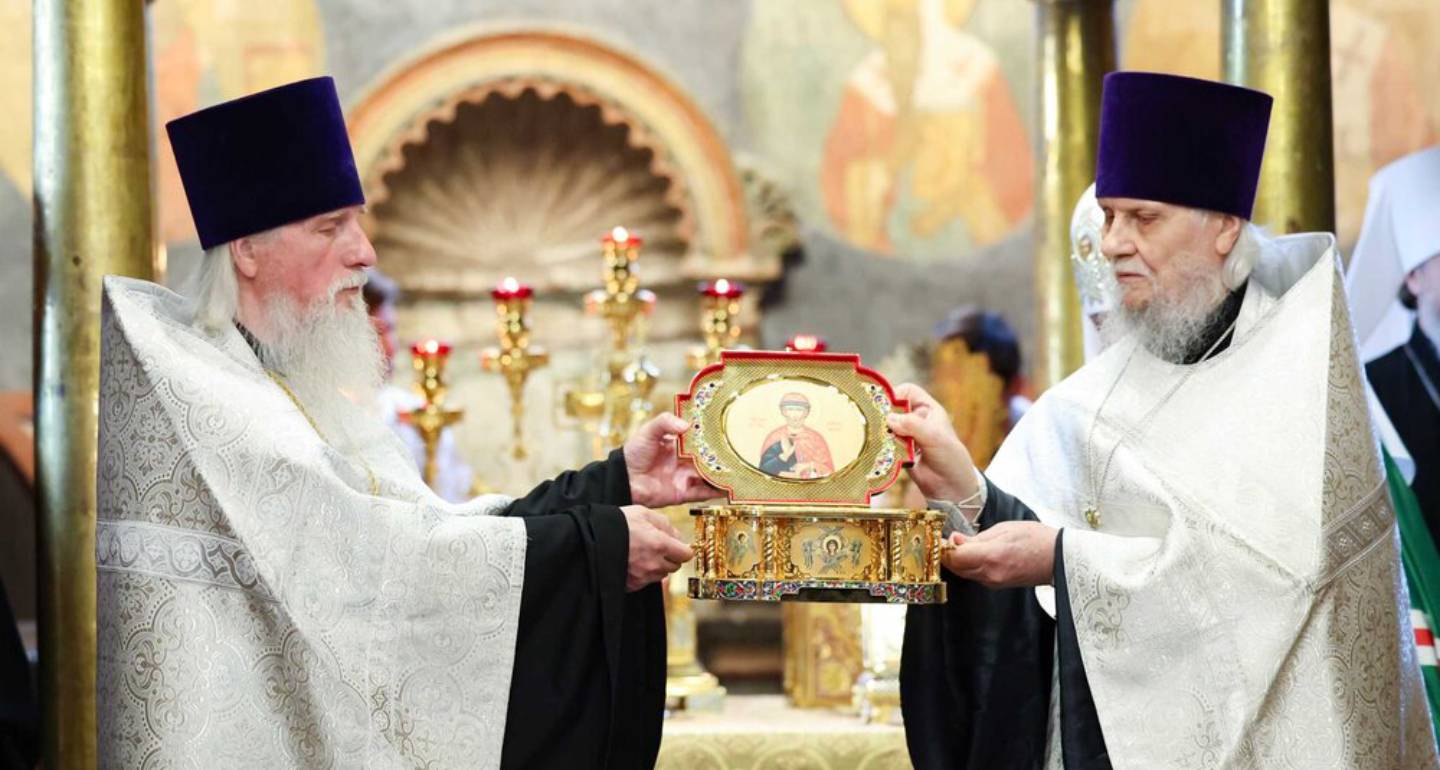
The recent uncovering of Dmitry Donskoy’s relics in the Cathedral of the Archangel is yet another attempt by the Russian Orthodox Church to help the state solve its problems. However, parroting the state’s version of Russian history leaves the Church with no message except “patriotism.”
Alexander Zanemonets

With the growth in points of friction between the great powers, organizations like the SCO will continue to play a role in the strategic adaptation of the smaller powers caught between them.

Temur Umarov