Most of Moscow’s military resources are tied up in Ukraine, while Beijing’s foreign policy prioritizes economic ties and avoids direct conflict.
Alexander Gabuev, Temur Umarov
{
"authors": [
"Ashley J. Tellis",
"Michael Krepon"
],
"type": "legacyinthemedia",
"centerAffiliationAll": "dc",
"centers": [
"Carnegie Endowment for International Peace"
],
"collections": [],
"englishNewsletterAll": "ctw",
"nonEnglishNewsletterAll": "",
"primaryCenter": "Carnegie Endowment for International Peace",
"programAffiliation": "SAP",
"programs": [
"South Asia"
],
"projects": [],
"regions": [
"North America",
"United States",
"East Asia",
"China",
"Caucasus",
"Russia"
],
"topics": [
"Security",
"Military"
]
}Source: Getty
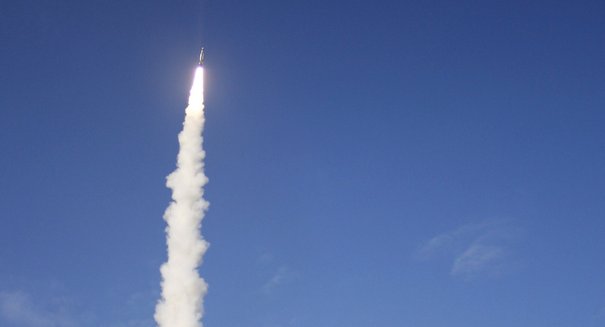
To counter the threat posed by debris from space weapons tests, space-faring nations should enact a Code of Conduct that bans further destructive tests of anti-satellite weapons.
Source: Space News

Some debris is inevitably released during every space launch. Extremely large spikes in space debris have been caused by space weapon tests designed to kill satellites on impact. In 1985, the administration of then U.S. President Ronald Reagan carried out a destructive anti-satellite weapon test, turning an aging U.S. weather satellite into 300 pieces of trackable debris. One lethal debris fragment from this test came within a mile of the newly launched international space station — 14 years later. It took 19 years for the debris caused by this test to burn out of the Earth's atmosphere. After this experience, the Pentagon lost enthusiasm for debris-producing anti-satellite weapon tests.
Former Senior Fellow
Ashley J. Tellis was a senior fellow at the Carnegie Endowment for International Peace.
Michael Krepon
Michael Krepon co-founded the Stimson Center in 1989. He worked previously in the executive branch and on Capitol Hill.
Carnegie does not take institutional positions on public policy issues; the views represented herein are those of the author(s) and do not necessarily reflect the views of Carnegie, its staff, or its trustees.
Most of Moscow’s military resources are tied up in Ukraine, while Beijing’s foreign policy prioritizes economic ties and avoids direct conflict.
Alexander Gabuev, Temur Umarov
With the White House only interested in economic dealmaking, Georgia finds itself eclipsed by what Armenia and Azerbaijan can offer.
Bashir Kitachaev
If the regime in Tehran survives, it could be obliged to hand Moscow significant political influence in exchange for supplies of weapons and humanitarian aid.
Nikita Smagin
The interventions in Iran and Venezuela are in keeping with Trump’s strategy of containing China, but also strengthen Russia’s position.
Mikhail Korostikov
Arms supplies from Russia to Iran will not only continue, but could grow significantly if Russia gets the opportunity.
Nikita Smagin