

Commentary
With the growth in points of friction between the great powers, organizations like the SCO will continue to play a role in the strategic adaptation of the smaller powers caught between them.
Temur Umarov
{
  "authors": [],
  "type": "pressRelease",
  "centerAffiliationAll": "dc",
  "centers": [
    "Carnegie Endowment for International Peace"
  ],
  "collections": [],
  "englishNewsletterAll": "asia",
  "nonEnglishNewsletterAll": "",
  "primaryCenter": "Carnegie Endowment for International Peace",
  "programAffiliation": "AP",
  "programs": [
    "Asia"
  ],
  "projects": [],
  "regions": [
    "United States",
    "China"
  ],
  "topics": []
}
REQUIRED IMAGE
Michael Pettis, one of the foremost experts on China’s economy, has joined the Carnegie Endowment for International Peace.
BEIJING, Apr 21—Michael Pettis, one of the foremost experts on China’s economy, has joined the Carnegie Endowment for International Peace.
A leading economist, former merchant banker, and currently Professor of Finance with Peking University’s Guanghua School of Management, Pettis will be a senior associate with Carnegie’s China program.
Making the announcement, Douglas H. Paal, Carnegie’s vice president for studies, said:
“Michael Pettis stands out in the field of economists who watch China because he writes with a true sense of where public policy meets economic reality. He publishes frequently in important media outlets, where he is even more often quoted for his expert opinion. Carnegie is fortunate, particularly at such a crucial time for the global economy and China’s role within it, to have such a distinguished scholar with hands-on business experience and a perch near the seat of power in Beijing. He will add greatly to the work of our China Program—in Beijing and Washington—and complement that of our new International Economics Program.”
Michael Pettis said:
“As the United States, China, and the world are forced to adapt to the consequences of one of the deepest financial and economic crises in recent history, the impact of policy making on the tectonic economic and geopolitical changes taking place will be fraught with risk and filled with opportunity. I am delighted and honored to be working with the tremendous intellectual resources at the Carnegie Endowment to help contribute to an understanding of the way this interaction will occur.”
###
NOTES
Michael Pettis is Professor of Finance with Peking University’s Guanghua School of Management, where he specializes in Chinese financial markets. He has also taught, from 2002 to 2004, at Tsinghua University’s School of Economics and Management and, from 1992 to 2001, at Columbia University’s Graduate School of Business. He is a member of the board of directors of ABC-CA Fund Management Co., a Sino–French joint venture based in Shanghai.
Pettis has worked on Wall Street in trading, capital markets, and corporate finance since 1987, when he joined the Sovereign Debt trading team at Manufacturers Hanover (now JP Morgan). Most recently, from 1996 to 2001, Pettis worked at Bear Stearns, where he was managing director-principal heading the Latin American Capital Markets and the Liability Management groups. He has also worked as a partner in a merchant banking boutique that specialized in securitizing Latin American assets and at Credit Suisse First Boston, where he headed the emerging markets trading team.
Besides trading and capital markets, Pettis has been involved in sovereign advisory work, including for the Mexican government on the privatization of its banking system, the Republic of Macedonia on the restructuring of its international bank debt, and the South Korean Ministry of Finance on the restructuring of the country’s commercial bank debt. Pettis is a member of the Institute of Latin American Studies Advisory Board at Columbia University as well as the Dean’s Advisory Board at the School of Public and International Affairs.
He is the author of several books, including The Volatility Machine: Emerging Economies and the Threat of Financial Collapse (Oxford University Press, 2001). He received an MBA in Finance in 1984 and an MIA in Development Economics in 1981, both from Columbia University.
Carnegie does not take institutional positions on public policy issues; the views represented herein are those of the author(s) and do not necessarily reflect the views of Carnegie, its staff, or its trustees.

With the growth in points of friction between the great powers, organizations like the SCO will continue to play a role in the strategic adaptation of the smaller powers caught between them.

Temur Umarov

Ongoing uncertainty in the Middle East allows Moscow to both increase its influence in Tehran and continue to enjoy the financial windfall of higher oil prices.

Nikita Smagin
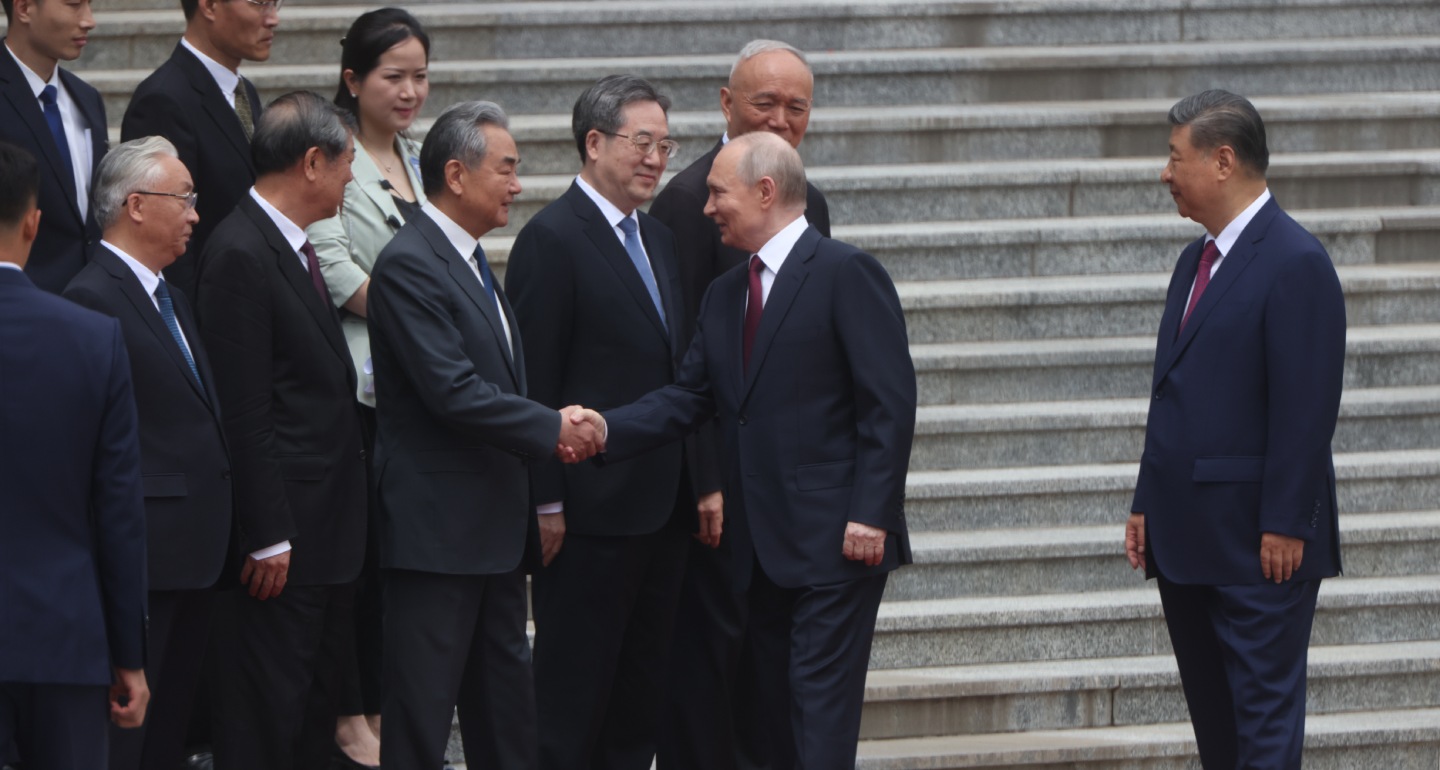
With no key agreement signed on the Power of Siberia 2 gas pipeline, there is a risk that the window of opportunity for Russia will close if Chinese power generation becomes so green that new gas sources are no longer of any interest to Beijing.

Alexander Gabuev

Governments in Estonia, Latvia, and Lithuania want to ensure that a U.S. military withdrawal would not leave them dangerously exposed to a Russian attack.

Sergejs Potapkins
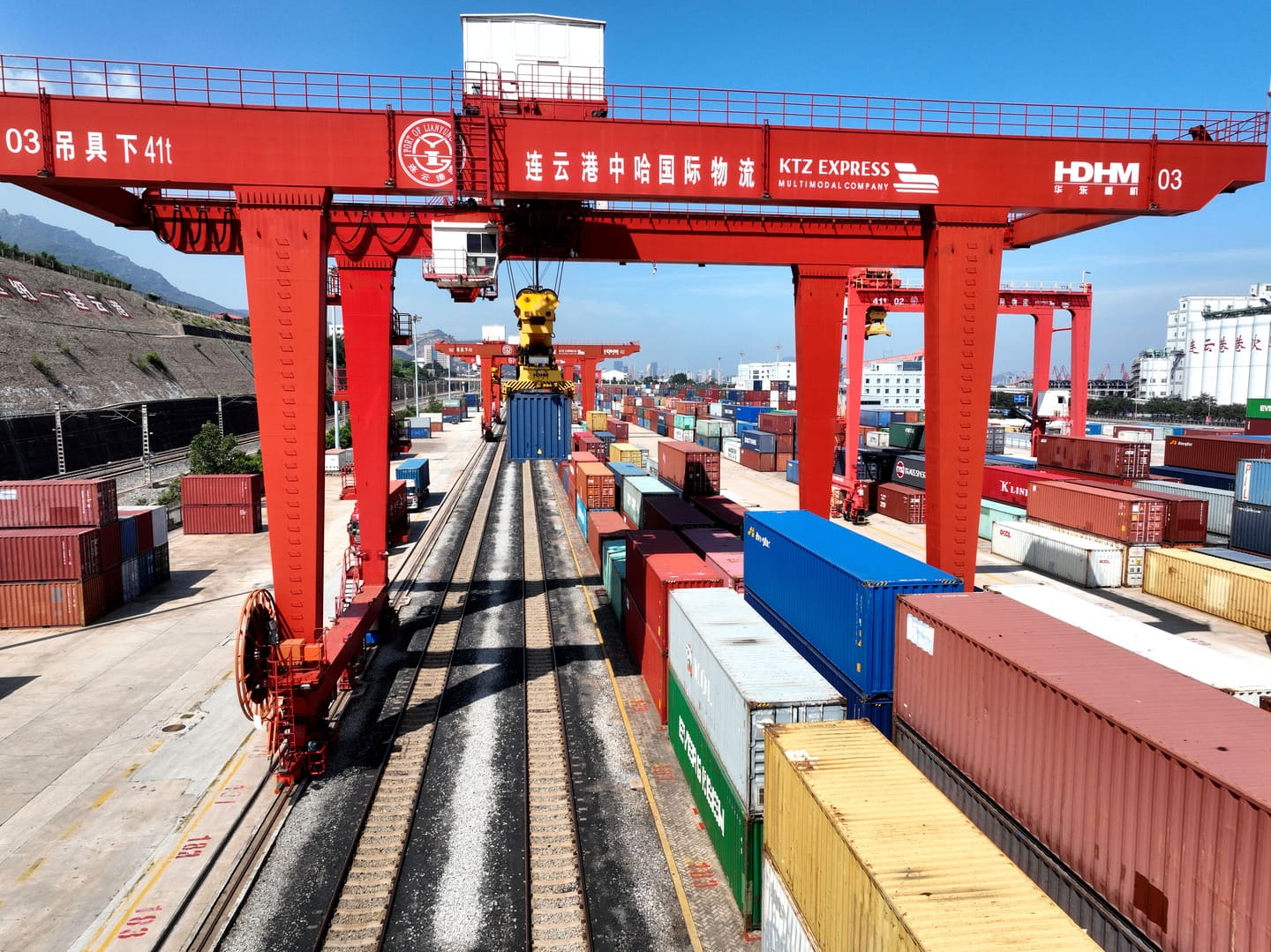
For the Middle Corridor to fulfill its promises, one of these routes must become scalable. At present, neither is.
Friedrich Conradi