

In The Media
John Judis
{
  "authors": [
    "John Judis"
  ],
  "type": "other",
  "centerAffiliationAll": "",
  "centers": [
    "Carnegie Endowment for International Peace"
  ],
  "collections": [],
  "englishNewsletterAll": "",
  "nonEnglishNewsletterAll": "",
  "primaryCenter": "Carnegie Endowment for International Peace",
  "programAffiliation": "",
  "programs": [],
  "projects": [],
  "regions": [
    "United States",
    "North America"
  ],
  "topics": [
    "Foreign Policy"
  ]
}
REQUIRED IMAGE
In putting forth his foreign policy, President George W. Bush speaks of the United States having a "calling" or "mission" that has come from the "Maker of Heaven." Yet, while he uses explicitly religious language more than his immediate predecessors, there is nothing exceptional about a U.S. president resorting to religious themes to explain his foreign policy. U.S. goals in the world are based on Protestant millennial themes that go back to seventeenth-century England. What has distinguished Bush from some of his predecessors is that these religious concepts have not only shaped his ultimate objectives but also colored the way in which he viewed reality— sometimes to the detriment of U.S. foreign policy.
Click on link above for the full text of this Policy Brief.
A limited number of print copies are available.
Request a copy
About the Author
John B. Judis is a visiting scholar at the Carnegie Endowment for International Peace and a senior editor of The New Republic. He is the author of five books: William F. Buckley: Patron Saint of the Conservatives (Simon and Schuster, 1988), Grand Illusion: Critics and Champions of the American Century (Farrar Straus, 1992), The Paradox of American Democracy (Pantheon, 2000), The Emerging Democratic Majority (with Ruy Teixeira) (Scribners, 2002), and The Folly of Empire: What George W. Bush Could Learn from Theodore Roosevelt and Woodrow Wilson (Scribners, 2004), from which this essay is adapted.

Former Visiting Scholar
As a visiting scholar at Carnegie, Judis wrote The Folly of Empire: What George W. Bush Could Learn from Theodore Roosevelt and Woodrow Wilson.
Recent Work
John Judis
John Judis
Carnegie does not take institutional positions on public policy issues; the views represented herein are those of the author(s) and do not necessarily reflect the views of Carnegie, its staff, or its trustees.

With the growth in points of friction between the great powers, organizations like the SCO will continue to play a role in the strategic adaptation of the smaller powers caught between them.

Temur Umarov

When faced with fuel shortages in the past, Central Asian governments could always count on additional supplies from Moscow. That safety net no longer exists.

Galiya Ibragimova

Despite unhappiness on the ground, Moscow is determined to use both carrot and stick to ensure there is record support for United Russia in occupied Ukraine.

Konstantin Skorkin

The recent damage inflicted by Ukrainian drones and missiles on Russia has made Belarus aware of its own vulnerabilities—and surprisingly amenable to Kyiv’s demands.

Artyom Shraibman
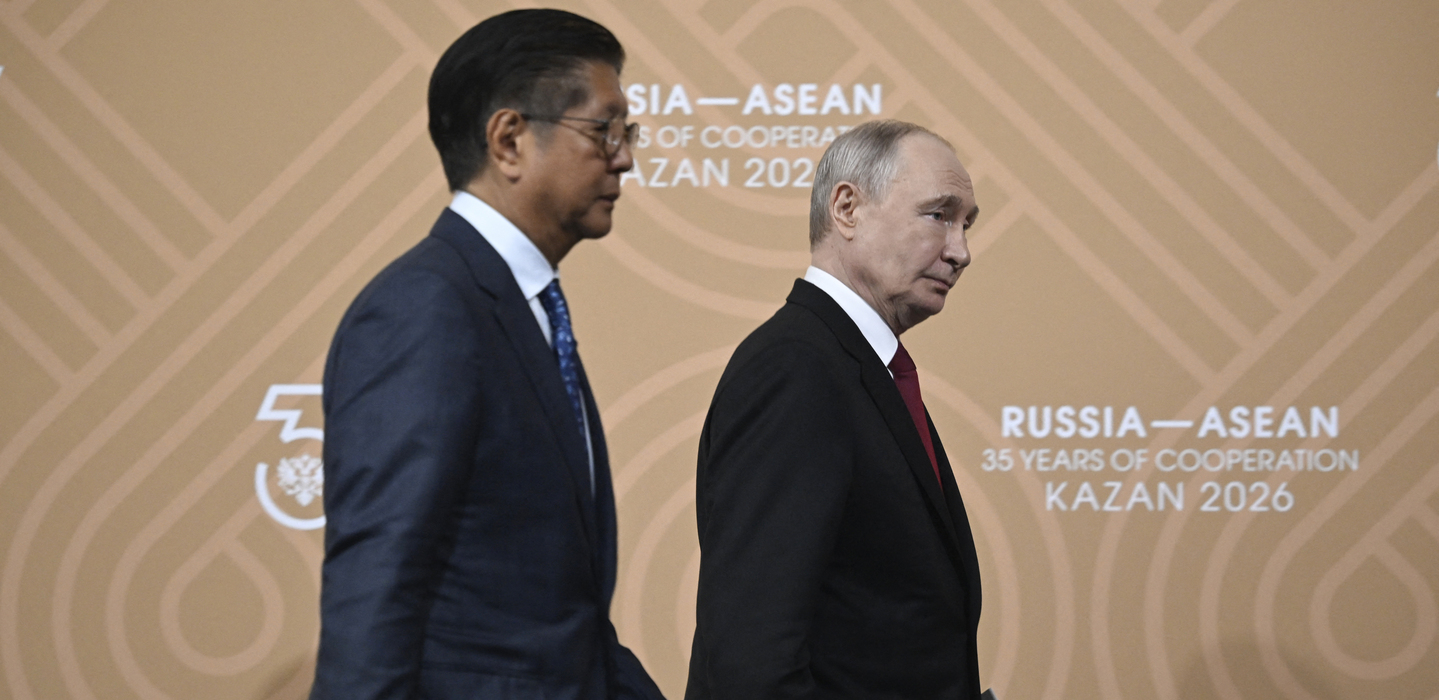
Russia looks set to reap economic benefits from closer ties with Southeast Asian countries that are keen to find reliable energy suppliers and diversify trade ties.

Alexander Gabuev