

In The Media
Michele Dunne, Robert Kagan
{
  "authors": [
    "Robert Kagan"
  ],
  "type": "legacyinthemedia",
  "centerAffiliationAll": "dc",
  "centers": [
    "Carnegie Endowment for International Peace"
  ],
  "collections": [],
  "englishNewsletterAll": "menaTransitions",
  "nonEnglishNewsletterAll": "",
  "primaryCenter": "Carnegie Endowment for International Peace",
  "programAffiliation": "MEP",
  "programs": [
    "Middle East"
  ],
  "projects": [],
  "regions": [
    "North America",
    "United States",
    "Middle East",
    "Iran"
  ],
  "topics": [
    "Political Reform",
    "Foreign Policy",
    "Nuclear Policy",
    "Nuclear Energy"
  ]
}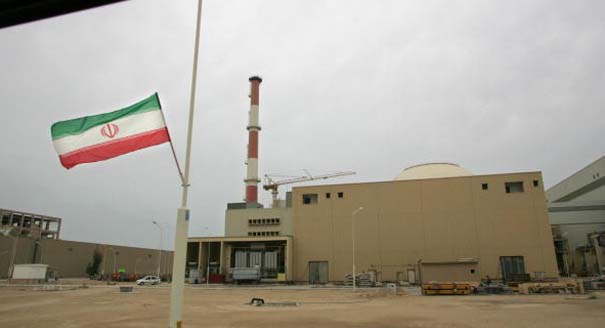
Source: Getty
President Obama has the opportunity to make the world a dramatically safer place by helping the Iranian people achieve a new form of government. A regime change in Tehran would be the best nonproliferation policy.
Source: The Washington Post

Imagine an Iran whose educated, inventive and highly cultured people were allowed to flourish, fully enmeshed in the global economy and society. Imagine the effect on the Muslim world and the greater Middle East of a modernizing, prosperous Iran that held regular, free and fair elections. Those who have long advocated a "grand bargain" were right to talk about the immense global benefits if Iran could be integrated into the international order. Their big mistake was thinking such a bargain could be had with benighted and virulently anti-Western leaders. But the bargain would be grand if the present government could go the way of the Brezhnevs and Ligachevs.
Regime change is more important than any deal the Obama administration might strike with Iran's present government on its nuclear program. Even if Tehran were to accept the offer made last year to export some of its low-enriched uranium, this would be a modest step down a long, uncertain road. Such a minor concession is not worth abandoning the push for real change.
It would be similarly tragic if Israel damaged the likelihood of political change by carrying out an airstrike against Iran's nuclear facilities in the coming year. That would provide a huge boost to the Tehran regime just when it is on the ropes -- and for what? The uncertain prospect of setting back the nuclear program for a couple of years?
Regime change in Tehran is the best nonproliferation policy. Even if the next Iranian government refused to give up the weapons program, its need for Western economic assistance and its desire for reintegration into the global economy and international order would at least cause it to slow today's mad rush to completion and be much more open to diplomatic discussion. A new government might shelve the program for a while, or abandon it altogether. Other nations have done so. In any event, an Iran not run by radicals with millennial visions would be a much less frightening prospect, even with a nuclear weapon.
The clinching argument is pragmatic. What is more likely: that Iran's present leadership will agree to give up its nuclear program or that these leaders will be toppled? A year ago, the answer seemed obvious. There was little sign the Iranian people would ever rise up and demand change, no matter what the United States and other democratic nations did to help them. If the prospects for a deal on Tehran's nuclear program seemed remote, the prospects for regime change were even more remote.
These probabilities have shifted since June 12. Now the odds of regime change are higher than the odds the present regime will ever agree to give up its nuclear program. With tougher sanctions, public support from Obama and other Western leaders, and programs to provide information and better communications to reformers, the possibility for change in Iran may never be better. As Richard Haass wrote recently, "Even a realist should recognize that it's an opportunity not to be missed."
Does Obama recognize it? So far, the administration has been slow to shift in response to events in Iran. It has proceeded as if the political upheaval had only marginal significance, and the real prize remains some deal with Tehran. The president has been cautious to a fault. Even as Iranian opposition leaders ask him to take their side, and Iran experts such as Karim Sadjadpour and Ray Takeyh call for more active efforts on behalf of Iran's reformists, Obama has said and done little.
The president needs to realize that this is his "tear down this wall" moment. And that it is fleeting. Iran's leaders are rushing to obtain a nuclear weapon in part because they believe that possessing the bomb will strengthen their hand domestically as well as internationally. They're probably right. Moreover, Israel's patience will not be infinite. If too much time passes without change in Iran, Israel may feel compelled to attack, no more how questionable the likelihood of success and how grave the fallout.
Were the Iranian regime to fall on Obama's watch, however, and were he to play some visible role in helping, his place in history as a transformational world leader would be secure. Thirty years ago, the Iranian Revolution triumphed, aided by the incompetence of top Carter administration officials, some of whom, to this day, call for normalization with the Ayatollah Khomeini's brutal successors. Obama has a chance to reverse their strategic and ideological debacle. But he cannot wait too long.
Former Senior Associate
Kagan, author of the recent book, The Return of History and the End of Dreams (Knopf 2008), writes a monthly column on world affairs for the Washington Post and is a contributing editor at both the Weekly Standard and the New Republic.
Recent Work

Michele Dunne, Robert Kagan
Robert Kagan, Michele Dunne
Carnegie does not take institutional positions on public policy issues; the views represented herein are those of the author(s) and do not necessarily reflect the views of Carnegie, its staff, or its trustees.

The European far right might fail to steer EU policy in the direction Russia wants, but they will create enough chaos inside Europe to benefit the Kremlin.

Dimitar Bechev

Minsk clearly expected the dialogue with Washington to yield more results, in particular the lifting of EU sanctions and permission to export potash.

Artyom Shraibman

If the Russian-speaking community in Latvia cannot articulate their interests without being seen as disloyal, they could end up embracing a pro-Kremlin agenda.

Sergejs Potapkins

Russia’s ruling party would have benefited from Putin appearing as its distant patron, but as an active frontman imposing his views on the public, he has done nothing but harm both the party’s election campaign and the ruling system overall.

Andrey Pertsev

In the tenth year of his presidency, President Mirziyoyev’s system is becoming even more personalized than that of his predecessor Karimov.

Galiya Ibragimova