

Commentary
Ruslan Suleymanov
{
  "authors": [
    "Ruslan Suleymanov"
  ],
  "type": "commentary",
  "blog": "Carnegie Politika",
  "centerAffiliationAll": "",
  "centers": [
    "Carnegie Endowment for International Peace",
    "Carnegie Russia Eurasia Center"
  ],
  "englishNewsletterAll": "",
  "nonEnglishNewsletterAll": "",
  "primaryCenter": "Carnegie Russia Eurasia Center",
  "programAffiliation": "",
  "regions": [
    "Afghanistan",
    "Pakistan",
    "Middle East",
    "Russia"
  ],
  "topics": [
    "Global Governance",
    "Defense",
    "Security",
    "Foreign Policy"
  ]
}
Source: Getty
Not only does the fighting jeopardize regional security, it undermines Russian attempts to promote alternatives to the Western-dominated world order.
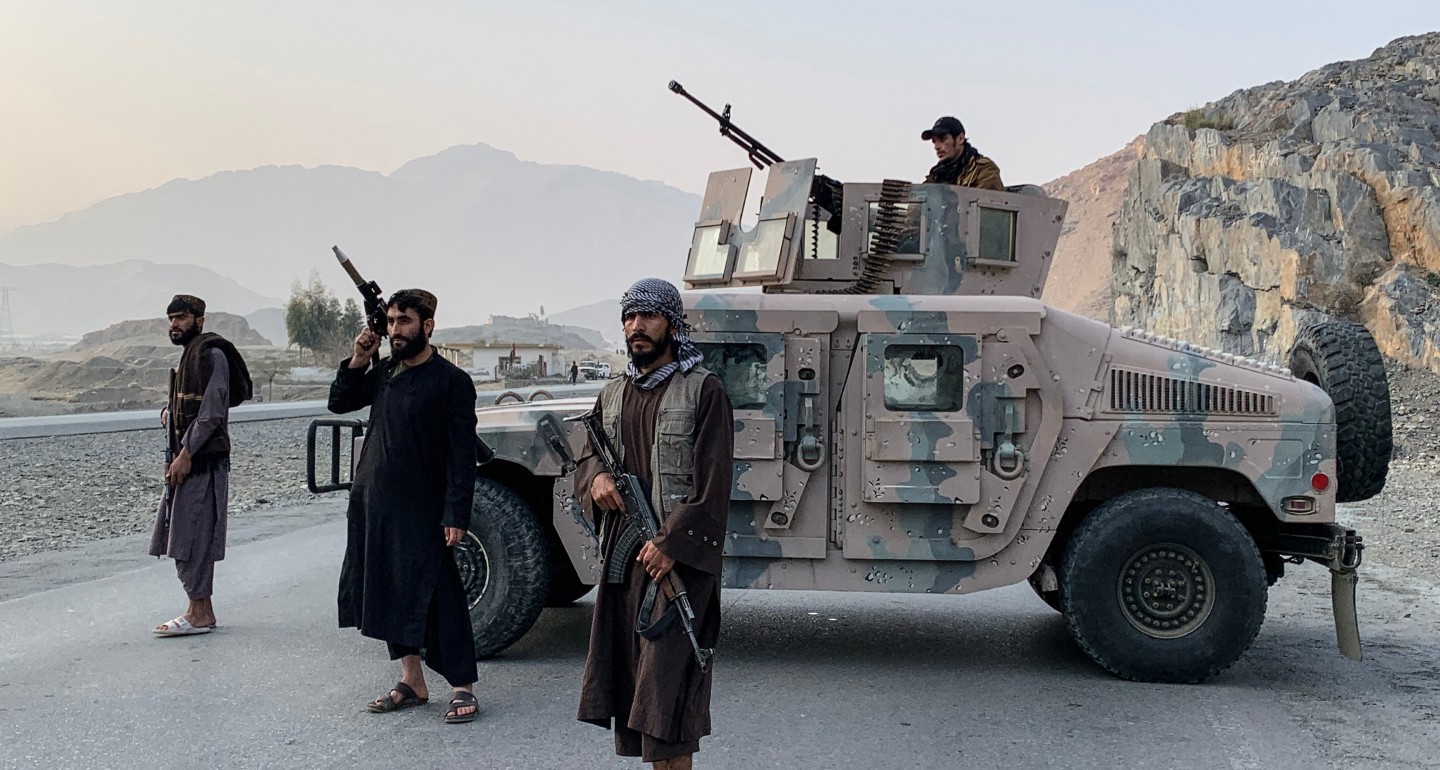
The latest fighting between Afghanistan and Pakistan may have been overshadowed by the U.S. and Israeli attacks on Iran, but for the Kremlin, the conflict poses a challenge. Both Afghanistan and Pakistan are important Russian partners, and each subsequent military escalation weakens regional security and undermines the concept of the Global South that has been heavily promoted by Moscow. Despite claims by Russian officials that the Shanghai Cooperation Organization (SCO) and BRICS group of developing nations could form the basis for a new world order, the practical help these groups can offer in conflict situations has been shown—yet again—to be limited.
The Afghanistan-Pakistan confrontation began on February 26, two days before the start of the war in the Middle East. While the fighting has received little attention, hundreds have been killed on both sides. After an eleven-day ceasefire for Eid al-Fitr, hostilities resumed on March 29, and further escalation is possible at any moment.
This is hardly the first time the two countries have fought one another. The main reason for clashes in recent years has been the militant group Tehreek-e-Taliban Pakistan, also known as the Pakistani Taliban. Islamabad sees Tehreek-e-Taliban Pakistan as an active terrorist network that regularly carries out attacks in Pakistan—and believes it’s being harbored by Kabul. The Taliban in Kabul has always said that it has no links to Tehreek-e-Taliban Pakistan.
Another long-running issue is a dispute over the Afghanistan–Pakistan border, which was arbitrarily established in 1893 by a treaty between Abdur Rahman Khan, the emir of Afghanistan, and Sir Mortimer Durand, a representative of the British colonial government in India. Because the so-called Durand Line bisects a region where ethnic Pashtuns have lived for centuries, successive Afghan governments—including the Taliban (which is mostly Pashtun)—have refused to recognize it. Each armed escalation between Pakistan, which became independent in 1947, and Afghanistan has begun with clashes along the disputed border.
A final cause of the tension is the estimated 1.5 million Afghan refugees living in Pakistan. In October 2023, Pakistan approved a plan to repatriate over a million undocumented foreign citizens—most of them Afghans—and since then, about 600,000 Afghans have been forcibly deported. The removals continue to this day.
Regardless of its historical roots, the current fighting poses a number of awkward questions for Russia: not least because Moscow sees both Kabul and Islamabad as key partners in the Global South—and as ideological allies when it comes to efforts to build a new, multipolar world.
Russia removed the Taliban from its list of terrorists in 2025, becoming the first country in the world to recognize the former rebels as the legitimate government of Afghanistan. One reason for this move was that it was important for the Kremlin to support forces in the Global South that share its anti-Western convictions. Another was that it wanted Afghan support to tackle terrorism, particularly following the deadly attack on Moscow’s Crocus City concert hall in 2024, for which militants from the Afghan wing of the Islamic State claimed responsibility.
If cooperation does allow Moscow to minimize the terrorist threat, then Russia will likely seek to boost trade with Afghanistan (at the moment, it fluctuates in value between $300 million and $400 million per year), and participate in infrastructure and investment projects. For example, discussions about Russian Railways taking part in the development of Afghanistan’s rail network have been underway for years. Admittedly, progress has been limited to public statements of intent.
Pakistan is no less of an important partner for Russia. With its population of 250 million (the fifth biggest in the world), it plays a major role in the various international organizations in which the Kremlin lobbies for the dismantling of Western dominance and establishment of a new global order. With Russian support, Pakistan became a member of the SCO in 2017, and is expected to join BRICS later in 2026. Pakistan is also a permanent member of the Moscow Format Consultations on Afghanistan that are supposed to help Kabul with counter-terrorism and stopping the drug trade.
The economic relationship between Russia and Pakistan has strengthened in recent years. The value of trade between the two countries doubled from $697 million in 2021 (before Russia’s full-scale invasion of Ukraine) to $1.3 billion in 2024. Most of this is agricultural goods. In 2024, Moscow hosted the inaugural Pakistan–Russia trade and investment forum.
It’s unsurprising, therefore, that the Kremlin is not happy about the latest war. First and foremost, it threatens the entire system of regional security, and could stymie joint plans for fighting terrorism and the drug trade. But the conflict between two members of the Global South could also undermine Moscow’s efforts to promote groups that it believes can act as counterweights to the Western-centric world order. Neither the SCO, nor BRICS, nor other groups that include Russia have been able to influence the course of the Pakistan–Afghanistan war—revealing their own weakness.
Russia’s ability to influence events on what it considers to be the southern edge of its sphere of influence has also been shown to be minimal. Moscow did offer to mediate between Kabul and Islamabad—but was turned down. After all, it has no way to exert significant political or economic leverage over either side.
Notably, all recent ceasefire agreements between Pakistan and Afghanistan were reached without any input from Moscow. In May 2025, the United States played a key role, and in October 2025, it was Qatar and Turkey that led mediation efforts. This time, the main mediators are Qatar, Turkey, and Saudi Arabia. When it comes to an armed conflict between two members of the Global South, the Kremlin’s ideological narratives about a new world order and standoff with the West are of little use.

Non-resident research fellow, the Institute for Development and Diplomacy (Azerbaijan)
Recent Work
Ruslan Suleymanov
Ruslan Suleymanov
Carnegie does not take institutional positions on public policy issues; the views represented herein are those of the author(s) and do not necessarily reflect the views of Carnegie, its staff, or its trustees.

This year’s wars have made alternative routes to transit through Russia no less risky for Central Asian countries.

Galiya Ibragimova
Disillusioned with the West over Gaza, Arab countries are not only trading more with Russia; they are also more willing to criticize Kyiv.
Ruslan Suleymanov

Baku may allow radical nationalists to publicly discuss “reunification” with Azeri Iranians, but the president and key officials prefer not to comment publicly on the protests in Iran.

Bashir Kitachaev
It’s one thing to export Russian helicopters to Iran to fight the insurgency, and it’s easy to imagine Moscow becoming a haven for fleeing Iranian leaders. But it’s very difficult to imagine Russian troops defending the Iranian regime on the ground.

Nikita Smagin
The U.S. president’s successful imposition of a ceasefire on notorious sworn enemies who have both agreed to make concessions only highlights Putin’s intransigence and his lack of competence and reason.

Alexander Baunov