

Commentary
Uri Dadush
{
  "authors": [
    "Uri Dadush"
  ],
  "type": "questionAnswer",
  "centerAffiliationAll": "",
  "centers": [
    "Carnegie Endowment for International Peace",
    "Carnegie Europe"
  ],
  "collections": [],
  "englishNewsletterAll": "",
  "nonEnglishNewsletterAll": "",
  "primaryCenter": "Carnegie Endowment for International Peace",
  "programAffiliation": "",
  "programs": [],
  "projects": [],
  "regions": [
    "Western Europe",
    "Europe",
    "North America"
  ],
  "topics": [
    "Economy"
  ]
}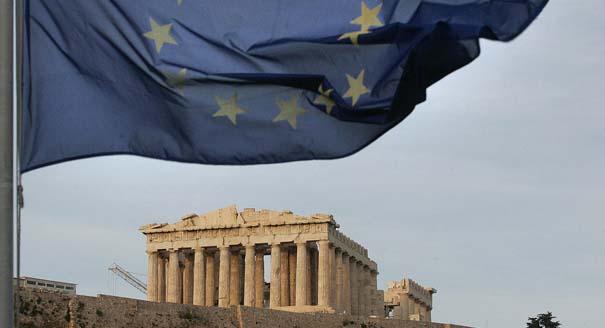
Source: Getty
Greece’s economic imbalances are neither unprecedented nor — with help — unmanageable. Given the business, banking, and political interests in a positive outcome, Greece will either rescue itself, or be rescued.
Greece’s debt crisis and loss of competitiveness are raising concerns far beyond its borders, including the viability of the single currency and the recovery of the euro zone. European leaders have promised to support Greece and safeguard the euro, but resisted an immediate bailout.
In a new video Q&A, Uri Dadush analyzes the dangers this new crisis poses for other vulnerable countries and recommends actions for policy makers in Greece, Europe, and the G20 to deal with the fallout. Dadush says that while this is the biggest test the euro area has faced, Greece’s imbalances are neither unprecedented nor—with help—unmanageable. “Given the business, banking, and political interests in a positive outcome, Greece will either rescue itself, or be rescued."

Former Senior Associate, International Economics Program
Dadush was a senior associate at the Carnegie Endowment for International Peace. He focuses on trends in the global economy and is currently tracking developments in the eurozone crisis.
Recent Work
Uri Dadush
Uri Dadush
Carnegie does not take institutional positions on public policy issues; the views represented herein are those of the author(s) and do not necessarily reflect the views of Carnegie, its staff, or its trustees.
Andrey Melnichenko’s essay offers no answer to the fundamental question of how, under any kind of negotiated settlement, Europe can protect itself from the Russian ressentiment that is inevitable in all scenarios except for an outright victory for Putin.

Leonid Bershidsky

Whether PAS can refocus on the unfinished business of state-building may ultimately prove more consequential for Moldova’s European future than the pace of its accession negotiations.

Balázs Jarábik

A much-discussed disagreement over internet restrictions in Russia was never an existential threat for Putin: It was about elite groups protecting their interests.

Alexandra Prokopenko

The demands of the Kremlin’s war in Ukraine, demographic problems, and public hostility toward Central Asians mean Russia does not have enough workers.

Salavat Abylkalikov
Minsk’s faith in the future of its larger neighbor’s economy is fading as Belarusian firms in Russia see record losses.

Olga Loiko