

Commentary
Nikolay Petrov
{
  "authors": [
    "Nikolay Petrov"
  ],
  "type": "other",
  "centerAffiliationAll": "",
  "centers": [
    "Carnegie Endowment for International Peace",
    "Carnegie Europe",
    "Carnegie Russia Eurasia Center"
  ],
  "collections": [],
  "englishNewsletterAll": "",
  "nonEnglishNewsletterAll": "",
  "primaryCenter": "Carnegie Russia Eurasia Center",
  "programAffiliation": "",
  "programs": [],
  "projects": [],
  "regions": [],
  "topics": []
}
Source: Getty
Russia's system of government administration is inefficient, unable to cope with both a transition of political power and the economic crisis at the same time. To ensure its own survival, the Russian regime must modernize itself.
During 2009, Dmitry Medvedev’s first full year as president, the system continued the process of adjusting, reorganizing itself and adapting to the ruling tandem and the ongoing financial and economic crisis. Already weakened by the political course taken during Vladimir Putin’s years in power, the institutions of government continued their decline. The last remaining strong institution – the presidency – lost its former status, thus speeding up the transition to a network state based on informal institutions and agreements. One of the ways the system of personified power has adapted to the new situation is to create a series of clone-institutions that can substitute for each other. The result is that Medvedev now has a sort of “development cabinet” in the form of the Commission on Economic Modernization, while Putin has his own version of the State Council Presidium in the Commission on Regional Development.
This whole unwieldy system of government, focused on carrying out standardized tasks and transmitting signals from the top, is poorly adapted to operating in a crisis. Numerous glitches in the decision-making process are just one sign of how ineffective the system has become. It perhaps could have coped with adjusting separately to the tandem or to the crisis, but facing both at once is too much.
The crisis has helped to decentralize political life, but the authorities have still not renounced the paternalistic “state/citizens” and “center/regions” model of relations, although the authorities’ position has undergone some serious transformation during the year. This is especially evident in the election process. Afraid that the crisis would deepen, the authorities loosened their grip a little last spring and made a few changes, liberalizing the electoral system somewhat. But this liberalization did not last long, and the government evidently decided that the worst was over economically and that things could gradually return to normal.
Those who saw the fall of Putin’s social contract – under which the government guarantees rising living standards while citizens accept the role of passive spectator rather than active political participant – were too quick to jump. Sadly, the idea that the authorities would be capable of modernizing the system themselves for their own survival’s sake has been proved equally wrong.
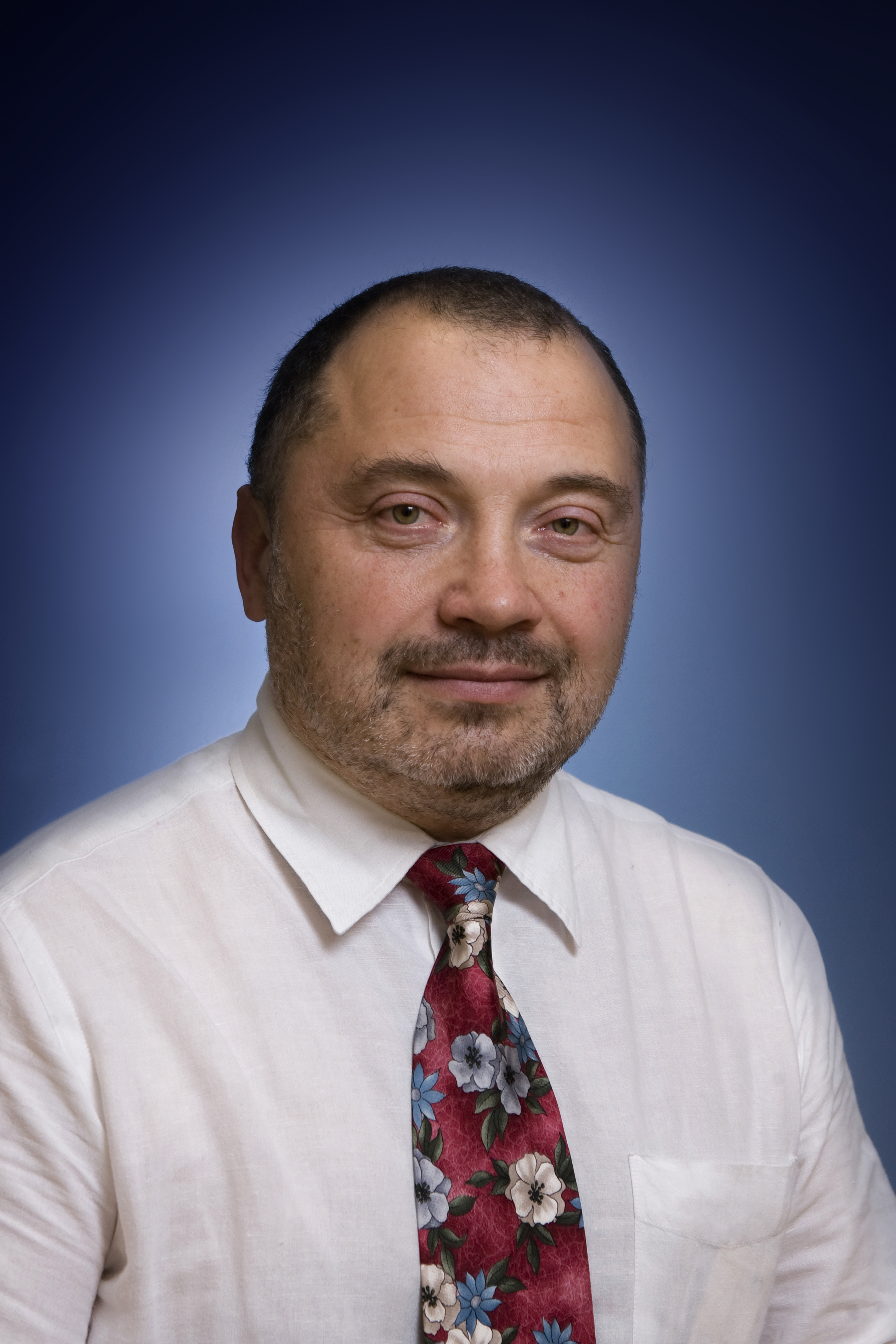
Former Scholar-in-Residence, Society and Regions Program, Moscow Center
Nikolay Petrov was the chair of the Carnegie Moscow Center’s Society and Regions Program. Until 2006, he also worked at the Institute of Geography at the Russian Academy of Sciences, where he started to work in 1982.
Recent Work
Nikolay Petrov
Nikolay Petrov
Carnegie does not take institutional positions on public policy issues; the views represented herein are those of the author(s) and do not necessarily reflect the views of Carnegie, its staff, or its trustees.