

Commentary
Minsk clearly expected the dialogue with Washington to yield more results, in particular the lifting of EU sanctions and permission to export potash.
Artyom Shraibman
{
  "authors": [
    "Pieter Bottelier",
    "Uri Dadush"
  ],
  "type": "legacyinthemedia",
  "centerAffiliationAll": "dc",
  "centers": [
    "Carnegie Endowment for International Peace"
  ],
  "collections": [],
  "englishNewsletterAll": "asia",
  "nonEnglishNewsletterAll": "",
  "primaryCenter": "Carnegie Endowment for International Peace",
  "programAffiliation": "AP",
  "programs": [
    "Asia"
  ],
  "projects": [],
  "regions": [
    "North America",
    "United States",
    "East Asia",
    "China"
  ],
  "topics": [
    "Economy",
    "Trade"
  ]
}
Source: Getty
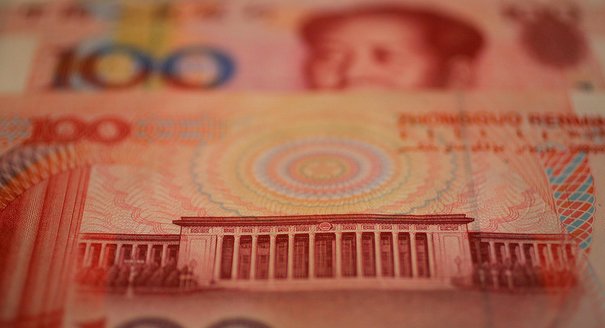
The debate over China's currency propagates dangerous myths about both the Chinese economy and the potential benefits of a more expensive renminbi for the United States.
Source: International Herald Tribune

Though returning to a more flexible and appreciating currency is in China’s interest, dangerous myths about China’s economy, and the benefits to the U.S. of a more expensive renminbi, are again being propagated, feeding China bashers and protectionist lobbies while endangering a crucial relationship. Some of the myths:
China’s growth has depended primarily on exports. Exports are important to China, but domestic demand is the overwhelming growth-driver. As China’s imports grew almost as fast as exports during the decade preceding the crisis, net-exports accounted for only about 1 percentage point of China’s 9.5 percent average annual growth rate.
China did not contribute enough to global demand during the crisis. As a result of China’s aggressive and successful stimulus program, domestic demand expanded 12.3 percent in 2009 (while it contracted 2.6 percent in the United States). As a result, China’s current account surplus and the U.S. deficit declined sharply. China did more than any other country to pull the world out of the recession.
China’s consumption is not growing fast enough. Private consumption grew by an average of about 7.5 percent per year over the 10 years prior to the crisis, faster than in any other large economy, though investment and gross domestic product grew even faster, causing the consumption/G.D.P. ratio to fall to an unusually low level. In 2009 China’s consumption grew faster than G.D.P. for the first time in many years.
Revaluation of the renminbi will help the United States. The immediate effect of renminbi appreciation will be to raise prices for U.S. consumers. A 25 percent revaluation of the renminbi, which some economists have said is needed, would — if not offset by a reduction in China’s prices — add $75 billion to the U.S. import bill. And since the United States imports three times as much from China as it exports there, higher U.S. exports to China would not nearly offset the welfare loss to U.S. consumers from higher Chinese prices.
In the end, though some U.S. firms would gain and some export jobs would be created, the U.S. consumer would be the loser.
Revaluation of the renminbi is critical to reducing global trade imbalances. A revaluation of the renminbi by itself would do little to redress global imbalances, and could, as mentioned, initially lead to a wider U.S.-China trade deficit. Most likely, unless U.S. domestic demand falls for other reasons, the overall U.S. trade deficit would in the end hardly budge as the U.S. would simply import more from other countries.
China has manipulated its currency for years. About 60 countries peg their exchange rates to the dollar today, and they are not all manipulators. China pegged the renminbi in the midst of the Asian crisis in 1997, winning plaudits from the U.S. and other countries for contributing to regional stability.
Complaints arose in 2003 as China’s trade surplus and the U.S.-China trade deficit widened, a trend that accelerated in subsequent years.
China’s currency became undervalued primarily because of questionable U.S. macroeconomic policies and inadequate oversight of the U.S. financial system that contributed to an explosion of liquidity and a debt-financed consumption boom fed, in part, by inexpensive imports from China.
Fast productivity growth in China’s manufacturing sector, due to aggressive market reforms since the late 1990s, combined with export promotion and import substitution policies, contributed to the growing trade imbalances. In 2005 China adopted a policy of gradual renminbi appreciation. Its currency rose by 21 percent over the three years to July 2008 when a sharp drop in export orders, due to crisis conditions in the U.S., brought suspension of the policy.
Sterile debates on China’s currency take attention away from more important but politically tougher reforms in the U.S., such as increased consumption and energy taxes.
As for China, a more flexible, appreciated currency is clearly in its interest as it would give it more control over its monetary policy and reduce prices of imported goods to its consumers.
China’s nominal exchange rate is much less important than the domestic policy adjustments needed in both countries.

Former Nonresident Scholar, International Economics Program
Bottelier was a nonresident scholar in Carnegie’s International Economics Program and senior adjunct professor of China studies at the School of Advanced International Studies (SAIS), the Johns Hopkins University. His work currently focuses on China’s economic reform and development.

Former Senior Associate, International Economics Program
Dadush was a senior associate at the Carnegie Endowment for International Peace. He focuses on trends in the global economy and is currently tracking developments in the eurozone crisis.
Carnegie does not take institutional positions on public policy issues; the views represented herein are those of the author(s) and do not necessarily reflect the views of Carnegie, its staff, or its trustees.

Minsk clearly expected the dialogue with Washington to yield more results, in particular the lifting of EU sanctions and permission to export potash.

Artyom Shraibman

Depleted financial reserves and a shrinking tax base mean it is no longer possible to simultaneously deliver high defense spending, price stability, and economic growth.

Alexandra Prokopenko

With the growth in points of friction between the great powers, organizations like the SCO will continue to play a role in the strategic adaptation of the smaller powers caught between them.

Temur Umarov

When faced with fuel shortages in the past, Central Asian governments could always count on additional supplies from Moscow. That safety net no longer exists.

Galiya Ibragimova
Russia looks set to reap economic benefits from closer ties with Southeast Asian countries that are keen to find reliable energy suppliers and diversify trade ties.

Alexander Gabuev