

Commentary
Uri Dadush
{
  "authors": [
    "Uri Dadush"
  ],
  "type": "legacyinthemedia",
  "centerAffiliationAll": "",
  "centers": [
    "Carnegie Endowment for International Peace"
  ],
  "collections": [],
  "englishNewsletterAll": "",
  "nonEnglishNewsletterAll": "",
  "primaryCenter": "Carnegie Endowment for International Peace",
  "programAffiliation": "",
  "programs": [],
  "projects": [],
  "regions": [
    "Western Europe",
    "United Kingdom",
    "France",
    "Germany",
    "North America"
  ],
  "topics": [
    "Economy"
  ]
}
Source: Getty
The problems that led to the crisis in Europe go beyond just fiscal profligacy and will take a long time to correct. Though the euro will likely survive the adjustment, the crisis could still have a profound effect on the global economy.
Source: Voice of America
Though the crisis in Europe is not expected to be as devastating as the financial crisis in 2008, Uri Dadush explains that it will likely last longer. Europe’s problems “cannot be dealt with very quickly. You need to correct not just the government debt problems and the fiscal problems which are the result of very deep recessions, but you also have to do something about making these economies more competitive.” The dissolution of the Euro area is unlikely, but it is conceivable that one or two countries, including Greece, could decide to leave the Euro area in order to facilitate the adjustments needed to resolve the crisis.
Dadush also notes that the crisis is not confined to Europe. Problems in the Euro area, one of the world’s largest export markets, will impact economies around the world. Major trading partners, including the United States and China, will lose competitiveness relative to Europe as the value of the euro falls. For the United States, however, the biggest risk from the Euro crisis comes through financial channels. If the crisis intensifies, European banks would be hit with big losses that could cause credit markets to tighten again.

Former Senior Associate, International Economics Program
Dadush was a senior associate at the Carnegie Endowment for International Peace. He focuses on trends in the global economy and is currently tracking developments in the eurozone crisis.
Recent Work
Uri Dadush
Uri Dadush
Carnegie does not take institutional positions on public policy issues; the views represented herein are those of the author(s) and do not necessarily reflect the views of Carnegie, its staff, or its trustees.
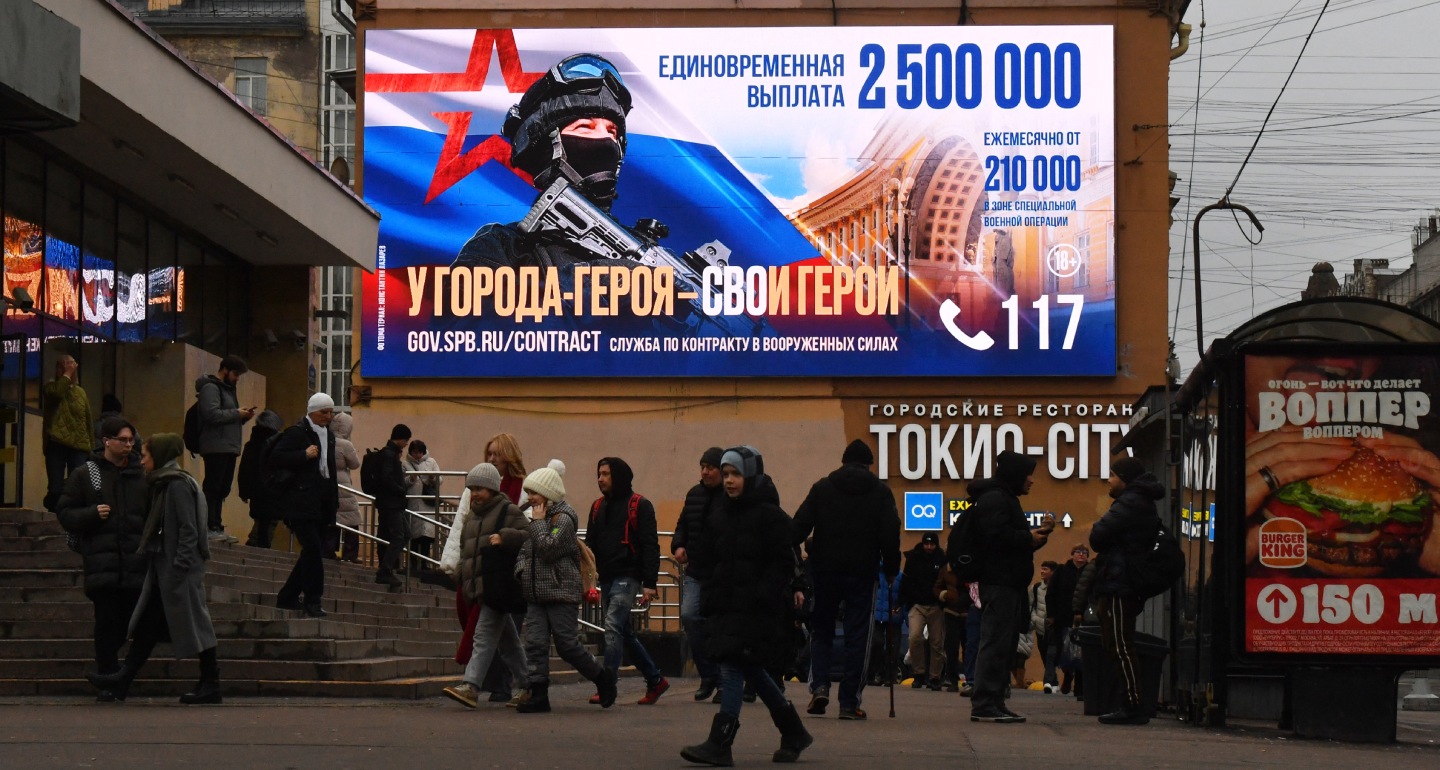
The Russian army is not currently struggling to recruit new contract soldiers, though the number of people willing to go to war for money is dwindling.

Dmitry Kuznets
The paradox of the European Commission’s decision is that the main victims will not be those it formally targets. Major Russian businesses associated with the Putin regime have long adapted to sanctions with the help of complex schemes involving third countries, offshore companies, and nonpublic entities.
Alexandra Prokopenko
A new book by Alexandra Prokopenko looks at why the Russian ruling class became the regime’s willing servants—and how they might fare in a post-Putin world.

Vladislav Gorin

The volume of frozen private assets might seem insignificant compared with Russia’s sovereign reserves, but these are the savings of millions of people who believed that foreign securities were a safe investment and in the institution of private property.
Yulia Starostina
International compliance and anti-money laundering standards are currently formulated in such a way that the Western financial system does not differentiate between Russian political prisoners and ISIS militants.
Alexandra Prokopenko