

Commentary
Russian strikes are weakening the economy sustaining Ukraine’s war effort. Closing the growing funding gap will require more European support and politically contentious reforms in Kyiv.
Balázs Jarábik
{
  "authors": [
    "Matthew Rojansky",
    "Lyndon Allin"
  ],
  "type": "legacyinthemedia",
  "centerAffiliationAll": "dc",
  "centers": [
    "Carnegie Endowment for International Peace",
    "Carnegie Europe",
    "Carnegie Russia Eurasia Center"
  ],
  "collections": [],
  "englishNewsletterAll": "ctw",
  "nonEnglishNewsletterAll": "",
  "primaryCenter": "Carnegie Endowment for International Peace",
  "programAffiliation": "russia",
  "programs": [
    "Russia and Eurasia"
  ],
  "projects": [],
  "regions": [
    "Caucasus",
    "Russia",
    "Eastern Europe",
    "Western Europe",
    "Moldova",
    "Europe"
  ],
  "topics": [
    "Foreign Policy"
  ]
}
Source: Getty
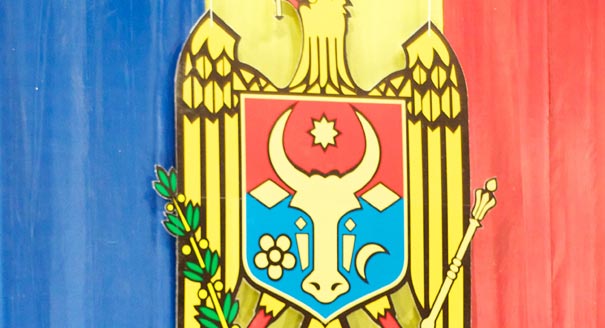
Resolving the conflict over Moldova’s breakaway region of Transdnestr would have wide-reaching positive implications for Russia, the EU, and the United States, but this opportunity will be lost if the issue is not addressed in the near future.
Source: The Moscow Times

Transdnestr declared its independence from Moldova during the breakup of the Soviet Union. The brief war that ensued was quickly stopped by Russian forces, which remain in the territory along with a massive Soviet-era arsenal.
Following a summit between Russia and the European Union in June, there were reports that President Dmitry Medvedev and German Chancellor Angela Merkel discussed the situation and that Moscow might be prepared to back a resolution of the longstanding conflict and possibly withdraw some of its forces from Transdnestr in exchange for a visa-free travel regime with Europe. This followed a meeting between Medvedev and Ukrainian President Viktor Yanukovych in Kiev in May in which they said the conflict in Transdnestr was a top priority for both countries.
Meanwhile, the brief suspension of Russian aid payments to Transdnestr prior to Deputy Foreign Minister Grigory Karasin’s visit to Tiraspol in July may have been intended to remind the local leadership that the territory exists only with Russia’s support. What’s more, after the International Court of Justice ruled in late July that Kosovo’s 2008 declaration of independence was permissible under international law, Russia carefully avoided suggesting that this could be a precedent for a similar move by Transdnestr.
In short, Russia may be prepared to consider giving up its military foothold on the EU’s southeastern doorstep — and on Ukraine’s western flank — for more meaningful access to European markets. Russia now appears to recognize that its economic interests are more important than the costly projection of military power in the region. Offering a concession to European and U.S. interests in resolving this longstanding frozen conflict would strengthen Russia’s hand as it seeks economic engagement with the West and assistance with its domestic modernization agenda.
Conflict resolution is obviously a priority for cooperation between the EU and Russia. Transdnestr makes Moldova weak and less prosperous, and this presents a potential security vacuum on the border of the EU. But this is also a clear opportunity for U.S.-Russian cooperation and can take advantage of the improved atmosphere amid the “reset.” The United States wants to see stable and prosperous democracies take shape in the greater Black Sea region.
Solving the conflict over Transdnestr is the key to Moldova’s eventual integration with Europe. In turn, a thaw would help normalize and institutionalize Ukraine’s unique position between Russia and the West by increasing the security and transparency of interactions on its western border.
Moscow’s help is needed to ensure that the Russian peacekeeping mission itself is not an obstacle to a long-term resolution. Russia can play a productive role by encouraging the authorities in Transdnestr to embrace an internationalized peacekeeping force that would eventually allow the EU to shoulder most of the burden. While it may be difficult for Russia to disengage from its traditional role as Tiraspol’s exclusive patron, Russia stands to reap considerable benefits from demonstrating its commitment to behaving as a responsible stakeholder in the European security system.
It is also in the interests of both the United States and Russia to see the EU take greater initiative in addressing this challenge in its own backyard. Germany, which has invested considerable diplomatic capital in recent months, and Romania, which recently emphasized that resolving this conflict is a priority, should push the EU to speak with one voice and remind Moldovan leaders that nationalist provocations do not serve their own long-term interests in European integration. The EU can also make Moldova more attractive to residents of Transdnestr right now by finding a mechanism for visa-free travel for Moldovans to Europe.
Because Russia views the United States as its principal global counterpart and the most important potential opponent or guarantor of its interests in the post-Soviet space, Washington has a unique opportunity to make Transdnestr a priority of the bilateral presidential commission’s working group on international security. In addition, the United States is well-positioned to work with member states of the World Trade Organization, including Moldova, to lower barriers to Russia’s WTO accession as a benefit of cooperation on Transdnestr.
Capitalizing on the positive trends of recent months will require a cooperative, transparent and creative approach not only from Moldova and Transdnestr, but also from Russia, Europe and the United States. As the world remembers the violence that erupted two years ago this month in South Ossetia, it should not be forgotten that the formerly frozen conflicts in Georgia were also neglected for years as hopelessly complex and unworthy of attention by Western leaders and governments. If attention is not focused on Transdnestr in the near future, a valuable opportunity will be lost.
Lyndon Allin is a Washington-based lawyer who served as IREX embassy policy specialist in Moldova from 2008 to 2009. Matthew Rojansky is deputy director of the Russia and Eurasia program at the Carnegie Endowment for International Peace.

Former Deputy Director, Russia and Eurasia Program
Rojansky, formerly executive director of the Partnership for a Secure America, is an expert on U.S. and Russian national security and nuclear-weapon policies.
Lyndon Allin
Former EASI-Hurford Next Generation Fellow
Lyndon Allin is a political officer with the Organization for Security and Cooperation in Europe Mission to Moldova.
Carnegie does not take institutional positions on public policy issues; the views represented herein are those of the author(s) and do not necessarily reflect the views of Carnegie, its staff, or its trustees.

Russian strikes are weakening the economy sustaining Ukraine’s war effort. Closing the growing funding gap will require more European support and politically contentious reforms in Kyiv.

Balázs Jarábik

Despite a new textbook, an influx of Russian teachers and managers, and an end to the teaching of Ukrainian, the Kremlin is unlikely to have “reprogrammed” locals.

Konstantin Skorkin

For every ruble allocated to social policy, health, and education in 2027, double that amount is earmarked for the army, the police, and the security services.

Alexandra Prokopenko

Cargo traffic through Russia’s Northern Sea Route has increased because of the disruption caused by the conflict in the Middle East, the Ukraine war, and U.S.-China tensions.

Mikhail Korostikov
An analysis of traffic accident data suggests that Ukrainian drone attacks caused a material but not disastrous fall in Russian gasoline consumption over the summer.

Sergey Vakulenko