

Q&A
- +1
Sheena Chestnut Greitens, Oriana Skylar Mastro, Yukon Huang, …
{
  "authors": [
    "Yukon Huang"
  ],
  "type": "legacyinthemedia",
  "centerAffiliationAll": "dc",
  "centers": [
    "Carnegie Endowment for International Peace",
    "Carnegie Europe",
    "Carnegie China"
  ],
  "collections": [],
  "englishNewsletterAll": "asia",
  "nonEnglishNewsletterAll": "",
  "primaryCenter": "Carnegie Endowment for International Peace",
  "programAffiliation": "AP",
  "programs": [
    "Asia"
  ],
  "projects": [],
  "regions": [
    "East Asia",
    "China"
  ],
  "topics": [
    "Economy"
  ]
}
Source: Getty
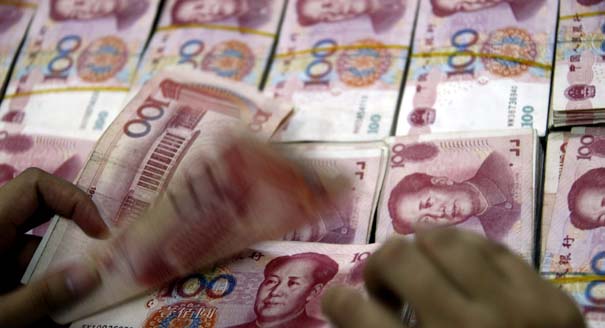
While assessments of Chinese economic imbalances often rely on flawed statistics that understate consumption and overestimate investment, the country’s share of consumption to GDP will not rise significantly until Beijing increases welfare spending or divests itself of state assets.
Source: Wall Street Journal

The prevailing impression is that Chinese consumption has been surging for years. There are countless reports of double-digit growth rates in luxury goods, fast-food outlets and home furnishings to go along with the property boom. How can one reconcile retail sales that are growing at 15-20% annually with national accounts data that show personal consumption growing only 8-9%? Retail sales are not the same as consumption in national accounts, but the correlation is strong over time.
This raises suspicions that something is amiss, quite possibly that domestic consumption is seriously understated. The head of the national accounts department at China's bureau of statistics acknowledged in 2009 that official household consumption figures are deficient. The statistics are based on obsolete, 30-year-old sample survey procedures; don't take full account of cash transactions that prevail in China; don't include fully non-cash provision of education and health services; and have not been adjusted to reflect the current market values for owner-occupied housing.
As a result of high sales taxes, household purchases are increasingly not being tracked. Part of this stems from the way Beijing administers its value-added tax, which makes it harder to catch evasion compared to other countries.
Moreover, the rapid growth in services is also not fully recorded in an accounting system that has difficulty covering smaller private transactions. This has been a major problem as China's accounting moves from a socialist-based "material product" approach to the U.N. System of National Accounts used in market economies. For example, in 2004 the share of services in GDP had to be adjusted upward by 30%. More remains to be done. It is almost certain that the official numbers understate reality.
On the other hand, estimates of the share of investment in GDP are too high. This is in part because GDP estimates of fixed investment do not adequately adjust for the rising costs of land purchases which thus inflate these estimates, as Goldman Sachs has written. It seems, then, that the GDP indicators of consumption and investment are inaccurate.
China's GDP—like consumption—is likely much higher than reported. A Morgan Stanley study estimates that in 2008, GDP was about 30% higher than official figures, and per capita consumption was as much as 80% higher. Other studies indicate that household income is understated by some 20-30% and thus GDP is also much larger in reality. Overall, GDP might be 10-15% higher; the true consumption-to-GDP ratio may be 40-45% and investment 35-40%.
Yes, these ratios are still extreme compared to other countries. But they are not that unusual given China's economic structure and its stage of development.
Over the past 20 years, China's official consumption-to-GDP ratio fell from around 50% to 35%, a total of 15 percentage points. Three comparable economies—Japan, Taiwan and South Korea—saw their consumption-to-GDP ratios fall by 20-40 percentage points during equivalent two-decade periods when they were industrializing rapidly.
What makes China unusual today is not the size of the decline in the consumption-to-GDP ratio but its absolute value. That ratio is currently 15-20 percentage points lower than that of other countries.
The flawed data explain about half of the difference, but the rest is admittedly due to Beijing's policies. All land and major industrial enterprises are owned by the state, and hence the returns from these assets accrue largely to local authorities and state enterprises, not to private households. As noted by the International Monetary Fund, income from investments and government transfers account for less than 10% of household disposable income, compared to 20-30% in other countries. Consumption is largely shaped by trends in household disposable income.
There are two conclusions to take away from all this. First, predictions of any imminent economic collapse, because of the supposed imbalance between consumption and investment, are on shaky grounds. There are other reasons for China's growth model being vulnerable. But this isn't one of them.
Second, more attention should be paid to the role of government expenditures. Economists usually look at consumption and investment and make their conclusions, but they should be looking at how the state transfers payments or provides services that end up as household consumption.
Theoretically, in a socialist state, a much larger share of public social expenditures should supplement household consumption. But the reality is that China's public social expenditures and transfers to households as a share of GDP are far below the norm as one would have expected, in large part because the returns of the socialist part of China's economy are not going to households. Unless China increases welfare spending or divests itself of these state assets, it is almost impossible for the share of consumption to GDP to rise to the same level seen in other countries.

Senior Fellow, Asia Program
Huang is a senior fellow in the Carnegie Asia Program where his research focuses on China’s economy and its regional and global impact.
Recent Work


Sheena Chestnut Greitens, Oriana Skylar Mastro, Yukon Huang, …


Yukon Huang, Isaac B. Kardon, Matt Sheehan

Russian strikes are weakening the economy sustaining Ukraine’s war effort. Closing the growing funding gap will require more European support and politically contentious reforms in Kyiv.

Balázs Jarábik

For every ruble allocated to social policy, health, and education in 2027, double that amount is earmarked for the army, the police, and the security services.

Alexandra Prokopenko

Depleted financial reserves and a shrinking tax base mean it is no longer possible to simultaneously deliver high defense spending, price stability, and economic growth.
Alexandra Prokopenko

With the growth in points of friction between the great powers, organizations like the SCO will continue to play a role in the strategic adaptation of the smaller powers caught between them.

Temur Umarov

A much-discussed disagreement over internet restrictions in Russia was never an existential threat for Putin: It was about elite groups protecting their interests.
Alexandra Prokopenko