• Research
  • Politika
  • About
Carnegie Russia Eurasia center logoCarnegie lettermark logo
  • Donate
{
  "authors": [
    "Matthew Rojansky"
  ],
  "type": "legacyinthemedia",
  "centerAffiliationAll": "dc",
  "centers": [
    "Carnegie Endowment for International Peace"
  ],
  "collections": [],
  "englishNewsletterAll": "ctw",
  "nonEnglishNewsletterAll": "",
  "primaryCenter": "Carnegie Endowment for International Peace",
  "programAffiliation": "russia",
  "programs": [
    "Russia and Eurasia"
  ],
  "projects": [],
  "regions": [
    "Eastern Europe",
    "Belarus"
  ],
  "topics": [
    "Political Reform",
    "Democracy"
  ]
}
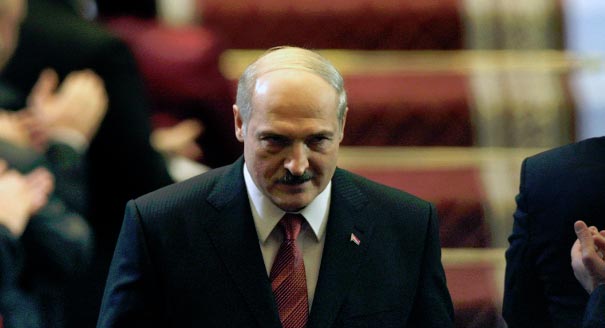
Source: Getty

In The Media

Europe Closes the Door on Belarus

With the latest round of sanctions and the decision to recall ambassadors from Minsk, the European Union has effectively closed the door on Belarus.

Link Copied
By Matthew Rojansky
Published on Feb 29, 2012

Source: Voice of Russia

Since the controversial re-election of Belarusian President Alexander Lukashenka in December 2010—and the accompanying crackdown on many protestors and opposition candidates—relations between Belarus and the European Union have deteriorated. In an interview with Voice of Russia, Carnegie’s Matthew Rojansky argued that the latest round of European Union sanctions on Belarus and the decision to recall EU member states’ ambassadors from Minsk clearly signal that “Europe has closed the door” on Belarus. Although European Union officials—most notably Polish Foreign Minister Sikorski – have traditionally adopted a “soft power approach” toward Belarus, Rojansky noted that Lukashenka has rejected the carrot of European integration and “really spat in their faces.” Rojansky described the pattern in relations between Belarus and the West as one in which “Belarus escalates and the West responds.” As a result, “Lukashenka made himself totally vulnerable and totally exposed to Moscow because he has no friends left in the West,” Rojansky concluded.

About the Author

Matthew Rojansky

Former Deputy Director, Russia and Eurasia Program

Rojansky, formerly executive director of the Partnership for a Secure America, is an expert on U.S. and Russian national security and nuclear-weapon policies.

    Recent Work

  • Paper
    An Opportunity for Ambition: Ukraine’s OSCE Chairmanship

      Matthew Rojansky

  • In The Media
    Presiding Over the OSCE: Challenges and Opportunities

      Matthew Rojansky

Matthew Rojansky
Former Deputy Director, Russia and Eurasia Program
Matthew Rojansky
Political ReformDemocracyEastern EuropeBelarus

Carnegie does not take institutional positions on public policy issues; the views represented herein are those of the author(s) and do not necessarily reflect the views of Carnegie, its staff, or its trustees.

More Work from Carnegie Russia Eurasia Center

  • Commentary
    Carnegie Politika
    Tokayev’s New Constitution Is a Bet on Stability—At Freedom’s Expense

    Kazakhstan’s new constitution is an embodiment of the ruling elite’s fears and a self-serving attempt to preserve the status quo while they still can.

      Serik Beysembaev

  • Commentary
    Carnegie Politika
    The Kremlin Is Destroying Its Own System of Coerced Voting

    The use of technology to mobilize Russians to vote—a system tied to the relative material well-being of the electorate, its high dependence on the state, and a far-reaching system of digital control—is breaking down.

      Andrey Pertsev

  • Commentary
    Carnegie Politika
    Notes From Kyiv: Is Ukraine Preparing for Elections?

    As discussions about settlement and elections move from speculation to preparation, Kyiv will have to manage not only the battlefield, but also the terms of political transition. The thaw will not resolve underlying tensions; it will only expose them more clearly.

      Balázs Jarábik

  • Commentary
    Carnegie Politika
    Where Does the Split in the Ruling Tandem Leave Kyrgyzstan?

    Despite its reputation as an island of democracy in Central Asia, Kyrgyzstan appears to be on the brink of becoming a personalist autocracy.

      Temur Umarov

  • Commentary
    Carnegie Politika
    In Uzbekistan, the President’s Daughter Is Now His Second-in-Command

    Having failed to build a team that he can fully trust or establish strong state institutions, Mirziyoyev has become reliant on his family.

      Galiya Ibragimova

Get more news and analysis from
Carnegie Russia Eurasia Center
Carnegie Russia Eurasia logo, white
  • Research
  • Politika
  • About
  • Experts
  • Events
  • Contact
  • Privacy
Get more news and analysis from
Carnegie Russia Eurasia Center
© 2026 Carnegie Endowment for International Peace. All rights reserved.