

Commentary
Judy Dempsey
{
  "authors": [
    "Judy Dempsey"
  ],
  "type": "legacyinthemedia",
  "centerAffiliationAll": "",
  "centers": [
    "Carnegie Endowment for International Peace",
    "Carnegie Europe"
  ],
  "collections": [],
  "englishNewsletterAll": "",
  "nonEnglishNewsletterAll": "",
  "primaryCenter": "Carnegie Europe",
  "programAffiliation": "",
  "programs": [],
  "projects": [],
  "regions": [
    "Europe"
  ],
  "topics": []
}
Source: Getty
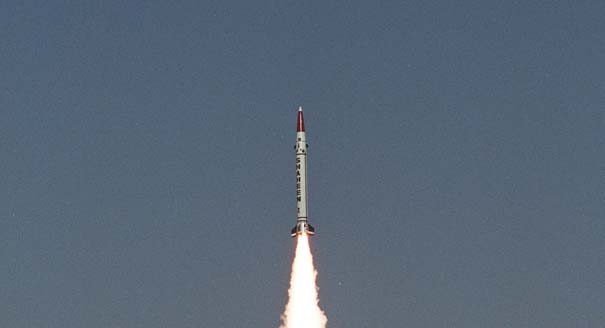
In an interview with Judy Dempsey, Stephen Hadley, national security advisor to former President George W. Bush from 2005 to 2009, discusses missile defense.
Source: Munich Calling

Prior to becoming senior advisor for international affairs, United States Institute of Peace, Mr. Hadley was national security advisor to former President George W. Bush from 2005-2009.
Then, missile defense was such a major contentious issue in relations between Washington and Moscow that former Russian President Vladimir Putin warned a MSC audience of a new cold war if the United States went ahead with its missile defense plans. Mr. Hadley holds a different opinion as he told Judy Dempsey.INTERVIEW WITH STEPHEN HADLEY, JANUARY 30, 2012
DEMPSEY: Mr. Hadley, the Euro Atlantic Security Initiative that you helped conceive has made missile defense one of its core concerns. How can talks with Russia on this very sensitive issue be started?
HADLEY: Actually, they have been going on for some time. There have been conversations at NATO and bilateral discussions between the U.S. and Moscow. The talks have started. The problem is making progress.
DEMPSEY: Where do you see the stumbling blocks?
HADLEY: The politics of missile defense are difficult on both sides. In Russia, particularly the military has reservations. In the United States there are also some concerns, particularly among some of the Republicans. The reality is that nobody is going to be able to commit to any action until the political succession in Russia is resolved and until after the United States had its presidential election. So it is probably a 2013 issue, not a 2012 issue.
DEMPSEY: In other words, we can’t expect much from the NATO summit in May in Chicago?
HADLEY: At this point I don’t think you can expect much of anything from Chicago.
DEMPSEY: As National Security Adviser for President George W. Bush, you and secretary of state Condoleezza Rice kept trying to convince the Russians that missile defense was not directed against them.
HADLEY: The United States has been trying to get Russia to cooperate over missile defense ever since the Ronald Reagan administration. When the Strategic Defense Initiative was conceived, President Reagan offered to share technology with Russia. Bush 41, (41st president) Clinton, and Bush 43 all tried to find a way forward to work with Russia over missile defense. This has been a more than 20-year effort to get the Russians to understand that it is in their interest to do missile defense cooperatively. But so far it has not happened.
DEMPSEY: Why is it so difficult?
HADLEY: In many ways, Russian politics has not left behind the Cold War attitude.
Even in the discussions about Syria, you see that Russia still looks at foreign policy through the lens of U.S.- Russia competition during the Cold War. They take that history and import it to the present policy. That’s why they think that missile defense somehow is a cover for an effort against them. That’s a real problem, and I’m not sure we are going to make progress on missile defense until Russia actually starts looking forward. Until they close the door on the past and start looking at a cooperative future, cooperation between Russia and Europe and Russia and the United States will not make much progress.
DEMPSEY: Nevertheless, with EASI, you have made a proposal on missile defense.
We -- a group of Russians, Americans and Europeans – developed an approach from the bottom up. I think it meets both the concerns that the Russian military and national security people have and the concerns that some of our Senate Republicans have. Our approach would also fully satisfy the framework for missile defense cooperation that the Defense Authorization Bill recently set out. We hope that it will show Russian, American and NATO negotiators a way towards an approach that would work. But so far, as I said earlier, the politics are not ripe. It is an issue that those who actually have the responsibility for these matters will have to revisit in 2013.
DEMPSEY: You are suggesting that the Republican side is on board?
HADLEY: They have reservations. They do not want classified information to go to the Russians for fear that they might pass it on to the Iranians. In our approach we recognize that the United States will have sensitive information that it will not want to share with Russia, and that Russia will have sensitive information that it will not want to share with the United States. But with cooperation we can still enhance the defense capabilities of both Russia and NATO.
DEMPSEY: When you think of the recent improvements in the relations between Poland and Russia, can it be done?
HADLEY: Poland is a very encouraging example about what can be accomplished.
This article was originally published in the Munich Security Conference's Munich Calling.

Nonresident Senior Fellow, Carnegie Europe
Judy Dempsey is a nonresident senior fellow at Carnegie Europe
Recent Work
Judy Dempsey
Judy Dempsey
Carnegie does not take institutional positions on public policy issues; the views represented herein are those of the author(s) and do not necessarily reflect the views of Carnegie, its staff, or its trustees.

The truth of the strategic situation is that Europe and Russia are extremely unlikely to be able to “turn the page” on their confrontation within the next two decades.
Arkady Moshes

The European far right might fail to steer EU policy in the direction Russia wants, but they will create enough chaos inside Europe to benefit the Kremlin.

Dimitar Bechev

If the Russian-speaking community in Latvia cannot articulate their interests without being seen as disloyal, they could end up embracing a pro-Kremlin agenda.

Sergejs Potapkins

Andrey Melnichenko’s essay offers no answer to the fundamental question of how, under any kind of negotiated settlement, Europe can protect itself from the Russian ressentiment that is inevitable in all scenarios except for an outright victory for Putin.

Leonid Bershidsky
Whether PAS can refocus on the unfinished business of state-building may ultimately prove more consequential for Moldova’s European future than the pace of its accession negotiations.

Balázs Jarábik