

Research
- +10
Rosa Balfour, Frances Z. Brown, Yasmine Farouk, …
{
  "authors": [
    "Moisés Naím"
  ],
  "type": "legacyinthemedia",
  "centerAffiliationAll": "dc",
  "centers": [
    "Carnegie Endowment for International Peace"
  ],
  "collections": [],
  "englishNewsletterAll": "ctw",
  "nonEnglishNewsletterAll": "",
  "primaryCenter": "Carnegie Endowment for International Peace",
  "programAffiliation": "SAP",
  "programs": [
    "South Asia"
  ],
  "projects": [],
  "regions": [
    "North America",
    "United States",
    "South Asia",
    "Afghanistan"
  ],
  "topics": [
    "Security",
    "Military",
    "Foreign Policy"
  ]
}
Source: Getty
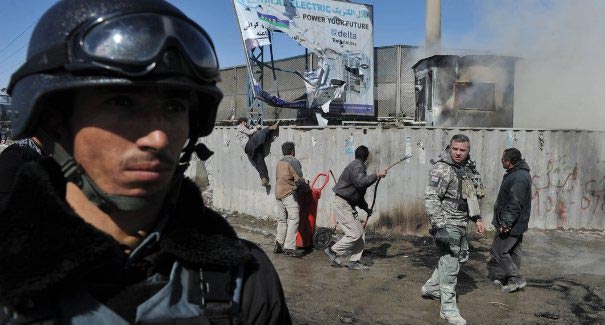
The fact that the Afghanistan war is not going well is no surprise. The surprise is that, according to Lt. Col. Davis, it is going even worse.
Source: El País

What are the implications of all this? That the Afghanistan war is going badly is no surprise. The surprise is that, according to Davis, it is going even worse than we thought, and much worse than we are told in the far from encouraging reports from top American officers. Naturally, the other surprise is that an officer on active service has decided to run the risk of breaking the rules, disseminating his devastating evaluation of the situation, and denouncing what he considers the mendacity of top Pentagon officials. Even more surprising is the fact that Davis has not yet been punished for his actions. A Pentagon spokesman hastily denied an NBC report that an investigation had been opened against Davis.
One possibility is that the colonel enjoys the support and protection of a group of senior military officers, and is in some way acting as their spokesman, something that Davis stridently denies. Another possibility is that the Pentagon fears that a reprisal against Davis might spark a wave of protest, and only serve to boost the visibility and influence of his views.
Lastly, another surprise is that Colonel Davis does not believe that the US ought to withdraw its troops from Afghanistan in 2014, as President Obama has promised. For Davis, the strategy ought to be to leave strong military bastions located at strategic points, while changing the nature of the mission. The troops, he says, ought to concern themselves mainly with capturing — or killing — terrorists that may be using the country as a base of operations. This is a crude way of saying that there is no hope of Afghanistan developing into a peaceful, prosperous and democratic nation.

Distinguished Fellow
Moisés Naím is a distinguished fellow at the Carnegie Endowment for International Peace, a best-selling author, and an internationally syndicated columnist.
Recent Work



Rosa Balfour, Frances Z. Brown, Yasmine Farouk, …
Moisés Naím
Carnegie does not take institutional positions on public policy issues; the views represented herein are those of the author(s) and do not necessarily reflect the views of Carnegie, its staff, or its trustees.

With the growth in points of friction between the great powers, organizations like the SCO will continue to play a role in the strategic adaptation of the smaller powers caught between them.

Temur Umarov

When faced with fuel shortages in the past, Central Asian governments could always count on additional supplies from Moscow. That safety net no longer exists.

Galiya Ibragimova

Two divergent trends—Putin’s hardline vision of how to prosecute the war in Ukraine, and a growing desire for change in Russia—could tear the regime apart.

Tatiana Stanovaya
Andrey Melnichenko’s essay offers no answer to the fundamental question of how, under any kind of negotiated settlement, Europe can protect itself from the Russian ressentiment that is inevitable in all scenarios except for an outright victory for Putin.

Leonid Bershidsky

Despite unhappiness on the ground, Moscow is determined to use both carrot and stick to ensure there is record support for United Russia in occupied Ukraine.

Konstantin Skorkin