

Paper
Matthew Rojansky
{
  "authors": [
    "Matthew Rojansky"
  ],
  "type": "legacyinthemedia",
  "centerAffiliationAll": "dc",
  "centers": [
    "Carnegie Endowment for International Peace"
  ],
  "collections": [],
  "englishNewsletterAll": "ctw",
  "nonEnglishNewsletterAll": "",
  "primaryCenter": "Carnegie Endowment for International Peace",
  "programAffiliation": "russia",
  "programs": [
    "Russia and Eurasia"
  ],
  "projects": [],
  "regions": [
    "North America",
    "United States",
    "Caucasus",
    "Russia"
  ],
  "topics": [
    "Foreign Policy"
  ]
}
Source: Getty
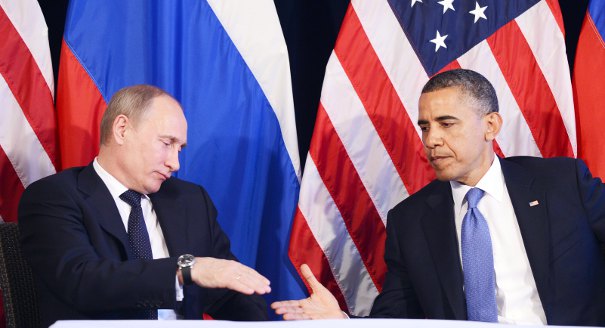
The U.S.-Russian reset in bilateral relations occurred three years ago, but a lot has changed since then.
Source: Fox News' Happening Now
Speaking on Fox News Happening Now, Carnegie’s Matt Rojansky examined the U.S.-Russian reset in bilateral relations, three years on.
This broadcast originally appeared in Fox News Happening Now.

Former Deputy Director, Russia and Eurasia Program
Rojansky, formerly executive director of the Partnership for a Secure America, is an expert on U.S. and Russian national security and nuclear-weapon policies.
Recent Work
Matthew Rojansky
Matthew Rojansky
Carnegie does not take institutional positions on public policy issues; the views represented herein are those of the author(s) and do not necessarily reflect the views of Carnegie, its staff, or its trustees.

Russia spent years building a “sovereign internet,” concentrating web infrastructure exclusively within Russian territory. Ukrainian drone attacks have shown how vulnerable that approach has left the Russian internet.

Maria Kolomychenko

Putin’s conservative staffing policies and search for ever greater control have cemented parliament’s transformation into a bureaucratic appendage of the executive branch.

Andrey Pertsev

Russia’s AI-driven propaganda campaigns operate in a fragmented, chaotic, and often illogical manner. That’s not necessarily a problem for the Kremlin, though: It’s much easier to mimic genuine public debate that way.

Ilya Klishin

Without a ceasefire with Ukraine on attacking each other’s energy infrastructure—to which the Kremlin is unlikely to agree—the diesel agreement between Putin and Trump is largely for show, rather than representing a genuine increase in the volumes of Russian diesel on the global market.

Sergey Vakulenko

Russian strikes are weakening the economy sustaining Ukraine’s war effort. Closing the growing funding gap will require more European support and politically contentious reforms in Kyiv.

Balázs Jarábik