

Research
- +10
Rosa Balfour, Frances Z. Brown, Yasmine Farouk, …
{
  "authors": [
    "Moisés Naím"
  ],
  "type": "legacyinthemedia",
  "centerAffiliationAll": "",
  "centers": [
    "Carnegie Endowment for International Peace"
  ],
  "collections": [],
  "englishNewsletterAll": "",
  "nonEnglishNewsletterAll": "",
  "primaryCenter": "Carnegie Endowment for International Peace",
  "programAffiliation": "",
  "programs": [],
  "projects": [],
  "regions": [
    "North America",
    "South America"
  ],
  "topics": [
    "Democracy",
    "Civil Society"
  ]
}
Source: Getty
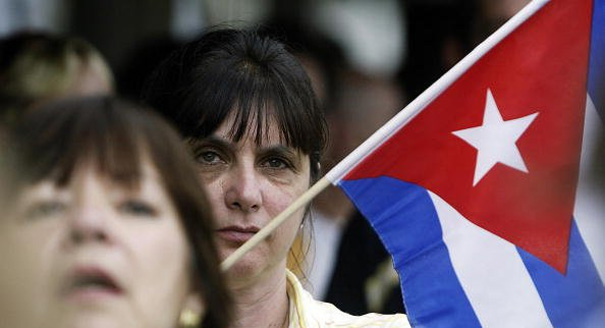
The suspicious deaths of Cuban dissidents Oswaldo Payá and Harold Cepero, as well as the opposing accounts by witnesses and Cuba's government, mean only one thing: someone is not telling the truth.
Source: El País
Assume that you are the judge who has to decide who is lying in the following case:
The facts. On July 22, 2012, on a remote highway near Bayamo, Cuba, a car accident took place, in which the Cuban dissidents Oswaldo Payá and Harold Cepero died. Payá came to fame, when he began the Varela Project, a citizens’ initiative to reform the Constitution and petition the government to grant basic liberties and hold democratic elections. Surprisingly, 11,020 Cubans signed the petition, even knowing that by doing so they were risking government reprisals. His long struggle against the Castro regime had been internationally recognized, and in 2002 he won the European Parliament’s Sakharov Prize.
The driver of the car in which Payá and Cepero died was Ángel Carromero, a 27-year-old Spanish politician, and a leader of Nuevas Generaciones, the Popular Party’s youth organization. The other passenger was Jens Aron Modig, a Swedish political activist. Both suffered minor injuries. Photographs taken after the accident, and released by the Cuban government, show massive damage to the rear of the car.
The driver’s version. During Carromero’s trial in Cuba, the prosecutor asked for seven years’ incarceration for involuntary manslaughter. The Spaniard admitted his responsibility, and was recorded on videotape saying that he lost control of the car, and that no other vehicle was involved in the accident. Thanks to a treaty between Cuba and Spain, he was repatriated to his country, where he was due to serve out the four-year sentence imposed by the Cuban court. Once back in Spain, however, Carromero changed his story. He now says that his rented vehicle was being constantly tailed, and that he was rammed by another car from behind, which caused the death of the two passengers in the back seat. This is what Carromero told The Washington Post: "Once I left the hospital, they took me to a jail in Bayamo. It’s the worst thing I’ve ever lived through. I was held incommunicado, never seeing the light of day. We walked among cockroaches until they put me in the infirmary cell, along with another Cuban prisoner. The conditions were deplorable. A stream of water fell from the roof once a day, the toilet didn’t have a tank, and you could use it only when you had a bucket of water that you could throw afterward into the bowl. The cell was full of insects that woke me up when they fell on my body.” Carromero's video confession was obtained under these conditions.
He also spoke of aggressive interrogations where, whenever he said that he had been rammed from behind at high speed, his jailers would react angrily and said that I was very young to lose my life. "One of them told me that what I had told them had not happened and that I should be careful, that depending on what I said things could go very well or very badly for me… Then came [...] a government expert who gave me the official version of what had happened. If I went along with it, nothing would happen to me. At the time I was heavily drugged, and it was hard for me to understand the details of the supposed accident that they were telling me to repeat. They gave me another statement to sign — one that in no way resembled the truth..The trial was a farce but I had to accept the verdict in order to get out of that hell […]”
For his part, Modig, on his return to Sweden, said that he just wanted to forget the nightmare; that he was asleep at the time of the crash and has no idea what happened. Payá’s daughter, Rosa, says that her father was living under constant death threats, which had lately become more frequent, and that shortly before his death he was the victim of a suspicious traffic accident in which he and his wife nearly died.
The Cuban government’s version. The car was speeding on a road that was in a poor condition; the driver lost control and crashed into a tree. All other interpretations are simply the attempt, on the part of the US government and the usual enemies of the revolution, to make people believe that a tragic traffic accident was in fact a political crime. According to the official newspaper Granma, “the irrefutable testimony of experts and eyewitnesses, including that of the two foreigners involved in the accident, has closed the door on the infamous insinuation” that the regime might have murdered these two opposition leaders. After all, says Granma, “we all know the immaculate history of the revolution that triumphed, and has stayed in power for half a century, without one single extra-judicial execution, one disappearance, one torture, one kidnapping, one single act of terrorism.”
So over to you. Who do you believe is lying? Send me your verdict via Twitter @moisesnaim

Distinguished Fellow
Moisés Naím is a distinguished fellow at the Carnegie Endowment for International Peace, a best-selling author, and an internationally syndicated columnist.
Recent Work



Rosa Balfour, Frances Z. Brown, Yasmine Farouk, …
Moisés Naím
Carnegie does not take institutional positions on public policy issues; the views represented herein are those of the author(s) and do not necessarily reflect the views of Carnegie, its staff, or its trustees.

Sergei Kiriyenko used Russia’s parliamentary vote to further hone his strategy of corporate mobilization that is designed to maximize votes for United Russia.

Andrey Pertsev

If the Russian-speaking community in Latvia cannot articulate their interests without being seen as disloyal, they could end up embracing a pro-Kremlin agenda.

Sergejs Potapkins
A regime founded on force, coercion, and repression does not want its propaganda, with all its flaws of logic, omissions, and outright lies, to be competing with the most simple of all messages: Thou shalt not kill.

Leonid Bershidsky

With his public call for new elections in Ukraine, ex-defense minister Mykhailo Fedorov has opened Pandora’s box.

Konstantin Skorkin

In the discussions made possible by the State Duma election campaign, one question is being asked more and more loudly. “What next?”
Andrey Pertsev