Source: Indian Express
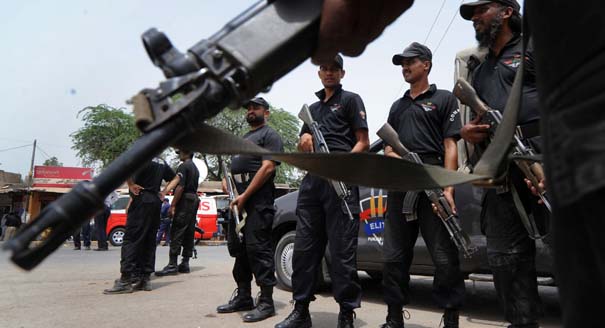
The jailbreak that took place in Dera Ismail Khan this summer was disturbing not only because the Taliban could liberate 248 fellow militants, but also because they took the time to single out and kill Shia prisoners. Sectarianism has indeed become a pervasive phenomenon in Pakistan — and a very violent one, as evident from the record number of casualties registered so far in 2013. This toll is due to the targeted killings of political leaders of the "other" community. But not only them, since both groups have diversified their targets. The Shias — doctors, civil servants and even army officers — have been the main victims. Both groups have also resorted to less discriminating methods, tipping over into mass crimes that aim not only to decapitate rival organisations, but terrorise the Other: blasts occur outside a mosque after the Friday prayer, suicide bombers decimate a procession or a family celebration, each time killing dozens of innocent people.
This escalation reflects a political strategy. For decades, sectarianism was not an issue in Pakistan. The founding father of the country, Muhammad Ali Jinnah, was an Ismaili and several of its top leaders — Iskander Mirza and Yahya Khan, for instance — were Shias without people even knowing it. Z.A. Bhutto, who was married to an Iranian woman, like Mirza, has been suspected of being one. And inter-sect marriages were commonplace. But political entrepreneurs and outsiders have created this "ism", like communalism in India. Zia-ul-Haq implemented a form of "Sunnisation" in the name of an Islamisation policy that was intended to give him legitimacy after his 1977 coup. As a result, the Shias objected that the taxation policy the Pakistani state was implementing under the garb of officialising zakat was not in tune with their traditions, and they mobilised in large numbers against it in 1980.
But they were then galvanised by the 1979 Iranian Revolution that Imam Khomeini was trying to export to Pakistan. This external factor resulted in another foreign intervention, since Saudi Arabia reacted immediately by supporting Sunni militant groups — while already financing the mujahideens involved in the anti-Soviet jihad in Afghanistan — and a proxy war between these two contenders for the leadership of the Muslim world crystallised in Pakistan.
From the late-1970s till the mid-1980s, this conflict found its translation in political organisations. The Tehreek Nafaz-e-Fiqh-e-Jafariya (TNJF, a movement for the implementation of Shia jurisprudence) was created in April 1979 in reaction to Zia's policy, but flourished because of Iranian support. And Sipah-e-Sahaba Pakistan (SSP, the Army of the Companions of the Prophets) was formed in 1985. The latter grew out of the Deobandi-oriented Jamiat Ulema-e-Islam (JUI) and enjoyed support from the state, as well as from Saudi Arabia. Ten years later, these political parties were better known for the militias they had been the crucible of. An extremist faction of the SSP founded the Lashkar-e-Jhangvi (the Army of Jhangvi, named for one of the SSP's co-founders) in 1996, and the radical wing of the former TNJF established the Sipah-e-Muhammad Pakistan (SMP, the Army of Muhammad) in the early 1990s.
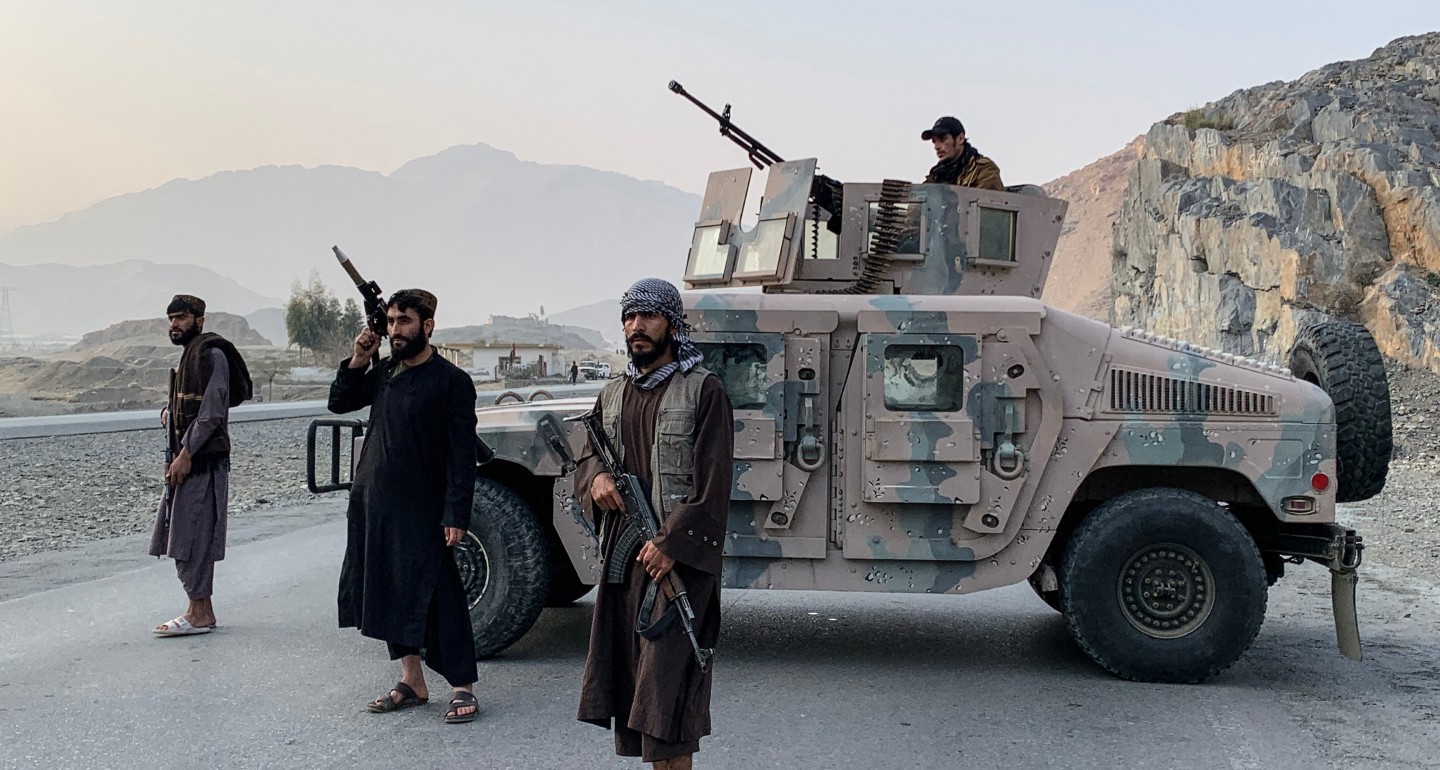
These groups have been responsible for targeted killings and blind blasts. In this civil war in the making, Sunni militants had two kinds of advantages: numbers (Shias are not more than 20 per cent of society in Pakistan), and the safe haven that the Afghan Taliban offered to the LeJ from 1996 onwards. By that time, Afghanistan itself had become the theatre of acute sectarianism, as evident from the massacre of Shias in Mazar-e-Sharif in 1998. After 2001, the fall of Kabul forced the LeJ militants to come back to Pakistan, where the police and the army eliminated most of the leaders. But they have gradually recuperated. First, they have found refuge in the FATA, where they have become associated with the Tehrik-i-Taliban Pakistan (TTP). One of the Pakistani Taliban, Qari Hussain Mehsud, who was in charge of the suicide cell of the movement by the late-2000s, helped the Sunni militants. And his cousin, Hakimullah Mehsud, gave to the TTP an explicitly sectarian overtone when he became the commander for the regions of Khyber and Orakzai, where the percentage of Shias is above the average. He has taken over from Baitullah Mehsud at the helm of the TTP in 2009, and the distinction between jihadi activists and sectarian militants has largely lost relevance in the region since.
Secondly, Sunni sectarian groups have taken root in their original birthplace: Punjab, the key province of Pakistan. Punjab has largely been the crucible of sectarianism for socio-economic reasons. Jhang district is a case in point. After Partition, Shia landlords employed Sunni refugees, who had left India with next to nothing, as tenant farmers. As Sunnis improved their level of education and became more urbanised, they emancipated themselves from their old masters and demanded their place in the sun, including a share of power. Thus, in 1992, SSP leader Azam Tariq won the Jhang seat in the National Assembly, an unprecedented achievement for a previously marginal political force, all the more as he was re-elected in 1993. He lost his seat in 1997, but Jhang remains an SSP stronghold due to Sunni resentment towards Shia dominance, even after the assassination of Tariq in 2003.
But Sunni militancy has also gained momentum in Punjab because of collusion with mainstream parties such as, allegedly, the PML-N, which is the strongest political force in the province. In 2008, while sectarian movements had been subject to crackdowns under then President Pervez Musharraf, they reportedly turned to the PML-N for political protection in exchange for electoral support (that is, muscle power). The SSP leader, Muhammad Ahmed Ludhianvi, declared that his movement had procured "armed support" for dozens of PML-N candidates. One of the supposed agents of this rapprochement was Rana Sanaullah, a former PPP leader who had joined the PML-N. He reportedly brought to the party former Sunni militants to cope with his political adversaries more effectively. Once elected in 2008, he was appointed law minister in the government of Shahbaz Sharif and then repaid his debt, and also showed devotion to SSP heroes. Thus, in February 2010, he paid his respects at the tombs of Maulana Haq Nawaz Jhangvi, the founder of the SSP, and Azam Tariq. Re-elected in 2013, Sanaullah was reappointed in his cabinet by Shahbaz Sharif who, in addition to law, gave him the local government portfolio — a source of additional leverage.
The Sharif brothers appear naturally inclined to patronise Sunni militants because of their close relations with Saudi Arabia, where their father had found support after Bhutto nationalised his business in the 1970s, and where they have spent seven years in exile after Musharraf's coup. Their alleged support for such forces could pose an existential threat to Pakistan. Indeed, sectarianism implies a vertical split in society — especially since, besides peripheral groups like the Hazaras of Balochistan and the Shias of Gilgit-Baltistan, one of the most severely affected areas is the core province of Punjab. How can Pakistan remain the unique homeland of the Muslims of the region if there is not one, but two Islams?