

Commentary
Nathalie Tocci, Jan Techau
{
  "authors": [
    "Jan Techau"
  ],
  "type": "legacyinthemedia",
  "centerAffiliationAll": "",
  "centers": [
    "Carnegie Endowment for International Peace",
    "Carnegie Europe"
  ],
  "collections": [],
  "englishNewsletterAll": "",
  "nonEnglishNewsletterAll": "",
  "primaryCenter": "Carnegie Europe",
  "programAffiliation": "",
  "programs": [],
  "projects": [],
  "regions": [
    "Europe",
    "Western Europe",
    "Germany"
  ],
  "topics": [
    "EU",
    "Security",
    "Foreign Policy"
  ]
}
Source: Getty
Germans need to accept that their nation’s power and increasing foreign policy assertiveness come at a price. Berlin should stop moralizing and start upgrading its intelligence capabilities.
Source: Financial Times
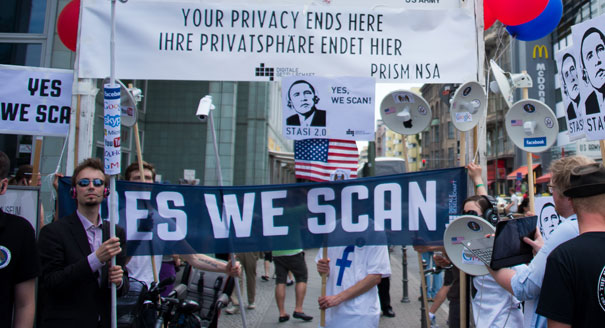
Amid the recriminations and self-justification over allegations of US spying – yes, trust is needed between allies; yes, everyone is doing it – one vital lesson has been overlooked.
In Germany, the response to allegations that Chancellor Angela Merkel’s mobile phone was tapped has been harsh and emotional. But Germans need to accept that their nation’s power and increasing foreign policy assertiveness come at a price. The era of standing on the international sidelines is over.
Most Germans quietly enjoy the status of “third most important country in the world”, as a former US ambassador to Berlin likes to put it. In the past decade and a half, the nation’s foreign policy has shown signs of unprecedented independent-mindedness. It strongly opposed the US-led invasion of Iraq, even at the cost of risking a transatlantic fallout – something it would have considered unthinkable only a few years earlier.More recently, it has stubbornly held the course in the euro crisis, demanding harsh economic reforms and fiscal consolidation in afflicted countries in return for feeding ample amounts of its taxpayers’ money into eurozone bailout funds and stability mechanisms.
Also, it does not shy away from raw power politics when it comes to protecting the interests of its wealth-generating export industries, especially cars, chemicals and machinery. Just look at recent spats with the European Commission over car emissions and solar technology.
In Europe, it has few qualms about going it alone in the important field of energy policy. Ms Merkel’s Energiewende – the abrupt u-turn away from nuclear power – left many neighbours, who had not been consulted, grappling with a dramatically changed situation.
This is not to say Germany is anything, for the most part, but a good partner and ally. Some of these decisions have sharpened its profile as a leader. Many countries wait for Berlin to take a position before taking one themselves on everything from fiscal to foreign policy.
However, this new role also means it is more important than ever for foreign powers, whether friend or foe, to understand what Berlin thinks and intends to achieve.
The debate in Germany since the spying revelations from WikiLeaks and Edward Snowden, the former NSA contractor, suggests a nation struggling to adjust its strategic culture and political instincts. Forty cold war years of limited sovereignty and outsourced thinking have left it with an under-developed geopolitical mindset.
After reunification, its first instinct was not to embrace its new size and eminence but to cash in on the peace dividend. Only in the past few years has Berlin reluctantly started to ponder the changed situation in its neighbourhood and the implications of an America less inclined to subsidise European security.
But many Germans still believe, or at least hope, they can have it all: the status of an independent-minded nation along with disengagement from the moral ambiguity of international politics.
This is why Berlin now needs a smart and strategic reaction to the spying affair.
Thankfully, its reaction has been measured. Ms Merkel, master tactician, has skilfully avoided snubbing the US while at the same time making enough noise to placate her enraged public. But a response is needed that goes beyond the merely tactical, requiring even greater political prowess.
Germany needs to invest significantly in its own intelligence services so that it can avoid future embarrassment – for itself and its partners. It needs better spies and improved technology to protect itself against snooping. And it needs to improve its own collection of data and tapping of sources. A powerhouse such as this needs top intelligence to compete. Others expect nothing less.
If you think you have seen outrage over American spying, pseudo-moralistic grandstanding in response to suggestions that Germany should itself take part in the practice more enthusiastically will be twice as noisy. Because this is the real lesson taught by Ms Merkel’s wiretapped phone: Germany must undertake these intelligence upgrades to prove it can move away from a strategic culture that blames evil America to one that accepts the harsh necessities of international politics.
This article was originally published in the Financial Times.

Director, Europe Team, Eurasia Group
Techau is director with Eurasia Group's Europe team, covering Germany and European security from Berlin. Previously, he was director of Carnegie Europe.
Recent Work

Nathalie Tocci, Jan Techau
Jan Techau
Carnegie does not take institutional positions on public policy issues; the views represented herein are those of the author(s) and do not necessarily reflect the views of Carnegie, its staff, or its trustees.

With the growth in points of friction between the great powers, organizations like the SCO will continue to play a role in the strategic adaptation of the smaller powers caught between them.

Temur Umarov

When faced with fuel shortages in the past, Central Asian governments could always count on additional supplies from Moscow. That safety net no longer exists.

Galiya Ibragimova

Two divergent trends—Putin’s hardline vision of how to prosecute the war in Ukraine, and a growing desire for change in Russia—could tear the regime apart.

Tatiana Stanovaya
Andrey Melnichenko’s essay offers no answer to the fundamental question of how, under any kind of negotiated settlement, Europe can protect itself from the Russian ressentiment that is inevitable in all scenarios except for an outright victory for Putin.

Leonid Bershidsky

Despite unhappiness on the ground, Moscow is determined to use both carrot and stick to ensure there is record support for United Russia in occupied Ukraine.

Konstantin Skorkin