

In The Media
David Rothkopf
{
  "authors": [
    "David Rothkopf"
  ],
  "type": "legacyinthemedia",
  "centerAffiliationAll": "",
  "centers": [
    "Carnegie Endowment for International Peace"
  ],
  "collections": [],
  "englishNewsletterAll": "",
  "nonEnglishNewsletterAll": "",
  "primaryCenter": "Carnegie Endowment for International Peace",
  "programAffiliation": "",
  "programs": [],
  "projects": [],
  "regions": [
    "North America",
    "United States"
  ],
  "topics": [
    "Political Reform",
    "Democracy"
  ]
}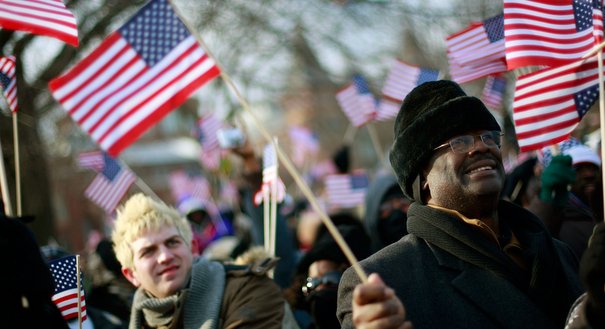
Source: Getty
Exceptionalism is contrary to the spirit of the U.S. Constitution and the ideas that led to the founding of the country.
Source: Foreign Policy
The White House is mixing it up. Usually after commando raids against terrorist targets, the leaks flow like a fine triumphalist wine. We hear just enough detail of high-level secret meetings to emphasize that everything that worked was actually the president's idea. We may get a photo or two indicating that while considering the raids everyone was looking extremely serious.
But that's not what happened in the wake of the raids this weekend. Rather, the response to the U.S. commando operations in Libya and Somalia reminded me a bit of the movie The Right Stuff, when after a post-splashdown screw-up that resulted in the sinking of his Mercury spacecraft, Gus Grissom is denied the pomp and parades that his colleagues had enjoyed.While this weekend's raids didn't exactly "screw the pooch," to use the movie's descriptive term, they did not go according to plan. According to reports, the raid in Somalia on al-Shabab encountered heavier resistance than anticipated and presented a much higher risk of civilian casualties than expected. Post-raid reports indicate that faulty intelligence may have been to blame. The raid in Libya that led the United States to grab accused embassy-bombing operative Nazih Abdul-Hamed al-Ruqai, better known as Abu Anas al-Libi, produced political blowback ranging from a post-raid statement from the Libyan government that the mission was carried out without its knowledge to the loud criticism of influential Islamic groups in the country that the United States had violated Libyan sovereignty to subsequent assertions by Libyan Prime Minister Ali Zeidan that "Libyan citizens should be judged in Libya, and Libya does not surrender its sons." (Further fallout from the raid came Thursday as extremists briefly kidnapped the Libyan prime minister then released him, giving the U.S. capture of Libi as the reason for their action.)
The blowback triggered the only orchestrated leaks associated with the raid -- comments from the most influential people in Washington, the famed unnamed "senior American officials," who claimed the United States had "tacit approval" for the raid from the Libyans. This wonderful euphemism raises many possibilities. Just what is a diplomatic wink and a nod? Did they raise non-objection objections to ensure the deniability that happened later? Did they simply agree to look the other way? Or did the U.S. government take a page out of Ross's book from Friends and simply suggest we were "on a break"?
Of course, as the president himself has asserted as recently as his U.N. General Assembly speech, the United States believes that it alone among nations has the right to go "on a break" from international law whenever it suits us. This is the fundamental dimension of American exceptionalism, born of a comment by de Tocqueville about the "exceptional" nature of the American people and more recently made popular by Russian President Vladimir Putin in his controversial New York Times op-ed attacking the American notion that we can play by our own set of rules.
Despite the storm of indignation that Putin's piece generated from exceptional Americans everywhere, as my friend Tom Friedman of the New York Times might say, just because Putin said it doesn't mean it wasn't true.
Exceptionalism is contrary to the spirit of the U.S. Constitution and the ideas that led to the founding of the country. If there is one lesson of human civilization, it is that equality under the law needs to apply to nations as well as people or else chaos and injustice ensue. This past weekend's raids were more damaging not because the outcome of one was unsuccessful but because the outcome of the other was. If countries feel they can swoop in and snatch up bad guys anywhere, whenever, and however it suited them, the world would quickly fall into a state of permanent war.
It is ironic that Barack Obama has become the avatar of exceptionalism. As a campaigner and even as a president, he has sometimes seemed resistant to the idea -- even when he seemed to embrace it during his first trip abroad after becoming president when he said, "I believe in American exceptionalism, just as I suspect that the Brits believe in British exceptionalism and the Greeks believe in Greek exceptionalism." It was a dodge designed to drain the idea of its odiousness. That is typically done (by academics as well by politicians like the president) by focusing on the noble values that set us apart.
The defenses of this idea founder on the hard truths of what the United States justifies with our argument that we are freer or that we promote more equality or whatever other qualities we might list (in a self-congratulatory way) on our national Facebook profile. But then we develop drone programs that we launch against friends and enemies alike with or without their permission. Or we launch commando raids to grab bad guys. Or we assemble a global surveillance apparatus that knows no limits, violating the sovereignty and privacy of even close allies as if they had no rights at all.
It is one thing to be proud of those qualities that have enabled America to create opportunity and ensure freedom for so many. It is quite another to argue that our success in framing a great legal system on a constitution that legitimately should be a model to the world allows us to ignore the laws and rights of others.
Every nation, the defenders argue, has a right to self-defense. But every nation also faces threats of many sorts. There are bad actors and organizations small and large and even other nations that pose physical, cyber, economic, and other threats to virtually every nation on Earth. Were any threat of any scale allowed to be the justification for the violation of another nation's sovereignty, the concept of sovereignty would evaporate in a puff of smoke before our very eyes and surely chaos would ensue.
That is why, for all but the most egregious threats, nations must rely on international law and cooperation with other authorities as the mechanisms by which they defuse or manage such threats -- grabbing wrongdoers and keeping them from committing further destructive acts. In the wake of the national trauma of 9/11, however, we fell into a dangerous rabbit hole of dubious logic. Since we had seen one major terrorist attack by one nonstate actor that had catastrophic consequences that shook the nation (much as an attack from a sovereign nation might have done), then, the thinking went, all terrorists must potentially pose a similar threat and, therefore, the right to self-defense gives us a free pass to get "all exceptional" on bad guys or data networks everywhere.
Grave threats justify self-defense under international law. Responding to them is not, therefore, exceptionalism. It is actually the opposite, working within a common set of rules. The trick is defining such threats very narrowly. This error of judgment and logical slippery slope are then compounded by the exceptionalist idea that all other nations and systems are somehow less worthy of respect than ours.
Having been wanted for the Uganda and Kenya bombings in 1998, Libi was clearly a very bad actor. But it did not serve U.S. interests to go into a country in which we had ostensibly militarily intervened in order to help restore the rule of law to only then violate those laws and the rights of that country and to send the kind of message that will create more Libis than the raid could possibly have taken into custody.
In a seemingly unrelated coda that was also rife with irony, the White House let slip that it is going to withhold certain aid from the Egyptian government because of its origins in a coup and, presumably, its post-coup efforts to restore stability to that country. Set aside for a moment the bizarre timing of this announcement. Set aside for a moment the fact that literally every major ally the United States has in the region from the Israelis to the Saudis to the Jordanians to the Kuwaitis to the Emiratis to the Bahrainis surely object to it. Set aside the fact that other aid will keep flowing, thus sending yet another confusingly mixed message to the Egyptians. The decision also underscores that the United States is selectively punishing a country that has historically been an ally for trying to reduce the threat posed (and demonstrated) by Islamic fundamentalists while failing to similarly go after those who have supported fundamentalist troublemakers in places like Libya -- which is precisely the reason Libi was found there. Who are those people we choose not to squeeze? The Qataris come to mind.
During the U.N. meetings in New York, one smart regional leader said the Qataris were supporting the fundamentalist push in Libya because they saw it, with its hydrocarbon resources, as a potential "milking cow" for the Muslim Brotherhood and similar movements throughout the Middle East. These are the same Qataris that have supported fundamentalists (as have the Turks) in Syria ... and where once again, we have refused to truly read them the riot act even as we beat up on those going after the fundamentalists.
Exceptionalism is one of the great flaws of U.S. foreign policy exacerbated in the post-9/11 era. But it has been compounded by the mistake of confusing tactics for strategies -- of allowing the pursuit of a few terrorists, which generates headlines when successful (and is swept under the rug when not), to distract us from forming the kind of coherent strategy that advancing our interests in the Middle East and across the Islamic world warrants. We grab a terrorist but inflame the Street that is giving birth to the next generation of terrorists. We punish an ally for acting extralegally even as we do so as a matter of policy -- and fail to realize the terribly mixed and counterproductive message we are sending to those who could help us achieve our greater goals. As a consequence, while touting a sequence of high-profile wins against individuals or the hierarchy of groups like al Qaeda, we have watched as new threats have proliferated to the point that they are greater than ever before and our standing has deteriorated to reach new lows. (Ongoing idiocy in Washington on domestic issues doesn't help.)
In short, we have become the incoherent exceptionalists. Not just a giant stomping on the rights of others and seeking to be hailed for it, but one doing so in a way that systematically undercuts the characteristics that have made us great and weakens us at the same time.
Former Visiting Scholar
David Rothkopf was a visiting scholar at the Carnegie Endowment as well as the former CEO and editor in chief of the FP Group.
Recent Work
David Rothkopf
David Rothkopf
Carnegie does not take institutional positions on public policy issues; the views represented herein are those of the author(s) and do not necessarily reflect the views of Carnegie, its staff, or its trustees.
The ruling elites in contemporary Russia are not a political class, but a community of managers who are not subject to competition or public accountability. The state is becoming an operating apparatus without any internal autonomy.

Alexandra Prokopenko
Pashinyan’s pro-European party has been re-elected with a decisive victory. But the pro-Russian opposition could still slow Armenia’s progress toward peace with Azerbaijan and rapprochement with Europe.
Mikayel Zolyan
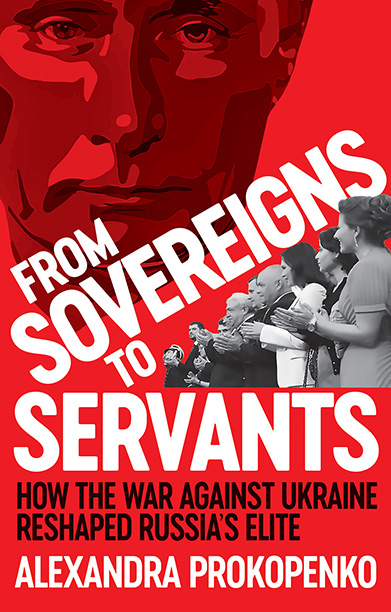
How did Putin co-opt Russia’s political and economic elites, ensuring no more than fitful resistance to the regime’s war on Ukraine?
Alexandra Prokopenko
For all the menacing rhetoric, the Armenian prime minister remains a leader with whom Putin is prepared to interact: not as an ally, but as a partner, albeit a problematic one.

Alexander Atasuntsev
By fueling the arguments of both supporters and opponents of Armenian Prime Minister Nikol Pashinyan, Azerbaijan wants to ensure he is re-elected with a weaker mandate.

Bashir Kitachaev