

Commentary
Dmitri Trenin
{
  "authors": [
    "Dmitri Trenin"
  ],
  "type": "commentary",
  "centerAffiliationAll": "",
  "centers": [
    "Carnegie Endowment for International Peace",
    "Carnegie Russia Eurasia Center"
  ],
  "collections": [],
  "englishNewsletterAll": "",
  "nonEnglishNewsletterAll": "",
  "primaryCenter": "Carnegie Russia Eurasia Center",
  "programAffiliation": "",
  "programs": [],
  "projects": [],
  "regions": [],
  "topics": [
    "Economy"
  ]
}
Source: Getty
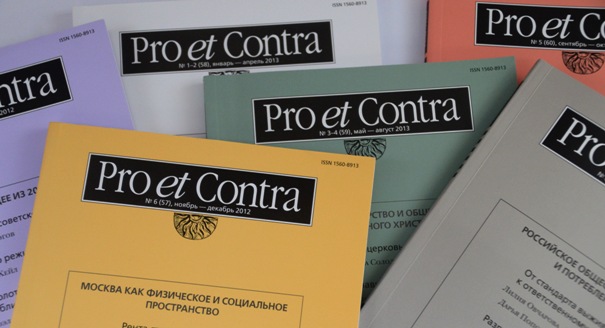
The quarterly journal Pro et Contra, published by the Carnegie Moscow Center, is being retooled as a web-based online publication, which the Center plans to roll out later in 2014.
The Carnegie Moscow Center (CMC) is turning 20 this year. To us at Carnegie, hitting the 20 year milestone doesn't mean resting on our laurels. Rather, we are gearing up to launch CMC 2.0. We are now making plans to ensure that the Center's activities remain cutting-edge and staunchly independent and that our research activities tackle the most pressing and challenging policy issues facing Russia and the broader post-Soviet region.
Clearly, the rapid growth of the Internet and related technologies gives us new opportunities to reach wider and younger audiences, and to stay in touch with them 24/7. To take full advantage of these new opportunities, Pro et Contra is being retooled as a web-based online publication, which we plan to roll out later in 2014.
Stay tuned!
Former Director, Carnegie Moscow Center
Trenin was director of the Carnegie Moscow Center from 2008 to early 2022.
Recent Work
Dmitri Trenin
Dmitri Trenin
Carnegie does not take institutional positions on public policy issues; the views represented herein are those of the author(s) and do not necessarily reflect the views of Carnegie, its staff, or its trustees.

Russian strikes are weakening the economy sustaining Ukraine’s war effort. Closing the growing funding gap will require more European support and politically contentious reforms in Kyiv.

Balázs Jarábik

For every ruble allocated to social policy, health, and education in 2027, double that amount is earmarked for the army, the police, and the security services.

Alexandra Prokopenko

Depleted financial reserves and a shrinking tax base mean it is no longer possible to simultaneously deliver high defense spending, price stability, and economic growth.
Alexandra Prokopenko
A much-discussed disagreement over internet restrictions in Russia was never an existential threat for Putin: It was about elite groups protecting their interests.
Alexandra Prokopenko

The demands of the Kremlin’s war in Ukraine, demographic problems, and public hostility toward Central Asians mean Russia does not have enough workers.
Salavat Abylkalikov