

In The Media
Lilia Shevtsova
{
  "authors": [
    "Lilia Shevtsova"
  ],
  "type": "legacyinthemedia",
  "centerAffiliationAll": "",
  "centers": [
    "Carnegie Endowment for International Peace",
    "Carnegie Russia Eurasia Center"
  ],
  "collections": [],
  "englishNewsletterAll": "",
  "nonEnglishNewsletterAll": "",
  "primaryCenter": "Carnegie Russia Eurasia Center",
  "programAffiliation": "",
  "programs": [],
  "projects": [],
  "regions": [
    "North America",
    "United States",
    "Russia",
    "Western Europe"
  ],
  "topics": [
    "Political Reform",
    "Democracy"
  ]
}
Source: Getty
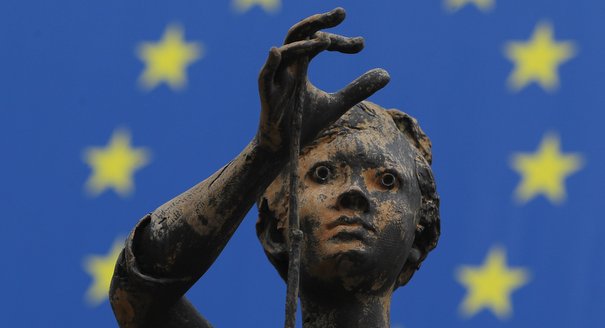
Does liberal democracy depend on the existence of ideological and civilizational rivals to spur it into cycles of reinvention and renewal?
Source: American Interest
Several recent essays on Western foreign policy and the state of liberal democracy—by Robert Kagan, Francis Fukuyama, and Walter Russell Mead—offer an excellent departure point for answering several questions about the post-Cold War period: Were the liberal hopes of those times justified? How did things veer so far off track? And why? Their essays also allow me to pose two follow-up questions: Can (and should) the West rethink its paradigm of retrenchment and “nation-building at home”? And can the liberal democracies reinvent themselves absent a strong global competitor and rival?
It’s a bitter irony that Vladimir Putin’s puncturing of the post-Cold War order has had the secondary, beneficial effect of getting the ball rolling on the painful process of rethinking. Putin has helped us see that the old order was doomed to fail in any case; it had become an imitation order, wrapped in layer upon layer of illusion and wishful thinking. Instead of becoming a framework for ensuring the victory of liberal democracy, the post-Cold War settlement turned into a kind of fuzzy, postmodern arrangement, full of contradictions and thinly veiled hypocrisies. It was based on the premises that Russia would be a cooperative partner with the West and that liberal democracy no longer had an ideological rival. Things never turned out this way. “It was a beautiful plan, but it hasn’t worked out”, writes Mead about Obama’s foreign policy; one could say the same thing about the Western policy over the past two decades.Of course, we need to remember that after the collapse of the Soviet Union in 1991, the West took a nap, having lost interest in great ideas and “grand designs.” Although the liberal democracies had no global adversary for the past twenty years, they proved unable to reform an international governance system (the Security Council, first of all) that was based on the legacy of the Second World War and a balance of forces that ceased to exist with the demise of the Soviet Union. The West also failed to revitalize the liberal democratic model; today it seems dysfunctional. It is becoming increasingly less appealing to the outside world, and it has also failed to prevent the global authoritarian march. In fact, the liberal democracies failed to recognize both when and how the authoritarian “Central Powers”, as Mead has called them, began their attempts to change the international rules of the game.
To be sure, the West can still take pride in the fact that it has no real competitors—but isn’t that the primary problem? ...
Read the full text of this article in the American Interest.

Former Senior Associate, Russian Domestic Politics and Political Institutions Program, Moscow Center
Shevtsova chaired the Russian Domestic Politics and Political Institutions Program at the Carnegie Moscow Center, dividing her time between Carnegie’s offices in Washington, DC, and Moscow. She had been with Carnegie since 1995.
Recent Work
Lilia Shevtsova
Lilia Shevtsova
Carnegie does not take institutional positions on public policy issues; the views represented herein are those of the author(s) and do not necessarily reflect the views of Carnegie, its staff, or its trustees.

Russia’s ruling party would have benefited from Putin appearing as its distant patron, but as an active frontman imposing his views on the public, he has done nothing but harm both the party’s election campaign and the ruling system overall.

Andrey Pertsev

Depleted financial reserves and a shrinking tax base mean it is no longer possible to simultaneously deliver high defense spending, price stability, and economic growth.

Alexandra Prokopenko
Blurring the line between humans and animals is a long-standing tradition in social utopian prose. In his latest novel, Leonid Bershidsky reminds us that in social experiments, people are often treated no differently than animals.

Alexander Baunov

In the tenth year of his presidency, President Mirziyoyev’s system is becoming even more personalized than that of his predecessor Karimov.

Galiya Ibragimova
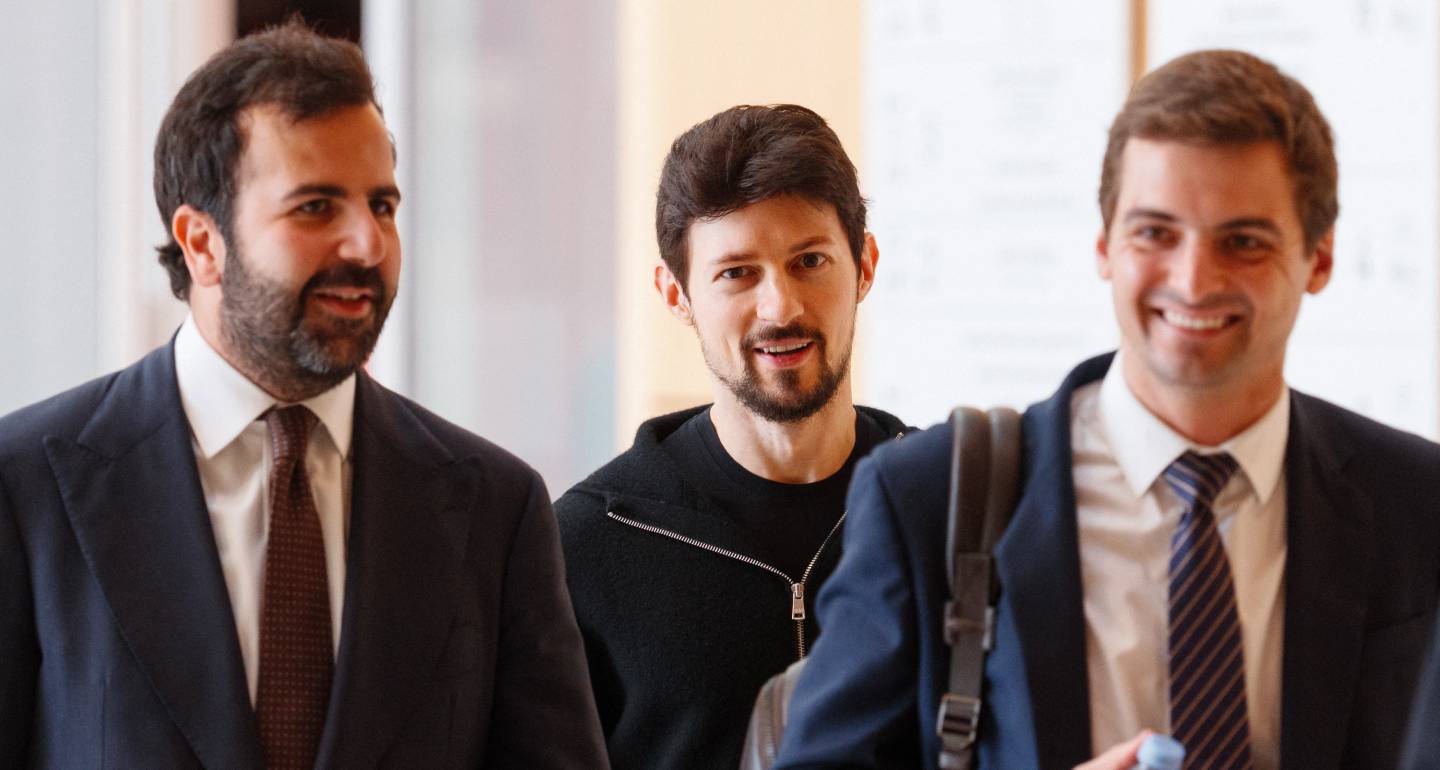
While France and Australia are seeking to establish the legal obligations of messaging apps like Telegram, Russia wants total subordination.

Maria Kolomychenko