

Research
- +4
Milan Vaishnav, Rahul Verma, Rukmini S., …
{
  "authors": [
    "Christophe Jaffrelot"
  ],
  "type": "legacyinthemedia",
  "centerAffiliationAll": "dc",
  "centers": [
    "Carnegie Endowment for International Peace"
  ],
  "collections": [],
  "englishNewsletterAll": "ctw",
  "nonEnglishNewsletterAll": "",
  "primaryCenter": "Carnegie Endowment for International Peace",
  "programAffiliation": "SAP",
  "programs": [
    "South Asia"
  ],
  "projects": [],
  "regions": [
    "South Asia",
    "Afghanistan",
    "Pakistan"
  ],
  "topics": [
    "Security",
    "Military",
    "Foreign Policy"
  ]
}
Source: Getty
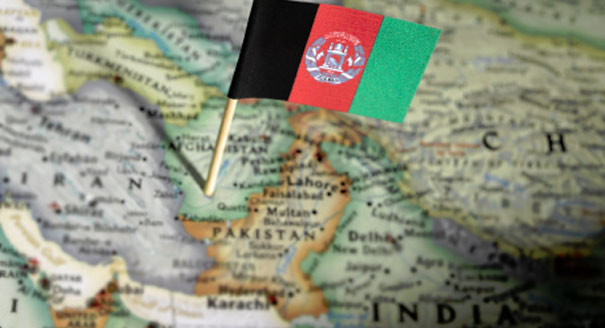
It remains to be seen if the Afghan National Army will be able to resist the Taliban, which has already rejected President Ghani’s invitation for peace talks.
Source: Indian Express
NATO’s withdrawal from Afghanistan will not have the impact some observers were fearing. The new rulers of Kabul, President Ashraf Ghani and Chief Executive Officer Abdullah Abdullah, have signed the agreement with the US that former President Hamid Karzai kept rejecting for months.
According to this agreement, US forces can stay in Afghanistan “until the end of 2024 and beyond”, mostly in nine major land and air bases. But this Bilateral Security Agreement, as it is called, is mostly intended to enable the Americans to train the 3,50,000 Afghan security forces. Not only will American troops be reduced to 9,800 over the course of the next year, but most of the remaining sophisticated arms that the US had brought to Afghanistan will also return home.
Will the Afghan National Army (ANA) be able to resist the Taliban, which has already rejected Ghani’s invitation for peace talks? Once Nato pulls its air assets out of the country, the Afghan air force will not be in a position to sustain military operations. Not only because it does not have the needed modern military aircraft (including helicopters), but also because it will have trouble obtaining working replacement parts.
Western countries may provide some help, but they are already channelling vast funds into the country’s defence. And there are other problems. The legitimacy of the ANA is somewhat affected by its ethnic character — a majority of its officers are of Tajik origin — and the desertion rate remains very high because of the low pay, especially given the risks taken by security personnel and compared to what the Taliban sometimes offers. Already, many regions are de facto in the hands of the Taliban, which exercises administrative power, levy taxes, regulate opium cultivation/ transformation and dispense some form of justice. This is true not only in the south and in the east, but also in the north, at least in the Kunduz area.If the Afghan regime is destabilised by the Taliban and no Western government is prepared to intervene, who will? Among the neighbours, the only countries that have the potential to play a stabilising role are India and China. However, India has been reluctant to engage with Kabul intensively in the defence sector, in spite of having made commitments over the last 10 months. Not surprisingly, Ghani has now decided to shelve Afghanistan’s demand for military equipment from India, also because partnering with India would complicate the already bitter Af-Pak relations. Last week, Beijing became his first international port of call. During the visit, Ghani remarked, “The only one who can be effective in peace is the one who has good relations with all sides” — an oblique comment on India’s position.
Till recently, China’s interest in Afghanistan was solely economic. It had invested heavily in Afghanistan’s copper reserves and oil fields, and promised infrastructural development. Now, Chinese President Xi Jinping has not only committed to investing more in Afghanistan, but also hinted that the Chinese will step up their security engagement in Afghanistan in the coming years.
And with good reason. First, a large portion of the opium consumed in China comes from Afghanistan and Beijing has long viewed drug consumption as a serious danger to its society. But Chinese engagement in Afghanistan is primarily driven by the Uighur militancy, considered the biggest threat to the country’s internal security. The Uighurs are a 10-million strong Turkic Muslim community resisting “Hanisation” and state oppression under the rubric of an ethno-religious separatist movement. Xinjiang, the province that is home to most of China’s Uighurs, is strategically important not only because it is rich in gas, oil and coal reserves, but also because it represents one-sixth of the country’s landmass and is bordered by eight neighbouring countries, including Afghanistan.
Now, the Turkistan Islamic Party, a prominent strand of the Uighur movement, which has claimed responsibility for a number of the killings in the last few months — 29 people died in mass knife attack at Kunming station this May, for instance — has close ties with Islamist groups in the Af-Pak region. These include the Islamic Movement of Uzbekistan, whose leaders have found refuge in the same area.
But what can the Chinese do? They are no more willing than India to deploy troops. So they may arm the Afghanistan government and train its security forces instead. As Avinash Paliwal mentions in a recent Observer Research Foundation brief, China has already trained hundreds of Afghan policemen and provided a few million worth of material and logistical support to the ANA. It may well do more. But what if this is not enough, as one may well anticipate?
The other card China may play is Pakistani. The Pakistan army has already handed over to Beijing the Uighur activists it has captured in the Federally Administered Tribal Areas (FATA) over the past few years. And the North Waziristan operation launched in June may have been partly suggested by Beijing — much like the 2007 Red Mosque operation — in the context of the intensification of “Uighur terrorism”.
The magnitude of this operation, which officially began on June 15, is unprecedented, mainly because of the number of internally displaced persons it has generated: one million. By early September, the army had announced 910 terrorists had been killed (whereas 82 soldiers had died), dozens of hideouts and 27 explosives and arms-making factories had been destroyed.
But the army admitted that most of the militants had crossed over to Afghanistan, except the foreigners, mainly Uzbeks, who did not have the benefit of tribal solidarity. This is probably something Beijing appreciated, but it is revealing of the challenge the region is facing. On one hand, the Pakistan army will probably target the “foreigners” more and spare the “good Islamists”, including the Haqqanis, in order to help the Taliban restore its “strategic depth”. On the other hand, Kabul will fight the Haqqanis (the ANA recently arrested two senior leaders of the network), but protect others, including Tehreek-e-Taliban Pakistan (TTP) chief Mullah Fazlullah, who has probably been in the Afghan province of Kunar since 2010. Ironically, Afghanistan has become for the TTP the same kind of safe haven that the FATA and Quetta used to be for al-Qaeda and the Afghan Taliban.
One way out may be to follow the recommendations of Lt Gen (retd) Talat Masood of the Pakistan army: “If we are unable to convince the Haqqani leadership and Quetta Shura that they should work out a negotiated settlement with the Afghan government then what have we gained by hosting these groups apart from inviting the hostility of the Afghan government and the international community and much worse?… If Pakistan and Afghanistan were to take each other’s insurgencies seriously and cooperate, it would be far easier to contain them.”
While the Pakistan army may not listen to these lucid words, it may still initiate a paradigm shift under Chinese pressure. If not, China’s confidence in the Pakistani military to seriously tackle Islamist movements may dwindle, especially after Rahmatullah Nabil, acting director of the Afghan intelligence agency, who reached Beijing a few days before Ghani, made clear to the Chinese that most of the Uighurs captured by the ANA had been trained in Pakistan. In other words, the “all weathers friend” was not that reliable.
In response, Beijing may renew its overtures to New Delhi and Moscow to form joint counter-terrorism forums, an eventuality the Pakistan army would not want to occur. But China’s capacity to address the Islamist phenomenon in its entirety remains to be seen. In fact, it is a major test for a country that, till now, has not paid much attention to threats beyond its borders. The way it responds to Kabul’s invitation to intervene more in Central Asia may begin a new chapter — or not.
This article was originally published in the Indian Express.

Former Nonresident Scholar, South Asia Program
Jaffrelot’s core research focuses on theories of nationalism and democracy, mobilization of the lower castes and Dalits (ex-untouchables) in India, the Hindu nationalist movement, and ethnic conflicts in Pakistan.
Recent Work

Milan Vaishnav, Rahul Verma, Rukmini S., …
Christophe Jaffrelot
Carnegie does not take institutional positions on public policy issues; the views represented herein are those of the author(s) and do not necessarily reflect the views of Carnegie, its staff, or its trustees.

Despite a new textbook, an influx of Russian teachers and managers, and an end to the teaching of Ukrainian, the Kremlin is unlikely to have “reprogrammed” locals.

Konstantin Skorkin

Cargo traffic through Russia’s Northern Sea Route has increased because of the disruption caused by the conflict in the Middle East, the Ukraine war, and U.S.-China tensions.

Mikhail Korostikov

The European far right might fail to steer EU policy in the direction Russia wants, but they will create enough chaos inside Europe to benefit the Kremlin.

Dimitar Bechev

Minsk clearly expected the dialogue with Washington to yield more results, in particular the lifting of EU sanctions and permission to export potash.

Artyom Shraibman

With the growth in points of friction between the great powers, organizations like the SCO will continue to play a role in the strategic adaptation of the smaller powers caught between them.

Temur Umarov