

Q&A
Suzanne Maloney, Aaron David Miller, Karim Sadjadpour
{
  "authors": [
    "Karim Sadjadpour"
  ],
  "type": "legacyinthemedia",
  "centerAffiliationAll": "dc",
  "centers": [
    "Carnegie Endowment for International Peace",
    "Malcolm H. Kerr Carnegie Middle East Center"
  ],
  "collections": [
    "Iranian Proliferation"
  ],
  "englishNewsletterAll": "menaTransitions",
  "nonEnglishNewsletterAll": "",
  "primaryCenter": "Carnegie Endowment for International Peace",
  "programAffiliation": "MEP",
  "programs": [
    "Middle East"
  ],
  "projects": [],
  "regions": [
    "Middle East",
    "Iran"
  ],
  "topics": [
    "Security",
    "Nuclear Policy",
    "Foreign Policy"
  ]
}
Source: Getty
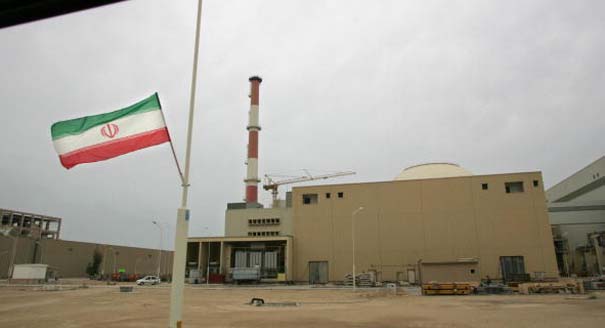
Failed talks on Iran’s nuclear program could lead to a managed irresolution, where the two sides fail to meet in the same place but also recognize that it is in the best interests of both parties to have the talks keep going.
Source: WBUR Here and Now
As Iran and the United States were preparing for another round of talks on Iran’s nuclear program in Geneva, Carnegie’s Karim Sadjadpour discussed the possible outcomes of the ongoing talks with WBUR Here and Now. He said that the main outstanding issues between the negotiating parties right now include the number of centrifuges Iran should be allowed, the length of time the agreement should hold for, and how the sanctions should be phased out.Sadjadpour added that more recent news about the talks offer some optimistic signs about concluding the deal, but the news often swing between optimism and pessimism. One of the obstacles to successfully concluding the talks is the hardliners in Tehran “who are fearful that if a nuclear deal happens that could spur greater U.S.-Iran cooperation, which could undermine their hold on power,” Sadjadpour said.
Sadjadpour concluded that if the talks failed, this would not necessarily lead to military action against Tehran. Instead, “a more likely possibility is that there isn’t a comprehensive resolution.” This would lead to what Sadjadpour refers to as a “managed irresolution,” which means that “the two sides fail to meet in the same place” but also recognize that it is in the best interest of both parties to “have the talks keep going.”
This interview was originally broadcast by WBUR Here and Now.

Senior Fellow, Middle East Program
Karim Sadjadpour is a senior fellow at the Carnegie Endowment for International Peace, where he focuses on Iran and U.S. foreign policy toward the Middle East.
Recent Work


Suzanne Maloney, Aaron David Miller, Karim Sadjadpour

Aaron David Miller, Karim Sadjadpour, Robin Wright
Carnegie does not take institutional positions on public policy issues; the views represented herein are those of the author(s) and do not necessarily reflect the views of Carnegie, its staff, or its trustees.

With the growth in points of friction between the great powers, organizations like the SCO will continue to play a role in the strategic adaptation of the smaller powers caught between them.

Temur Umarov

When faced with fuel shortages in the past, Central Asian governments could always count on additional supplies from Moscow. That safety net no longer exists.

Galiya Ibragimova

Two divergent trends—Putin’s hardline vision of how to prosecute the war in Ukraine, and a growing desire for change in Russia—could tear the regime apart.

Tatiana Stanovaya
Andrey Melnichenko’s essay offers no answer to the fundamental question of how, under any kind of negotiated settlement, Europe can protect itself from the Russian ressentiment that is inevitable in all scenarios except for an outright victory for Putin.

Leonid Bershidsky

Despite unhappiness on the ground, Moscow is determined to use both carrot and stick to ensure there is record support for United Russia in occupied Ukraine.

Konstantin Skorkin