

Commentary
Japan’s long-term security policy is driven by concerns about China, and there is little appetite for (or interest in) pursuing a confrontation with Moscow.
James D.J. Brown
{
  "authors": [
    "Milan Vaishnav",
    "Sadanand Dhume"
  ],
  "type": "legacyinthemedia",
  "centerAffiliationAll": "dc",
  "centers": [
    "Carnegie Endowment for International Peace"
  ],
  "collections": [],
  "englishNewsletterAll": "ctw",
  "nonEnglishNewsletterAll": "",
  "primaryCenter": "Carnegie Endowment for International Peace",
  "programAffiliation": "SAP",
  "programs": [
    "South Asia"
  ],
  "projects": [],
  "regions": [
    "South Asia",
    "India"
  ],
  "topics": [
    "Political Reform",
    "Economy",
    "Foreign Policy"
  ]
}
Source: Getty
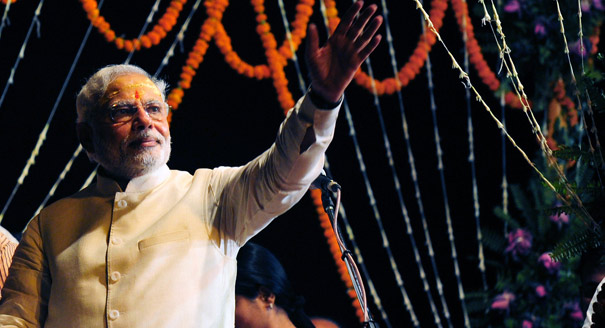
On the eve of Modi’s second visit to the United States, what are the outcomes of the U.S.-India Strategic and Commercial Dialogue and what is the status of the bilateral relationship?
Source: Bloomberg TV India
On the eve of Modi’s second visit to the United States, Carnegie’s Milan Vaishnav and Sandanand Dhune from the American Enterprise Institute discussed the outcomes of the U.S.-India Strategic and Commercial Dialogue, the BJP’s reform agenda, and the impact of upcoming state elections in Bihar. On U.S.-India cooperation, Vaishnav noted an increasingly convergent position regarding Pakistan. He also spoke of China, saying that whether or not the text of the joint statement has anything to say about China, the People’s Republic nonetheless looms large in the subtext of the U.S.-India relationship. On the economy, Vaishnav contended that India is trending in the right direction compared to other emerging markets, but not improving with the speed that most people hoped it would. A lot of reform, Vaishnav concluded, still needs to be done.

Director and Senior Fellow, South Asia Program
Milan Vaishnav is a senior fellow and director of the South Asia Program and the host of the Grand Tamasha podcast at the Carnegie Endowment for International Peace. His primary research focus is the political economy of India, and he examines issues such as corruption and governance, state capacity, federalism, and electoral behavior. He also conducts research on the Indian diaspora.
Sadanand Dhume
Council on Foreign Relations
Carnegie does not take institutional positions on public policy issues; the views represented herein are those of the author(s) and do not necessarily reflect the views of Carnegie, its staff, or its trustees.

Japan’s long-term security policy is driven by concerns about China, and there is little appetite for (or interest in) pursuing a confrontation with Moscow.

James D.J. Brown

Putin’s conservative staffing policies and search for ever greater control have cemented parliament’s transformation into a bureaucratic appendage of the executive branch.

Andrey Pertsev

Without a ceasefire with Ukraine on attacking each other’s energy infrastructure—to which the Kremlin is unlikely to agree—the diesel agreement between Putin and Trump is largely for show, rather than representing a genuine increase in the volumes of Russian diesel on the global market.

Sergey Vakulenko

Russian strikes are weakening the economy sustaining Ukraine’s war effort. Closing the growing funding gap will require more European support and politically contentious reforms in Kyiv.

Balázs Jarábik

Ex-president Gurbanguly Berdimuhamedov remains interested in politics, but his son Serdar, Turkmenistan’s current president, is becoming increasingly independent and willing to break with his father’s legacy. If their covert rivalry goes too far, both risk losing power.

Galiya Ibragimova