

Commentary
Marc Pierini
{
  "authors": [
    "Marc Pierini"
  ],
  "type": "legacyinthemedia",
  "centerAffiliationAll": "dc",
  "centers": [
    "Carnegie Endowment for International Peace",
    "Carnegie Europe"
  ],
  "collections": [],
  "englishNewsletterAll": "ctw",
  "nonEnglishNewsletterAll": "",
  "primaryCenter": "Carnegie Europe",
  "programAffiliation": "EP",
  "programs": [
    "Europe"
  ],
  "projects": [],
  "regions": [
    "Middle East",
    "Russia",
    "North America",
    "United States",
    "Syria",
    "Iran"
  ],
  "topics": [
    "Foreign Policy"
  ]
}
Source: Getty
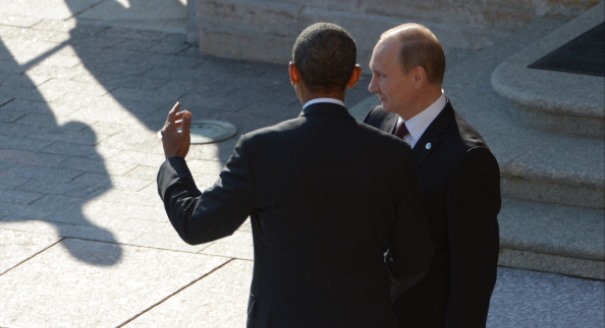
After meeting at the United Nations, will the leaders of the United States and Russia find a way to work together to end the conflict in Syria?
Source: Euronews
SA terse look on one side, some kind of a smile on the other… the Obama-Putin face-off at the United Nations in New York on Monday was riddled with underlying tension over the United States’ and Russia’s differences, notably on Syria.It was even hard to pin down who had suggested the meeting.
The White House talked about “a lengthy list of concerns about Russia’s conduct in international hotspots”.
Addressing the General Assembly, Putin’s tone was unapologetic, as if to say: ‘Assad is indispensable, live with it’.
Putin said: “Today, we provide military and technical assistance both to Iraq and Syria. We think it is an enormous mistake to refuse to cooperate with the Syrian government. We should finally acknowledge that no one but President Assad’s armed forces and Kurdish militia are truly fighting the Islamic State [movement] and other terrorist organisations in Syria.”
Obama appeared open to Assad staying on a little bit longer.
Obama said: “The United States is prepared to work with any nation, including Russia and Iran, to resolve the conflict. Yes, realism dictates that compromise will be required to end the fighting and ultimately stamp out ISIL. But realism also requires a managed transition away from Assad and to a new leader.”
Putin in his speech left room for political reform in Damascus, suggesting that Assad would cooperate. For Washington, Syria has to eventually be free of Assad. But he is still an asset to Moscow, and Moscow to him — with ISIL prising loose more and more of Assad’s grip on the country.
Russia reinforces his stronghold of Latakia, while it builds up its own naval base in Tartus, Russia’s only port on the Mediterranean. The Russians are also enlarging two aerodromes, so that cargo giants and fighter jets can use them.
Obama and Putin met privately for 94 minutes. Russian media cited Putin as saying, “there is still a way we can work together”. Speaking publicly, both had blasted each other, taking care not to use names.
On global anti-terrorism and regional power stakes, their dialogue is till open.
Our Brussels correspondent James Franey talked to former career diplomat Marc Pierini, a visiting scholar at Carnegie Europe.
Franey asked: “Why is Mr. Putin offering this so-called olive branch on Syria now?”
Marc Pierini, Carnegie Europe: “I think Russia just did a triple operation. They shored up Assad — the army was about to collapse in the northwest and in the centre, so they saved their long-time ally. Second: they are establishing a more strategic base with attack helicopters, attack airplanes etc., which is a statement for the whole of the Middle East and for Iran also. And finally, they are extending, as you say, an olive branch, but on their terms, meaning that Assad will have to be at the centre of this peace process, which of course creates difficulties for President Obama and President Hollande, while others like Chancellor Merkel have said: “we can talk”. So, it’s a divisive game, but it’s a game nobody can afford to ignore. So there’ll be some sort of talk and we’ll see where we go.”
Euronews: “So, in a way, is Russia using this as a trade-off with regards to the Ukraine crisis?”
Pierini: “This is a way to see it, but I think the intention is more general than that. We should remember the Libya case. There was a Security Council resolution in defence of the civilians and there was a NATO operation which essentially took down the Libyan regime. Russia considers — and I’ve said this for a long time — that this was an abuse of the UN Security Council. Therefore, they don’t want to see again an operation that is in their view something decided unilaterally. It’s a bit ironic because now they are calling a meeting for negotiations on anti-terrorism on their own terms. But there are not many options in the case of Syria, so we’ll have to see what comes out of the first meeting.”
Euronews: “The diplomatic option hasn’t really worked in Syria over the past few years. The impact of airstrikes is limited. Does the West need to consider a full-blown military option as well?”
Pierini: “I don’t think it’s on the cards. We have a new setup in the Middle East. We have Iran, which is back to the table because of the nuclear deal so it has a new sort of respectability. And we have Russia, which essentially has been acting unchallenged. Crimea, Eastern Ukraine, now Syria. What are the consequences for Russia? Very little. So, I think this is a game where, in a way, the West, because of the limitations to its own military actions — in particular the US, of course, in the case of Syria — is a little bit bound to be an observer or a follower.”

Senior Fellow, Carnegie Europe
Marc Pierini is a senior fellow at Carnegie Europe, where his research focuses on developments in the Middle East and Turkey from a European perspective.
Recent Work
Marc Pierini
Marc Pierini
Carnegie does not take institutional positions on public policy issues; the views represented herein are those of the author(s) and do not necessarily reflect the views of Carnegie, its staff, or its trustees.

Two divergent trends—Putin’s hardline vision of how to prosecute the war in Ukraine, and a growing desire for change in Russia—could tear the regime apart.

Tatiana Stanovaya
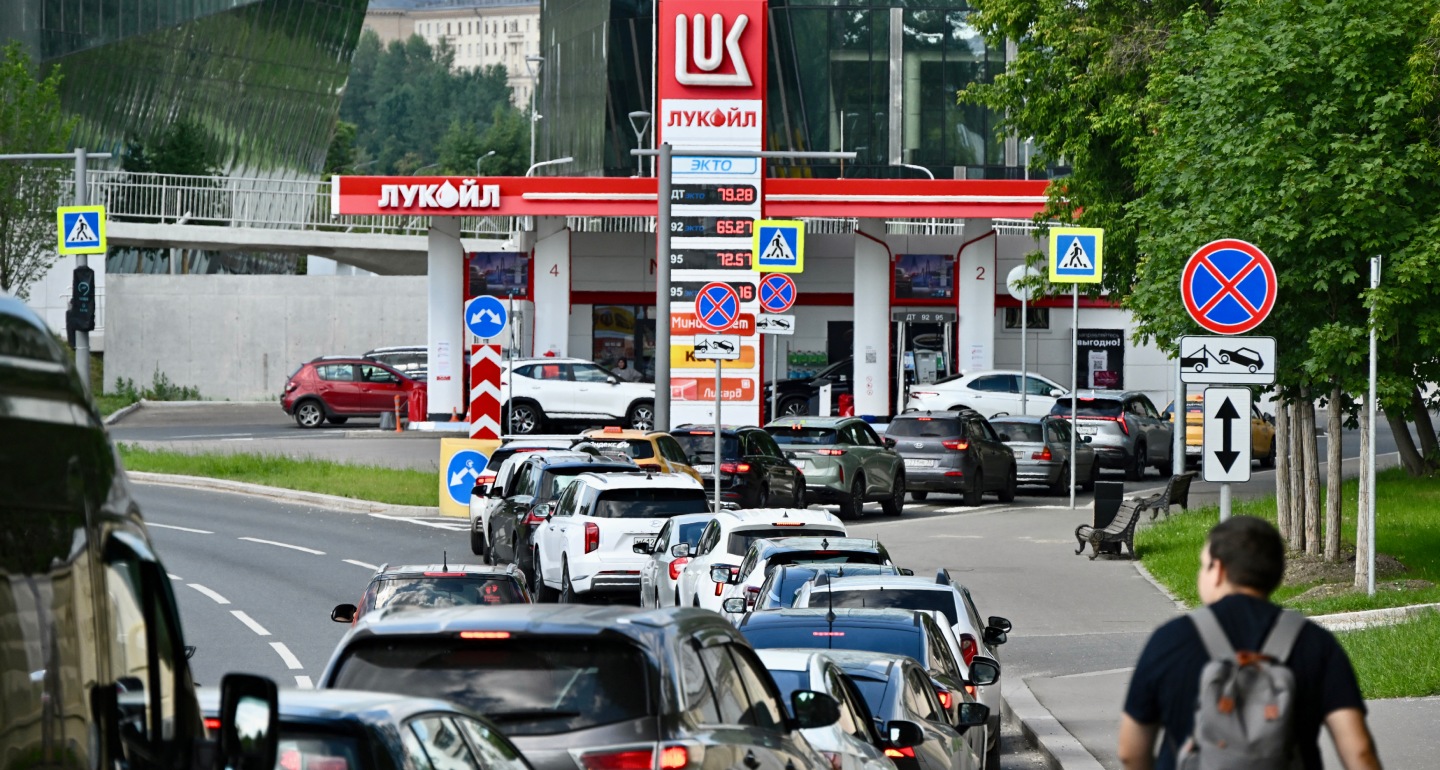
Official discussions about mini oil refineries are unlikely to come to anything—but the mere fact they’re happening reveals the regime is failing to deliver a functioning economy.

Sergey Vakulenko
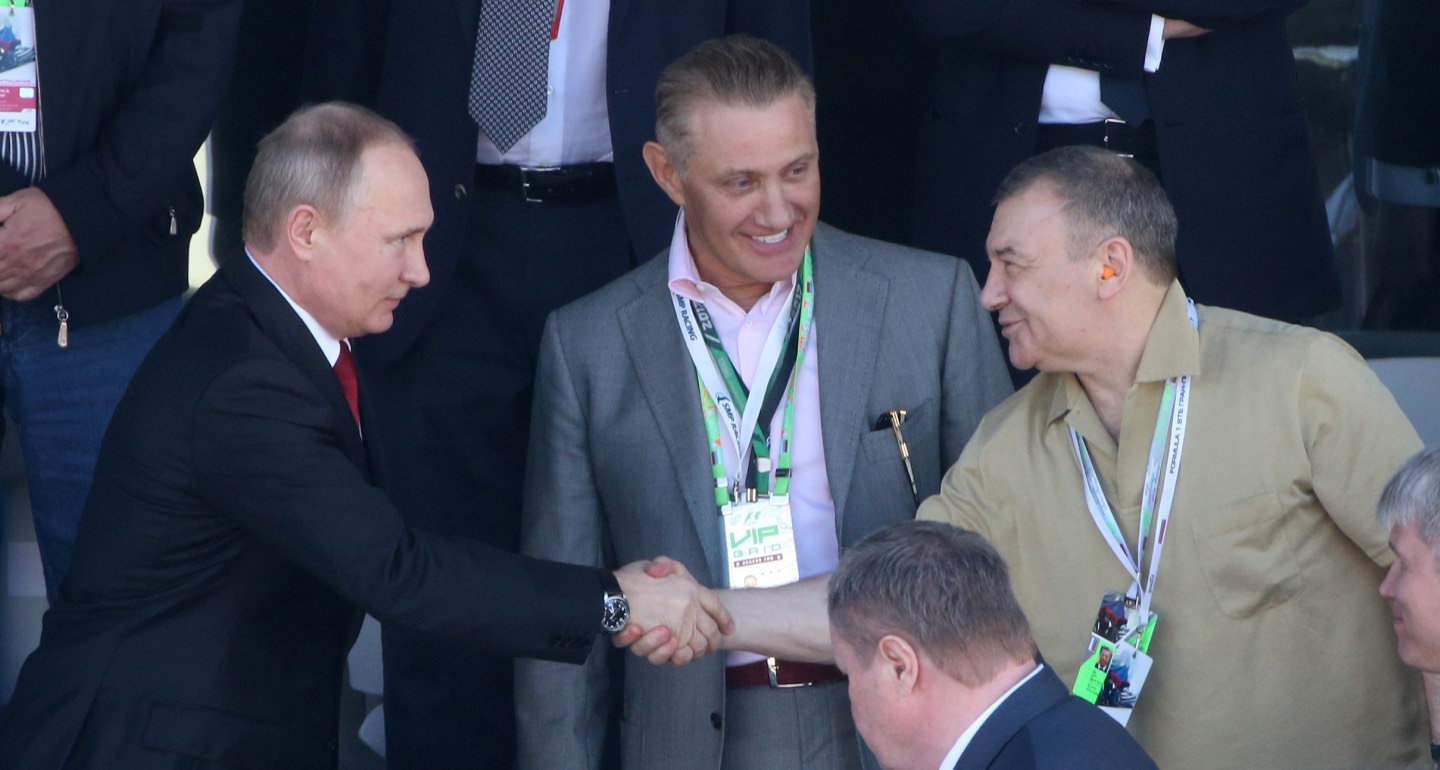
The security forces are targeting Arkady and Boris Rotenberg’s patronage network—and in Putin’s Russia, it’s extremely hard to stop a purge once it’s under way.
Mikhail Komin
Andrey Melnichenko’s essay offers no answer to the fundamental question of how, under any kind of negotiated settlement, Europe can protect itself from the Russian ressentiment that is inevitable in all scenarios except for an outright victory for Putin.

Leonid Bershidsky

Despite unhappiness on the ground, Moscow is determined to use both carrot and stick to ensure there is record support for United Russia in occupied Ukraine.

Konstantin Skorkin