

Commentary
Dmitri Trenin
{
  "authors": [
    "Dmitri Trenin"
  ],
  "type": "commentary",
  "centerAffiliationAll": "",
  "centers": [
    "Carnegie Endowment for International Peace",
    "Carnegie Russia Eurasia Center"
  ],
  "collections": [
    "Inside Russia"
  ],
  "englishNewsletterAll": "",
  "nonEnglishNewsletterAll": "",
  "primaryCenter": "Carnegie Russia Eurasia Center",
  "programAffiliation": "",
  "programs": [],
  "projects": [],
  "regions": [],
  "topics": []
}
Source: Getty
In the middle of a prolonged confrontation with the West, Russia cannot revive its Western-oriented or Eurasianist foreign policy concepts. In foreign relations, crisis-avoidance mechanisms must be the priority while Russia seeks a new strategic concept. That rethink must be underpinned by domestic reform; otherwise, the Russian state could share the fate of the Romanov regime in World War I.
In 2014, a quarter of a century of mostly cooperative relations among the great powers came to an end. In Ukraine and Syria, Moscow has essentially thrown down a gauntlet to what it sees as Washington’s global domination.
Yet this assertive Russia is also fragile. Russians should turn their minds back to 1914, when amid a clash of world powers the old Russian regime came crashing down. If it wants to escape the fate the reform-averse Romanovs endured in World War I, the current ruling elite needs to prioritize domestic change and carry out a comprehensive overhaul of the country’s institutions.
The current global clash of interests looks like a return to a period of old Great Power competition. The United States and China have much to quarrel about, and Washington and Moscow are now in a phase of extended confrontation. Russia’s recent actions challenged the world order that the United States was trying to shape after the end of the Cold War.
The political conflict between Russia and the United States is fundamental. There may be moments when tension eases and cooperation is possible, but there are no obvious options for strategic compromise.
Moreover, Russia has entered a phase of mutual estrangement with a large part of Europe; and it has, for the foreseeable future, acquired a hostile Ukraine on its border, whose new foundation for nation-building is based on hostility to Russia. Finally, Russia has been sucked into the permanent theater of conflict that is the Middle East. This is the price to pay for its bid to return to the world political arena after a twenty-five-year break.
In its recent history, Russia has sought to embrace one of two competing overarching foreign policy concepts—but both have shattered.
The first aimed to bring Russia—on terms it deemed acceptable—into the fold of the collective West (Euroatlantic or Greater Europe). The latter again sought to unite the Eurasian space through Russian leadership under new principles, first within the framework of the CIS, then through the Collective Security Treaty Organization, and finally as the Eurasian Union.
Both concepts—we can call them Plan A and Plan B—came into jeopardy in the first half of the 2010s, and were ultimately torpedoed by the Ukraine crisis.
What is to be done? First of all, Russia must accept reality and not regret the might-have-beens; then, it should decide what is possible in this rapidly changing world, and what is impossible, however desirable it may look. We should put several grand ideas into the “desirable but impossible” category: another “reset” in relations with the next U.S. presidential administration; a revival of Mikhail Gorbachev’s concept of a Greater Europe from Lisbon to Vladivostok; and a big, tightly-coordinated coalition against the self-proclaimed Islamic State, analogous to the anti-Hitler coalition of World War II.
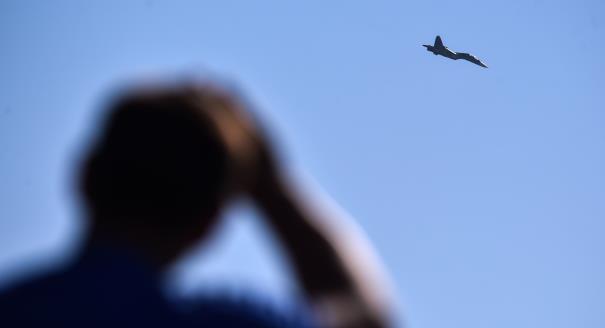
Instead, Russia should focus on more achievable and important goals, chiefly, preventing a direct confrontation with the United States, the likelihood of which is now significantly higher than zero. What happened with the Russian airplane over Syria was very unfortunate; a similar fiasco above the Baltics or the Black Sea would be even more dangerous.
This new fragile international security environment is not ready for new arms control measures. The main concern in this field must be to maintain existing agreements on strategic offensive weapons and medium-range missiles. The immediate priority is even more critical: mechanisms are needed to avert unintended conflicts.
That means we need to change the operating regime of currently frozen institutions such as the NATO-Russia Council. These institutions should become permanent mechanisms for crisis diplomacy, with hotlines and secure communication channels. They also need small groups of trusted individuals who can maintain a confidential dialogue.
The key strategic objective must be to develop a new Russian foreign policy concept—a kind of Plan C. This concept should be based on a balanced understanding of both Russia’s need for self-sufficiency and its necessary engagement with the rest of the world.
It is not worth modern Russia’s while either to join the integrationist alliances of the West or the East, or to try to create its own bloc. Russia’s current borders allow it to hold an important place in the world in any case. But Russia does need to develop a new regional strategy to deal with the challenge of a Westward-looking China, which is in the process of forming a Greater Eurasia that stretches from Beijing to the frontiers of Europe.
Yet all this is not the main thing. The key point is that Russia will be completely unable to revitalize itself as a world power if it does not address its own internal failings.
Russia needs to unambiguously prioritize domestic development—not just for the sake of having an international role, but to give itself any kind of future. Russia’s current political and economic order, if it persists, will sooner or later doom it to a tragic failure as a state.
In that sense, the current standoff with the United States holds many parallels with the way World War I brought about the collapse of old imperial Russia—except that this time the challenge to the Russian regime is more economic than political.
This critical situation could also be the spur to make long-overdue domestic changes. That means asserting the right of all to equality before the law; making government at all levels accountable to its citizens; removing artificial obstacles for the development of Russian business; setting as a priority the development of health care, education, science, technology, and innovation; and achieving, through dialogue, nationwide agreement on what are the key issues for Russia’s development and foreign policy.
Changing Russia’s model of economy and government requires overhauling its ruling elite, which now primarily serves specific corporate and personal rather than national interests. It means creating conditions for ensuring meritocracy within the ruling class and for making the rule of law supreme in the economy and society as a whole.
In principle, Russia can begin to carry this out from above while keeping the country under control and protecting it from destabilization. Yet the last days of the Romanovs have some somber lessons. If there is insufficient political will for comprehensive reform, then, just as happened with the last imperial regime a century ago, an acute foreign policy crisis could trigger the collapse of not just the system, but the entire country.
Former Director, Carnegie Moscow Center
Trenin was director of the Carnegie Moscow Center from 2008 to early 2022.
Recent Work
Dmitri Trenin
Dmitri Trenin
Carnegie does not take institutional positions on public policy issues; the views represented herein are those of the author(s) and do not necessarily reflect the views of Carnegie, its staff, or its trustees.
Rather than consolidating Russian society, the conflict in Ukraine has exacerbated existing divisions on a diverse array of issues, including support for the regime. Put another way, the impression that Putin now has the full support of the Russian public is simply incorrect.
Denis Volkov, Andrei Kolesnikov
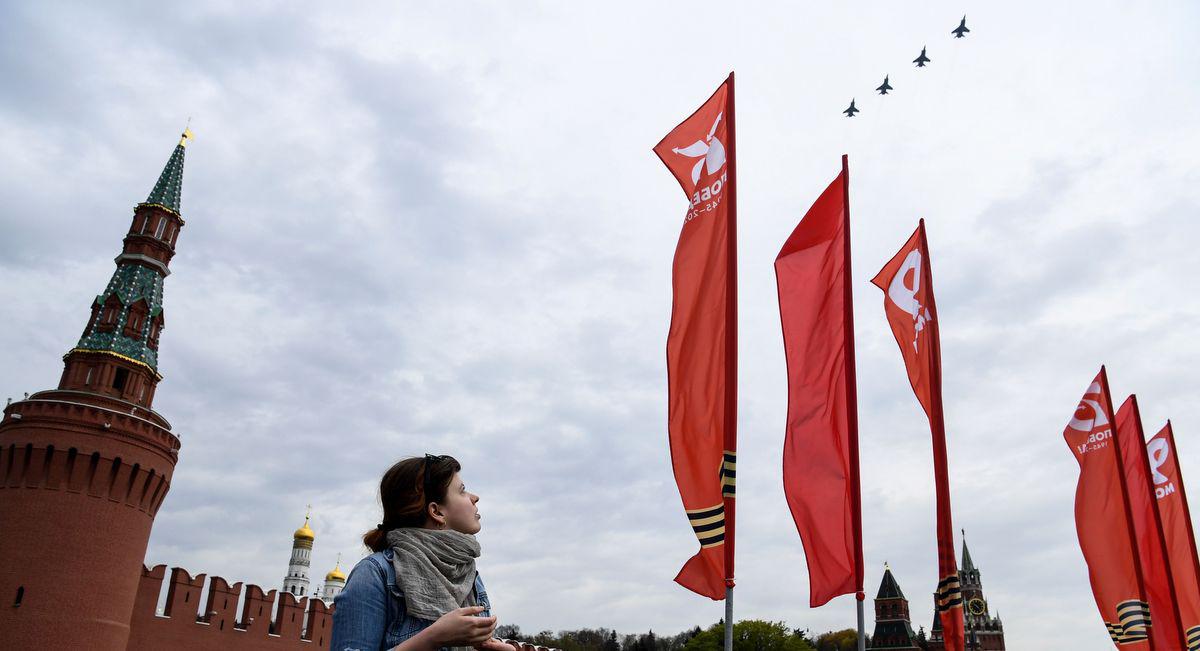
The foundation of the current Kremlin ideology is a defensive narrative: that we have always been attacked and forced to defend ourselves. Another line of defense is history.
Andrei Kolesnikov
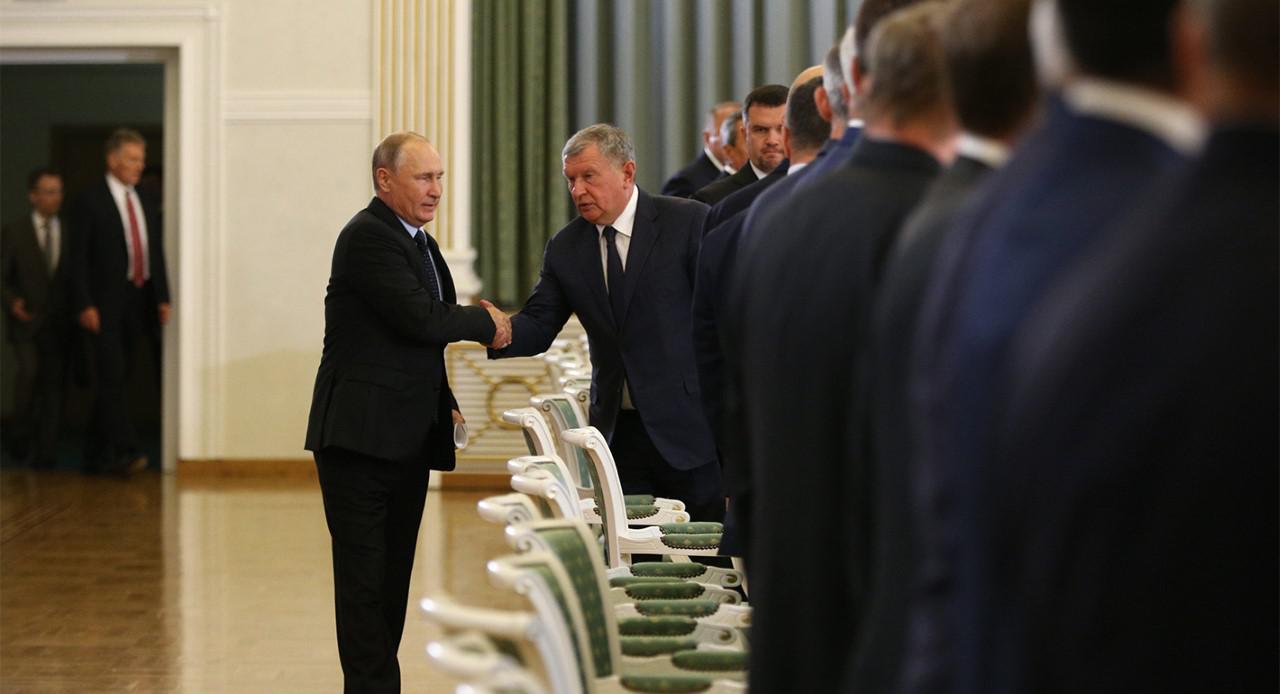
The pandemic has revealed a truth of the Russian government. Vladimir Putin has become increasingly disengaged from routine matters of governing and prefers to delegate most issues.

Tatiana Stanovaya
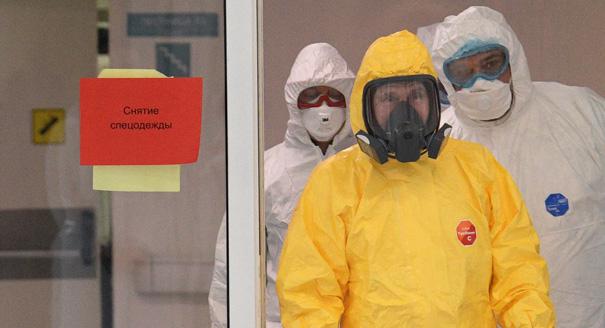
The fight against the new coronavirus in Russia is being led not by politicians oriented on the public mood, but by managers serving their boss. This is why the authorities’ actions appear first insufficient, then excessive; first belated, then premature.
Tatiana Stanovaya
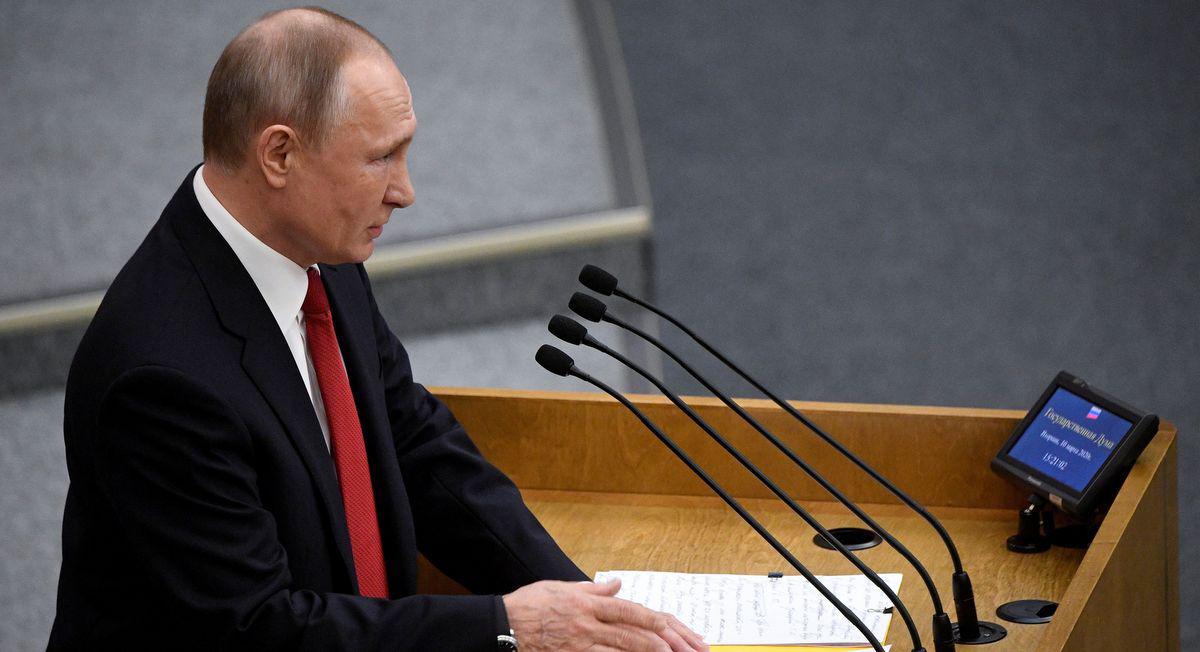
Amid a coronavirus pandemic and looming global economic crisis, Russian President Vladimir Putin has suddenly revealed how he intends to remain in power beyond 2024, when what should be his final term in office ends. In doing so, Putin seems to have bet – not incorrectly – that there is simply no one who can stop him.
Andrei Kolesnikov