

Commentary
Andrei Kolesnikov
{
  "authors": [
    "Andrei Kolesnikov"
  ],
  "type": "legacyinthemedia",
  "centerAffiliationAll": "",
  "centers": [
    "Carnegie Endowment for International Peace",
    "Carnegie Russia Eurasia Center"
  ],
  "collections": [
    "Inside Russia"
  ],
  "englishNewsletterAll": "",
  "nonEnglishNewsletterAll": "",
  "primaryCenter": "Carnegie Endowment for International Peace",
  "programAffiliation": "",
  "programs": [],
  "projects": [],
  "regions": [
    "Russia"
  ],
  "topics": [
    "Political Reform"
  ]
}
Source: Getty
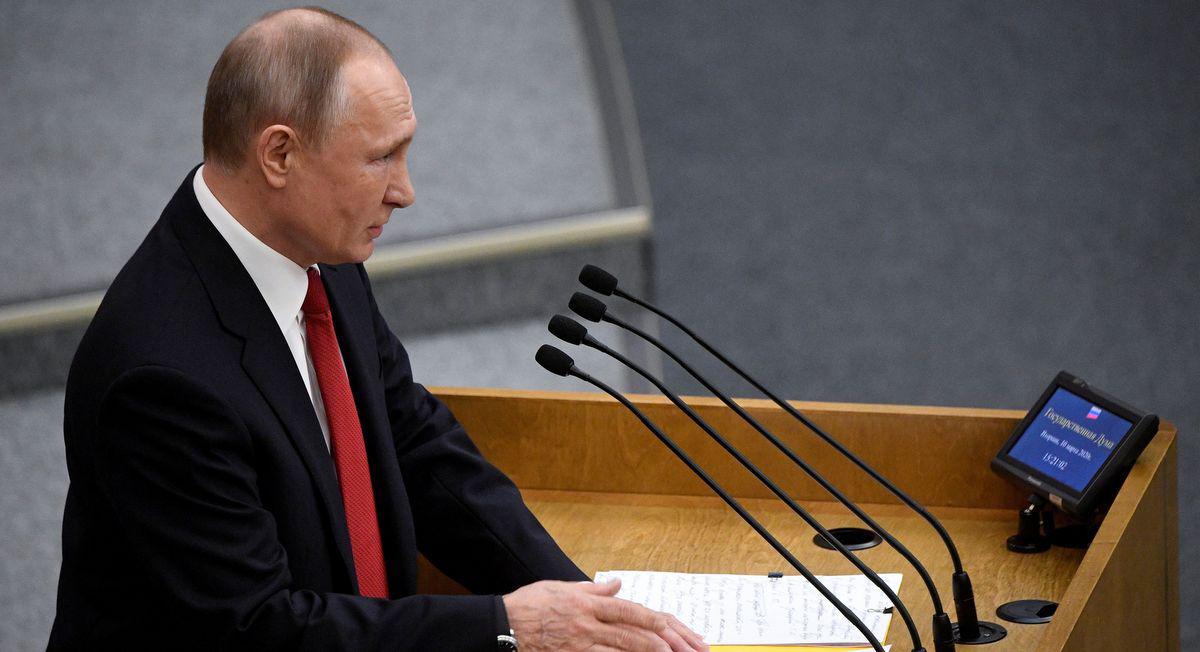
Amid a coronavirus pandemic and looming global economic crisis, Russian President Vladimir Putin has suddenly revealed how he intends to remain in power beyond 2024, when what should be his final term in office ends. In doing so, Putin seems to have bet – not incorrectly – that there is simply no one who can stop him.
Source: Project Syndicate
Thanks to legislation just passed by Russia’s parliament, Vladimir Putin now looks set to remain president until 2036, when he turns 83. He may even attain the status of “paramount leader,” on the model of China’s Deng Xiaoping in the 1970s. But no one should expect Deng-style reforms or modernization from Putin.
There was never any doubt that Putin would find some mechanism to prolong his presidency beyond 2024, when he is obliged to step down in accordance with the constitutional limit of two consecutive terms. There was speculation that Putin might circumvent the rules by becoming president of a new country created by a merger of Russia and Belarus. But while a closer union with Belarus is still an option, its own longtime president, Alexander Lukashenko, is unwilling to become merely the governor of a Russian province. Lukashenko may be a dictator, but he has committed decades to building a Belarusian nation-state.
Another possibility was that Putin would increase the powers of the State Council and then become its permanent chairman, thus assuming the role of Father (or, rather, Grandfather) of the Nation. But that model could generate perpetual conflicts with whomever fills the presidency. By simply resetting the clock on the constitutional term limit, the new legislation offers a far simpler solution. To be sure, the amendment now must be affirmed by Russia’s Constitutional Court and then by a nationwide referendum. But with Putin controlling both the court and the ballot box, a positive outcome is a foregone conclusion.
The referendum, scheduled for April 22, will put Putin firmly in the club of post-Soviet satraps whose leaders rule without constraints. That is the case in Kazakhstan, where former President Nursultan Nazarbayev rules as Father of the Nation, as well as in Uzbekistan, Azerbaijan, Tajikistan, Turkmenistan, and Belarus. In Russia, too, a referendum on constitutional amendments has turned into a plebiscite on prolonging Putin’s presidency.
Nonetheless, the announcement of Putin’s scheme on March 10 was unexpected. Interestingly, it comes hot on the heels of Russia’s withdrawal from an agreement with OPEC to limit oil production, a move instigated by Igor Sechin, Putin’s highly influential former deputy chief of staff who now serves as CEO of the state-linked oil giant Rosneft. Russia’s break with OPEC triggered a steep drop in oil prices and – crucially for Russia – in the ruble’s exchange rate, but Putin’s constitutional machinations have since offered a distraction from the country’s internal social and economic troubles.
In addition to extending his own rule, Putin has suggested constitutional amendments to expand social guarantees, such as by introducing annual indexation of pensions. The message for the average Russian voter seems to be that a more paternalistic sociopolitical order is on the way. The vicious circle of Russian political economy will continue: the state will extract more money from the economy while using some of the proceeds to purchase political loyalty. This is justified, according to Putin, because the state needs to store up more fat before it can allow for a potentially destabilizing rotation of power.
Needless to say, Putin’s latest gambit amounts to a doubling down on authoritarianism. Hence, he is also pushing for constitutional amendments affirming Russians’ faith in God, and defining marriage exclusively as a union between a man and a woman. And he has proclaimed his commitment to stand firm against Western attacks on Russia’s glorious history, particularly as a military power. Putin wants Russians to believe that only he can make the country great again: So long as Russia has a powerful, tenured leader committed to defending traditional values and national sovereignty, it can wait another day for stronger economic performance.
Do Russians support Putin and his eternal presidency? In fact, according to polling by the independent Levada Center, only 13% of the population has much interest in political issues at all. One might think that a weak currency, stagnant economic growth, and low real (inflation-adjusted) incomes would provoke a popular backlash. But it never happens. Russians understand that they can’t influence official decision-making, so many simply check out, viewing the occasional vote for the authorities as part of being a law-abiding citizen.
Moreover, while 39% of poll respondents complain that those in power are obsessed with their own privileges, the proportion of respondents who believe that Russia’s leaders have the country’s interests at heart has grown from 10% to almost 30% since 2013. Similarly, 27% of respondents assume that state managers are simply well-educated technocrats (a perception that Putin has cultivated in presenting his new cabinet).
As for the Russian elite, various oligarchic clans may compete fiercely, but they all know that they can exist only in the shadow of the dictator. Putin forgives their corruption in exchange for absolute loyalty, and everyone is a hostage of the system. One wrong step could lead to imprisonment for precisely those acts of corruption that had previously been condoned.
This politically archaic and economically inefficient system owes its survival to mass indifference. A “black swan” event could, in theory, shake the status quo; yet it is precisely because of an episode like the COVID-19 pandemic that Putin is convinced that he must remain in charge to steer Russia further through global turmoil. Russians may lose patience, but for now, the country seems doomed to live under Putin for years to come.
But Russians have not forgotten previous changes of the guard, from Stalin and Leonid Brezhnev to Yuri Andropov and Mikhail Gorbachev. Changing faces bring changes in the system, and nobody can live forever.
Former Senior Fellow, Carnegie Russia Eurasia Center
Kolesnikov was a senior fellow at the Carnegie Russia Eurasia Center.
Recent Work
Andrei Kolesnikov
Andrei Kolesnikov
Carnegie does not take institutional positions on public policy issues; the views represented herein are those of the author(s) and do not necessarily reflect the views of Carnegie, its staff, or its trustees.

Japan’s long-term security policy is driven by concerns about China, and there is little appetite for (or interest in) pursuing a confrontation with Moscow.

James D.J. Brown

The truth of the strategic situation is that Europe and Russia are extremely unlikely to be able to “turn the page” on their confrontation within the next two decades.

Arkady Moshes
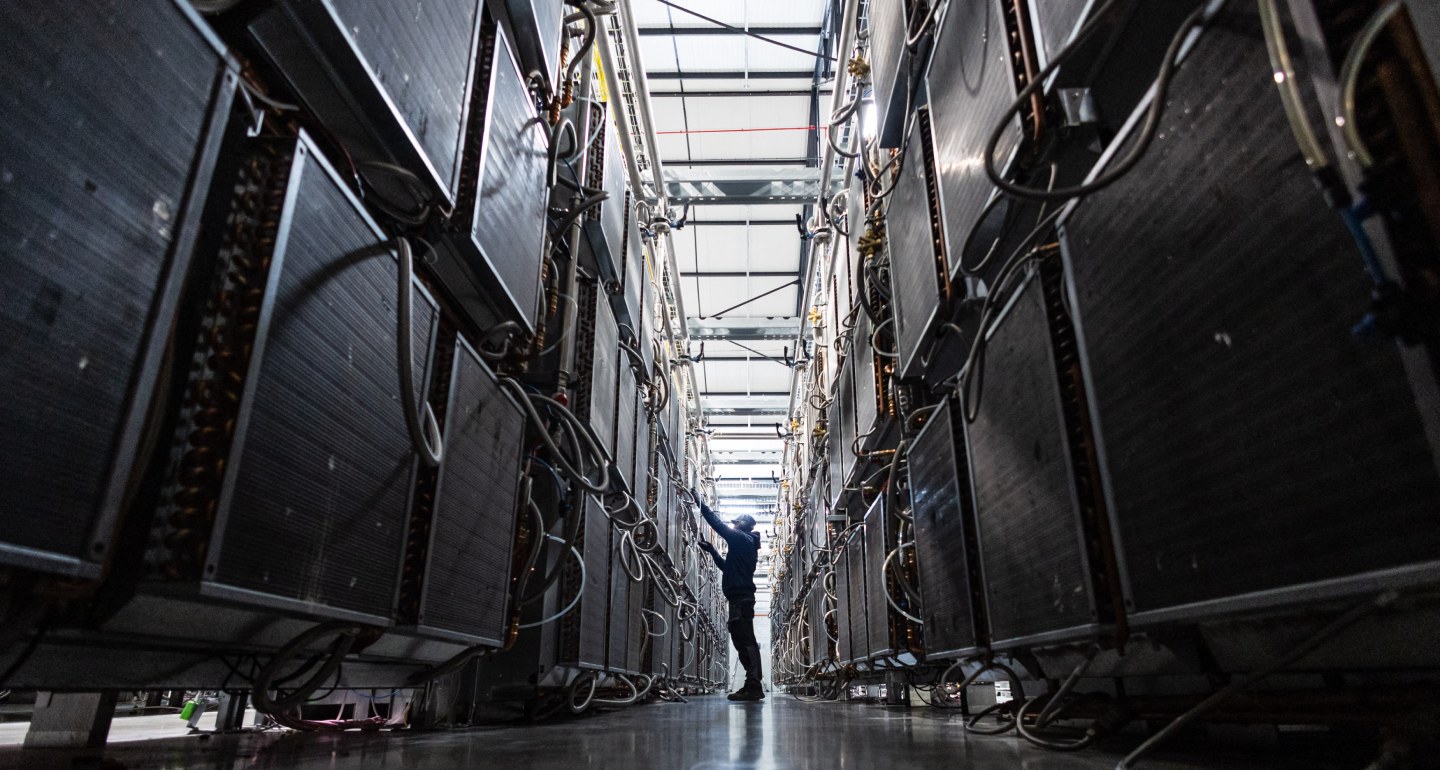
Russia spent years building a “sovereign internet,” concentrating web infrastructure exclusively within Russian territory. Ukrainian drone attacks have shown how vulnerable that approach has left the Russian internet.

Maria Kolomychenko

Putin’s conservative staffing policies and search for ever greater control have cemented parliament’s transformation into a bureaucratic appendage of the executive branch.

Andrey Pertsev

Russia’s AI-driven propaganda campaigns operate in a fragmented, chaotic, and often illogical manner. That’s not necessarily a problem for the Kremlin, though: It’s much easier to mimic genuine public debate that way.

Ilya Klishin