

Commentary
With the growth in points of friction between the great powers, organizations like the SCO will continue to play a role in the strategic adaptation of the smaller powers caught between them.
Temur Umarov
{
  "authors": [
    "Richard Sokolsky",
    "Aaron David Miller"
  ],
  "type": "legacyinthemedia",
  "centerAffiliationAll": "",
  "centers": [
    "Carnegie Endowment for International Peace"
  ],
  "collections": [],
  "englishNewsletterAll": "",
  "nonEnglishNewsletterAll": "",
  "primaryCenter": "Carnegie Endowment for International Peace",
  "programAffiliation": "",
  "programs": [],
  "projects": [],
  "regions": [
    "North America",
    "United States"
  ],
  "topics": [
    "Political Reform",
    "Foreign Policy"
  ]
}
Source: Getty
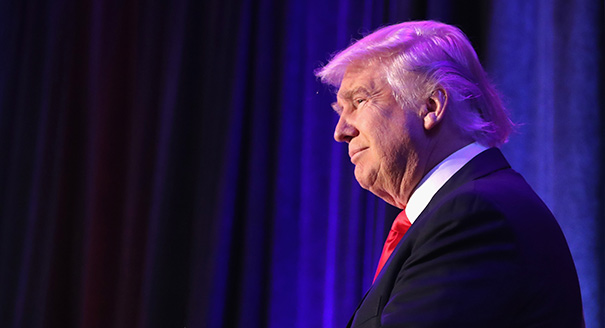
President Trump seems to be pursuing a muscular nationalism abroad that is protectionist and highly insular when it comes to dealing with allies.
Source: Wall Street Journal
In his inaugural address, Donald Trump asserted–actually decreed–an odd formulation for a democratically elected president: From this day forward, the U.S. would pursue an “America First” agenda both at home and abroad.
Mr. Trump has raised some legitimate questions and concerns about America’s continued commitment to nation-building, promoting democracy and human rights abroad, the use of American force in other countries’ civil wars, and bearing a disproportionate share of the costs of providing for the common defense of U.S. treaty allies.
Based on his campaign rhetoric and key actions taken so far, however, Mr. Trump’s approach isn’t so much America first as it is America only.
Indeed, he seems to be pursuing a muscular nationalism abroad that is protectionist and highly insular when it comes to dealing with allies.Remember the Smoot-Hawley Tariff Act of 1930: It raised U.S. tariffs on thousands of products, precipitating retaliation by America’s trade partners and a sharp reduction in global trade and American exports and imports during the Great Depression. In following this pseudo-isolationist approach, Mr. Trump may be undermining, not protecting, U.S. interests and putting them last. Consider the following:
1. Nothing good can come out of the president’s decision to pull out of the Trans-Pacific Partnership, a 12-nation Pacific trade agreement. TPP participants will either forge ahead with the agreement without the U.S. or join China’s Regional Comprehensive Economic Partnership, resulting in a decline of U.S. exports and loss of U.S. credibility in a region of great importance to U.S. security and prosperity. Imposing tariffs or border taxes is equally ill-advised; they will only trigger trade wars, harm U.S. exports, reduce American jobs, and damage U.S. relations with some of our most important partners.
2. Should Mr. Trump make good on his campaign pledge to move the U.S. Embassy in Israel from Tel Aviv to Jerusalem, he will not only be reversing decades of American policy but he’ll be jeopardizing the country’s national interests. There is no compelling national security or foreign policy interest served by this move and the downsides are many.
The move will signal–no matter how it’s explained–that the U.S. is validating Israel’s claims to the entire city of Jerusalem and that the Trump administration has greenlighted what is certain to be an intensification of building by Israel in east Jerusalem. It would also prejudge Palestinian claims to what is undeniably the most combustible and explosive issue in the unresolved Israeli-Palestinian conflict and compel Palestinians and Arab states to mount a defense of Jerusalem, which will invariably focus on the holy sites and stir up religious passions.
3. Calling into question the continued value of North Atlantic Treaty Organization and the European Union, as the president has done, undermines the effectiveness of two critical pillars of European security, stability and prosperity. It only invites the expansion of Russian influence further eastward–manna from heaven for Russian President Vladimir Putin. The European Union is America’s largest trading partner, and NATO provides needed military muscle and political legitimacy for America’s military engagement abroad.
4. Should Mr. Trump shift from questioning the “One China” policy–now in effect for more than four decades–to changing it, the impact on U.S. interests and strategy in Asia would be disastrous. The One China policy has enabled the U.S. to protect Taiwan and broaden its relationship with Taipei while maintaining U.S.-China ties that clearly serve American interests. Should Mr. Trump recognize Taiwan, he would likely risk an eventual military clash with Beijing and leave the American strategy in Asia in tatters. The real loser of such a policy change would be Taiwan, whose security would be in serious jeopardy.
5. Mr. Trump’s desire to test the proposition that the U.S. can cooperate with Russia makes sense as long as it doesn’t jeopardize U.S. interests and those of its allies. U.S.-Russian cooperation against Islamic State should not come at the expense of Ukraine, European unity and Baltic security. Nor should it legitimize Russia’s penchant for ignoring civilian casualties in the fight against jihadi terrorism. Mr. Putin is looking for a way out from under sanctions, especially those imposed on Russia after its annexation of Crimea and invasion of eastern Ukraine in 2014. Mr. Trump needs to make certain that Russia pays the appropriate price for their removal.
This piece was originally published by the Wall Street Journal.

Nonresident Senior Fellow, Russia and Eurasia Program
Richard Sokolsky is a nonresident senior fellow in Carnegie’s Russia and Eurasia Program. His work focuses on U.S. policy toward Russia in the wake of the Ukraine crisis.

Senior Fellow, American Statecraft Program
Aaron David Miller is a senior fellow at the Carnegie Endowment for International Peace, focusing on U.S. foreign policy.
Carnegie does not take institutional positions on public policy issues; the views represented herein are those of the author(s) and do not necessarily reflect the views of Carnegie, its staff, or its trustees.

With the growth in points of friction between the great powers, organizations like the SCO will continue to play a role in the strategic adaptation of the smaller powers caught between them.

Temur Umarov

The greater threat to Zelensky comes not from Fedorov alone, but from the convergence between the former defense minister’s political campaign and the anti-corruption investigations moving ever closer to the presidential administration.

Balázs Jarábik

With his public call for new elections in Ukraine, ex-defense minister Mykhailo Fedorov has opened Pandora’s box.

Konstantin Skorkin

In the discussions made possible by the State Duma election campaign, one question is being asked more and more loudly. “What next?”

Andrey Pertsev

When faced with fuel shortages in the past, Central Asian governments could always count on additional supplies from Moscow. That safety net no longer exists.

Galiya Ibragimova