

Commentary
The European far right might fail to steer EU policy in the direction Russia wants, but they will create enough chaos inside Europe to benefit the Kremlin.
Dimitar Bechev
{
  "authors": [
    "Saskia Brechenmacher",
    "Steve Feldstein"
  ],
  "type": "legacyinthemedia",
  "centerAffiliationAll": "dc",
  "centers": [
    "Carnegie Endowment for International Peace"
  ],
  "collections": [
    "Violence and Conflict"
  ],
  "englishNewsletterAll": "democracy",
  "nonEnglishNewsletterAll": "",
  "primaryCenter": "Carnegie Endowment for International Peace",
  "programAffiliation": "DCG",
  "programs": [
    "Democracy, Conflict, and Governance"
  ],
  "projects": [],
  "regions": [
    "North America",
    "United States"
  ],
  "topics": [
    "Democracy",
    "Security",
    "Foreign Policy"
  ]
}
Source: Getty
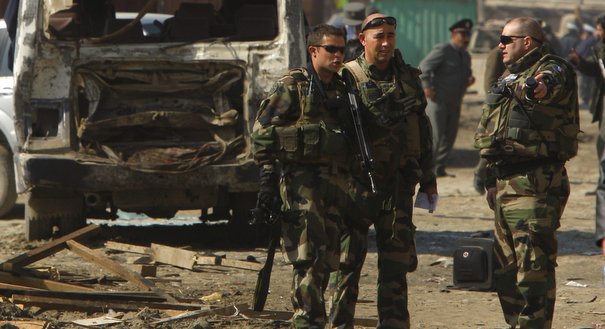
The Trump administration’s counterterrorism strategy risks forgetting key lessons from the Obama years.
Source: National Interest
Sixteen Years into the United States’ “global war on terror,” terrorist groups continue to proliferate in states that are either unwilling or incapable of defeating them. Not only has the threat of terrorism persisted, but it is escalating and intensifying in dangerous ways. The United States needs a comprehensive strategy to combat this threat. Such a strategy must be properly resourced, balancing civilian engagement with military tools and strengthening civilian-protection standards. After eight exhausting years fighting terrorist groups, there are important insights from the Obama administration that President Donald Trump would be wise to heed.
President Trump’s immediate predecessors responded to terrorist threats in different ways. President George W. Bush put the United States on a wartime footing. While he initially counted on a speedy and targeted intervention to topple the Taliban and weaken Al Qaeda in Afghanistan, the Iraq War and subsequent state-building failures pushed his administration toward an increasingly resource-intensive counterinsurgency strategy. President Barack Obama distanced himself from his predecessor’s counterinsurgency model, shifting instead to a light-footprint approach that consisted of expanded air strikes, wide use of special forces and greater reliance on host-government militaries.
As for President Trump, in the heat of the presidential campaign he was very clear about how he intended to confront terrorist groups, particularly the Islamic State (ISIS): “I will quickly and decisively bomb the hell out of ISIS, will rebuild our military and make it so strong no one—and I mean, no one—will mess with us.” Nine months into his presidency, Trump has indeed prioritized military action and downplayed diplomacy, soft power and political engagement. Without announcing a radical shift in strategy, he has loosened a number of constraints on the use of force. He has delegated authority to the military to set troop levels and undertake a much wider range of strikes, he has geographically expanded areas of active hostilities and he endorsed a dramatic escalation in air strikes in the spring, including dropping the largest nonnuclear bomb ever deployed in combat. While a new draft counterterrorism strategy notes that the United States should avoid costly military commitments and demands that U.S. allies shoulder a greater share of the burden, the Trump administration to date has largely followed the Obama administration’s plans to scale up military operations against violent extremist groups....
This article was originally published in the National Interest.
Senior Fellow, Democracy, Conflict, and Governance Program
Saskia Brechenmacher is a senior fellow in Carnegie’s Democracy, Conflict, and Governance Program, where her research focuses on democratic erosion, gender, and civic activism in the United States and globally. She also serves on the board of the International Center for Not-for-Profit Law.

Director and Senior Fellow, Democracy, Conflict, and Governance Program
Steve Feldstein is a senior fellow and director of the Democracy, Conflict, and Governance Program at the Carnegie Endowment for International Peace. His research focuses on technology, national security, the global context for democracy, and U.S. foreign policy.
Carnegie does not take institutional positions on public policy issues; the views represented herein are those of the author(s) and do not necessarily reflect the views of Carnegie, its staff, or its trustees.

The European far right might fail to steer EU policy in the direction Russia wants, but they will create enough chaos inside Europe to benefit the Kremlin.

Dimitar Bechev

Minsk clearly expected the dialogue with Washington to yield more results, in particular the lifting of EU sanctions and permission to export potash.

Artyom Shraibman

With the growth in points of friction between the great powers, organizations like the SCO will continue to play a role in the strategic adaptation of the smaller powers caught between them.

Temur Umarov

When faced with fuel shortages in the past, Central Asian governments could always count on additional supplies from Moscow. That safety net no longer exists.

Galiya Ibragimova

Two divergent trends—Putin’s hardline vision of how to prosecute the war in Ukraine, and a growing desire for change in Russia—could tear the regime apart.

Tatiana Stanovaya