• Research
  • Politika
  • About
Carnegie Russia Eurasia center logoCarnegie lettermark logo
  • Donate
{
  "authors": [
    "François Godement"
  ],
  "type": "legacyinthemedia",
  "centerAffiliationAll": "dc",
  "centers": [
    "Carnegie Endowment for International Peace"
  ],
  "collections": [],
  "englishNewsletterAll": "asia",
  "nonEnglishNewsletterAll": "",
  "primaryCenter": "Carnegie Endowment for International Peace",
  "programAffiliation": "AP",
  "programs": [
    "Asia"
  ],
  "projects": [],
  "regions": [],
  "topics": [
    "Economy"
  ]
}
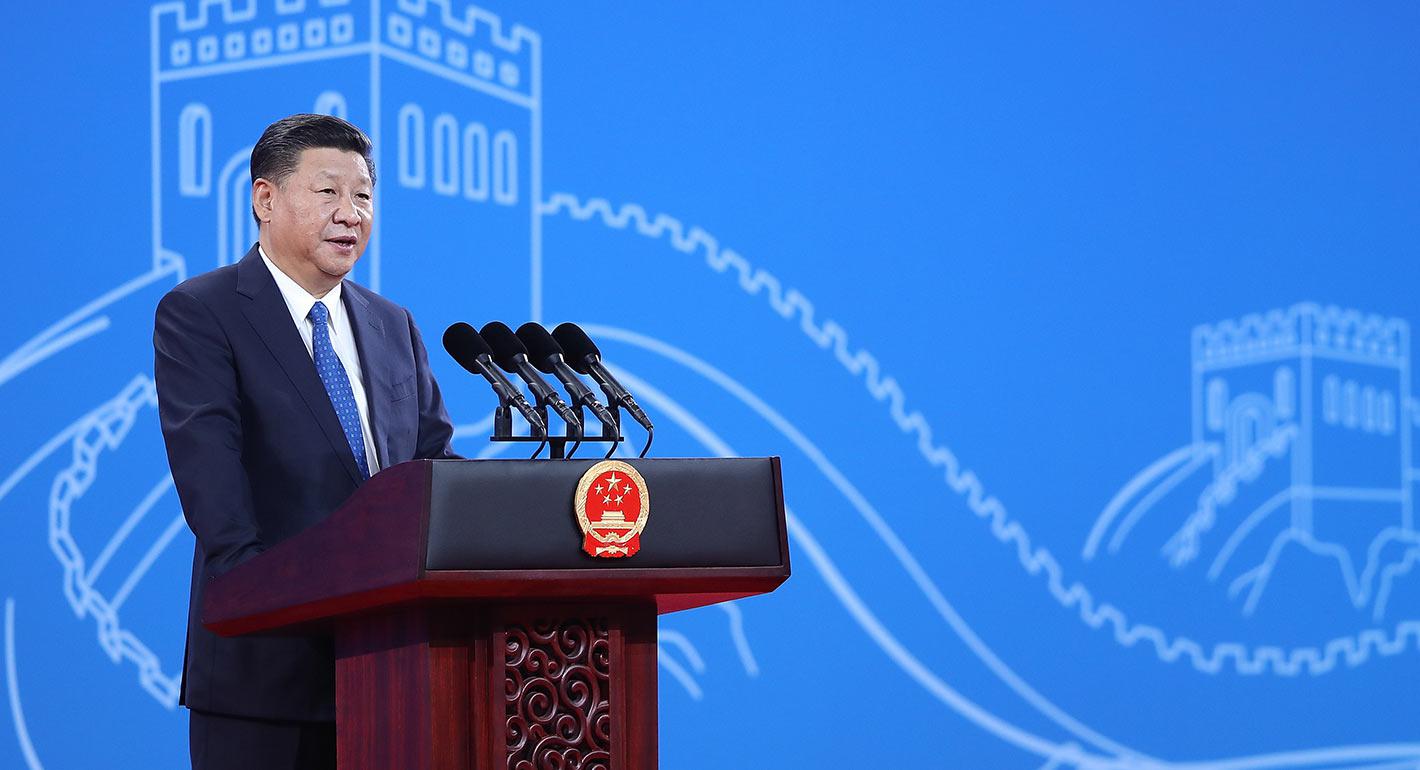
Source: Getty

In The Media

Is the Chinese Economy Drifting, Tanking or Changing?

2019 is a year full of ambiguities for the Chinese economy, mainly due to two reasons.

Link Copied
By François Godement
Published on Jan 24, 2019

Source: Institut Montaigne

2019 is a year full of ambiguities for the Chinese economy, mainly due to two reasons. The first is the important psychological pressures caused by the US-China trade war, which could potentially reverse the global trade trends that were largely dominated by China in the last decades. The second is the unclear messages conveyed by the Chinese government regarding its economic policy. In response to pressures coming from abroad, the government has alluded to possible reforms. Yet it has also taken defensive measures in order to resist these pressures. It has intensified its efforts to restrain domestic debts and liabilities. Yet at the same time, it has also adopted new stimulus measures, including new credit lines, to revive the economy. Adapt and resist, stop and go... No wonder that, after a phase of seeming invulnerability to US pressures, Chinese economists are showing signs of anxiety. Indeed, not only is the economy drifting, but it might also be tanking.

Such observations could however end up being the mere expression of unfounded pessimism after a phase of unbridled optimism.

The trade conflict has already had two significant consequences.

  • The first was the reboost of China’s exports to the United States, up until October 2018. A drop in the RMB to dollar exchange rate, and a rush to get exports past the gate before the late September tariff increases resulted in China’s highest ever trade surplus with the United States. China’s global imports also accelerated. This was likely caused by consumers’ and companies’ anticipation of tariffs and other upcoming import restrictions.
  • Meanwhile, the government has been consolidating a familiar policy: reining in speculation and bursting the economic "bubbles". It is the very policy that had been implemented, on the eve of the Great Financial Crisis of 2007-2009. At the time, China’s credit and budget discipline was perhaps purely coincidental, but it significantly helped to avoid widespread panic when the global crisis hit. Now, given that China is one of the trade war’s two main players, it is easier for authorities to foresee trouble and thus to tighten their control over runaway credit and finance. Official statements in the spring of 2018 started praising state enterprises and the state economy again. Shadow banking, which, in China, really is the "shadow of banks" and plays a significant role in structured funds with higher returns for savers, was brutally curtailed. So was, consequently, credit to private companies: no doubt the one-party state is in a good position to protect itself from the forecasted storm. However, local authorities have been hit both by anti-corruption campaigns and by a major curtailing of infrastructure projects. This also explains state companies' frenzy to get involved in the international Belt & Road projects. In 2018, investment dropped like never before in China.

Read Full Text

This article was originally published by Institut Montaigne.

About the Author

François Godement

Former Nonresident Senior Fellow, Asia Program

Godement, an expert on Chinese and East Asian strategic and international affairs, was a nonresident senior fellow in the Asia Program at the Carnegie Endowment for International Peace.

    Recent Work

  • Other
    Reorienting China Policy By Working With Europe

      François Godement, Ashley J. Tellis

  • In The Media
    China at the Gates: A New Power Audit of EU-China Relations

      François Godement, Abigaël Vasselier

François Godement
Former Nonresident Senior Fellow, Asia Program
François Godement
Economy

Carnegie does not take institutional positions on public policy issues; the views represented herein are those of the author(s) and do not necessarily reflect the views of Carnegie, its staff, or its trustees.

More Work from Carnegie Russia Eurasia Center

  • Commentary
    Carnegie Politika
    Does Russia Have Enough Soldiers to Keep Waging War Against Ukraine?

    The Russian army is not currently struggling to recruit new contract soldiers, though the number of people willing to go to war for money is dwindling.

      Dmitry Kuznets

  • Commentary
    Carnegie Politika
    Including Russia on the EU Financial Blacklist Will Hurt Ordinary People, Not the Kremlin

    The paradox of the European Commission’s decision is that the main victims will not be those it formally targets. Major Russian businesses associated with the Putin regime have long adapted to sanctions with the help of complex schemes involving third countries, offshore companies, and nonpublic entities.

      Alexandra Prokopenko

  • Commentary
    Carnegie Politika
    Why Didn’t the Ukraine War Turn Russia’s Ruling Class Against Putin?

    A new book by Alexandra Prokopenko looks at why the Russian ruling class became the regime’s willing servants—and how they might fare in a post-Putin world.

      Vladislav Gorin

  • Commentary
    Carnegie Politika
    Collateral Damage: The Frozen Foreign Assets of Middle-Class Russians

    The volume of frozen private assets might seem insignificant compared with Russia’s sovereign reserves, but these are the savings of millions of people who believed that foreign securities were a safe investment and in the institution of private property.

      Yulia Starostina

  • Commentary
    Carnegie Politika
    The Kremlin Has Weaponized Western Financial Checks to Punish Russian Dissidents

    International compliance and anti-money laundering standards are currently formulated in such a way that the Western financial system does not differentiate between Russian political prisoners and ISIS militants.

      Alexandra Prokopenko

Get more news and analysis from
Carnegie Russia Eurasia Center
Carnegie Russia Eurasia logo, white
  • Research
  • Politika
  • About
  • Experts
  • Events
  • Contact
  • Privacy
Get more news and analysis from
Carnegie Russia Eurasia Center
© 2026 Carnegie Endowment for International Peace. All rights reserved.