

Commentary
Artyom Shraibman
{
  "authors": [
    "Artyom Shraibman"
  ],
  "type": "commentary",
  "centerAffiliationAll": "",
  "centers": [
    "Carnegie Endowment for International Peace",
    "Carnegie Russia Eurasia Center"
  ],
  "collections": [
    "Coronavirus"
  ],
  "englishNewsletterAll": "",
  "nonEnglishNewsletterAll": "",
  "primaryCenter": "Carnegie Endowment for International Peace",
  "programAffiliation": "",
  "programs": [],
  "projects": [],
  "regions": [],
  "topics": []
}
Source: Getty
Having closed the border, even for six weeks, Russia has taken yet another psychologically important step in the process of its estrangement from Belarus.
Using proverbs such as “a friend in need is a friend indeed” to describe the relationship between two countries would be greatly oversimplifying matters. But it’s true that crises are a test of bonds. The coronavirus pandemic has shown how little trust is left between Minsk and Moscow.
The Russia–Belarus oil conflict may have receded from the headlines, but it has not been resolved. Officially, the dispute is over the small premium ($10–12 per ton of oil) that Russian oil producers charge Belarusian refineries for deliveries of crude oil. Since Belarus is gradually due to start paying global prices for oil from Russia by 2024, after years of buying it at favorable rates, it no longer wants to pay this premium. Russian suppliers, for their part, are not prepared to waive the premium completely, and instead suggest a gradual decrease through 2024, to reflect the gradual increase in the oil price.
The amount of money under dispute may not be huge, but the disagreement has become so politicized that no one wants to blink first. Belarusian refineries are currently processing around half of what they had planned. The only Russian producers supplying directly to Belarus are small companies and those owned by the tycoon Mikhail Gutseriev, a personal friend of Belarusian President Alexander Lukashenko.
Minsk is also buying Azeri and Russian oil in small quantities (and at a more expensive price) via the ports of Ukraine and Lithuania. Despite skeptical expectations to the contrary, Minsk has not dialed back the diversification of its supplies. On the contrary, it has taken an even more active approach.
Now, according to Reuters, Belarus is preparing to buy crude from Saudi Arabia, which—having failed to persuade Russia to keep oil prices buoyant by reducing production—is undercutting Russia on its traditional markets out of spite. Lukashenko has also ordered deliveries of oil via pipelines from Ukraine, Poland, Lithuania, and Latvia.
The search for alternative oil looks less and less like a method of bargaining with Russia, and more and more like a political choice. After all, Minsk has already incurred greater losses since January than it would have done by buying Russian oil at the small premium for the whole of 2020. The price is of secondary importance now: the priority is considerations of national pride and sovereignty. Even if the two sides do come to an agreement on oil in the near future, the bad taste will remain.
Then Minsk and Moscow fell out over their reactions to the coronavirus pandemic. Belarus is one of few countries in Europe that has not only not introduced mass quarantine, but has not closed its borders either. All of its neighbors, including Russia, have done so.
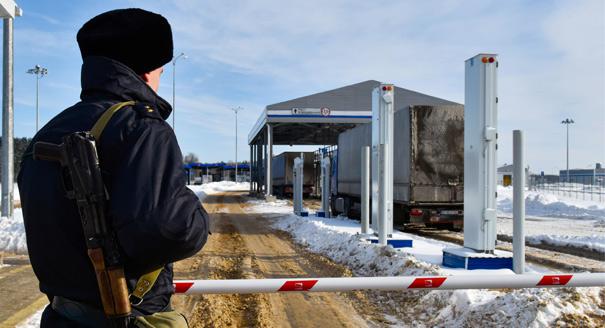
Russia has banned Belarusians from entering its territory from March 18 to May 1, and has closed the border between the two countries for individuals, letting through cargo only. As a result, many Belarusians have found it much harder to return home from abroad via Russia, and some have gotten stranded along the way.
The border closure has also hit residents of Belarus’s eastern regions, who used to go to Russia to sell goods, work, and buy gasoline there. But the problem is not the economic consequences, though they will be serious for Minsk.
In closing its border with Belarus, Russia hit Lukashenko where it hurts. In 1996, he and Russia’s then prime minister Viktor Chernomyrdin cut the ribbon on a symbolic border between the two countries, signifying its removal. It was one of the main achievements of Lukashenko’s political youth, and now it has been undone, albeit temporarily.
The Belarusian president accused the Russian authorities of protecting themselves and not their people from the coronavirus, rebuked them for not consulting with their ally first, and said the measure was completely pointless. He added that the virus was raging in Russia, in contrast with tranquil Belarus.
In response, the Russian government issued a statement accusing Minsk of not taking adequate measures against the spread of the virus, of not securing the Belarusian border, and of having a larger number of infections per capita than Russia.
Having closed the border—even for six weeks—Russia has taken yet another psychologically important step in the process of its estrangement from Belarus. Moscow is protecting Russian nationals from the virus by stopping outsiders who might be carrying it from entering the country. But, unusually for them, Belarusians have found themselves lumped in with the outsiders.
When Russia prioritizes its own national interests over those of its union state with Belarus on the issue of oil and gas, it can be explained as a bargaining tool, a move to force Minsk toward closer integration, or lobbying by greedy oligarchs who are indifferent to the idea of Slavic solidarity. But when, in response to the pandemic, the allies not only do not try to coordinate their actions, but adopt diametrically opposite solutions, and then fall out publicly over those measures, that’s a triumph of sovereignization.
Mutual trust is one of the main casualties of these disputes, whether over oil or borders. Without trust, Minsk and Moscow have no foundation upon which to form long-term agreements on any issue. They can only try to keep the union between Russia and Belarus at its current level, putting off a new crisis that will erode yet another dimension of their former friendship.
For the Russian government and public, that may be a barely noticeable process: they have enough other problems on their plate. For Belarus, it is a new paradigm of self-perception. The ruling elite and the part of society that had oriented itself on Russia is getting used to the idea that Belarus can count on no one but itself. Unconditional friends are a thing of the past.

Nonresident Scholar, Carnegie Russia Eurasia Center
Artyom Shraibman is a nonresident scholar at the Carnegie Russia Eurasia Center.
Recent Work
Artyom Shraibman
Artyom Shraibman
Carnegie does not take institutional positions on public policy issues; the views represented herein are those of the author(s) and do not necessarily reflect the views of Carnegie, its staff, or its trustees.
This episode looks at the domestic and international reception of Russia’s Sputnik V vaccine.

Alexander Gabuev, Polina Ivanova, Henry Foy
Russia is rapidly approaching a situation in which the public will lose the right to decide anything once and for all, because the authorities simply have no remaining political will or the resources to persuade the people.

Tatiana Stanovaya
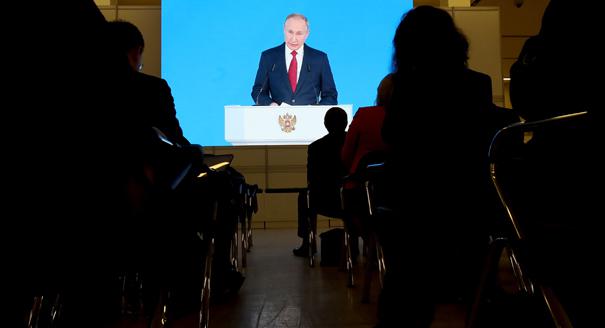
Two key mobilizing events—the vote to change the constitution and the Victory Day parade—were supposed to force Russians to temporarily forget about their low incomes and stagnating GDP. The pandemic meant they had to be postponed. Now—as lockdown measures are lifted—the Kremlin is trying to return to the scenario of rallying around the flag.
Andrei Kolesnikov
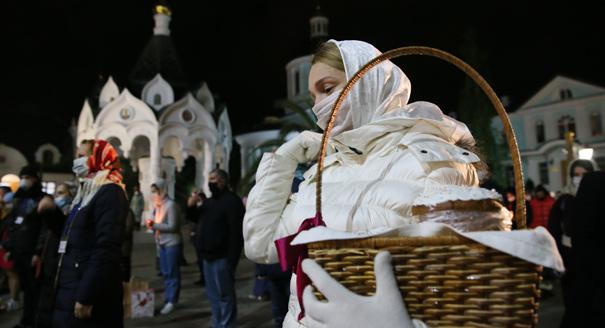
Increased coronavirus infection rates among Russian churchgoers could seriously damage attitudes toward Orthodoxy for a long time. The state has also seen for itself that the church is unable to deal with its own flock.

Ksenia Luchenko
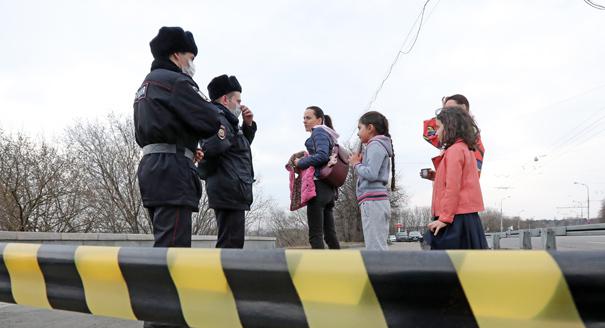
In trying to shirk responsibility for the fallout from the coronavirus pandemic, the Russian leadership is destroying the loyal majority it spent years building.

Andrey Pertsev