

Commentary
Richard Youngs
{
  "authors": [
    "Richard Youngs"
  ],
  "type": "legacyinthemedia",
  "centerAffiliationAll": "dc",
  "centers": [
    "Carnegie Endowment for International Peace",
    "Carnegie Europe"
  ],
  "collections": [
    "EU Integration and Enlargement",
    "Coronavirus"
  ],
  "englishNewsletterAll": "ctw",
  "nonEnglishNewsletterAll": "",
  "primaryCenter": "Carnegie Europe",
  "programAffiliation": "EP",
  "programs": [
    "Europe"
  ],
  "projects": [
    "Reshaping European Democracy"
  ],
  "regions": [
    "Europe",
    "Western Europe",
    "Iran"
  ],
  "topics": [
    "EU",
    "Economy",
    "Democracy"
  ]
}
Source: Getty
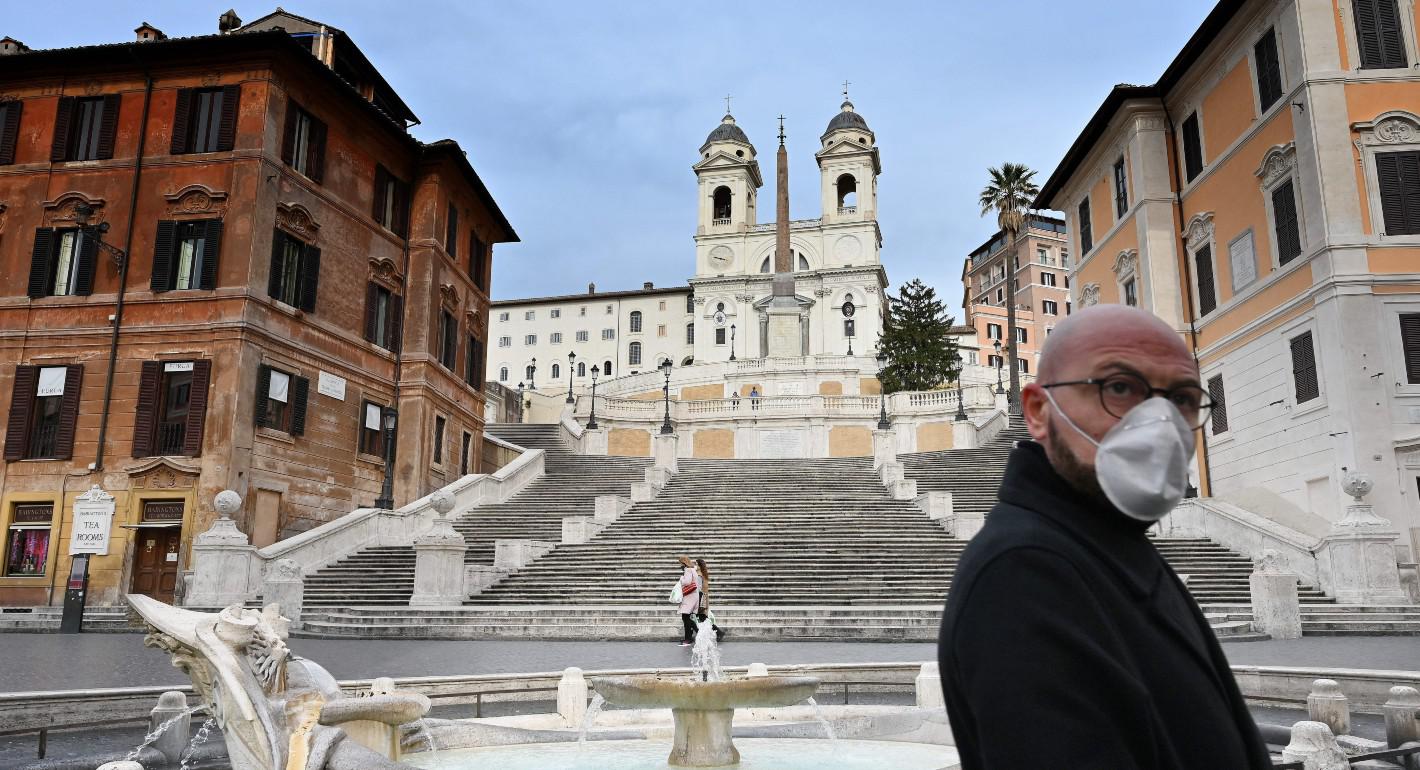
By trying to manage the financial fallout of the coronavirus without also providing democratic reform, the EU will unleash another cycle of the legitimacy problems it has suffered since the eurozone crisis.
Source: Conversation
An imbalance is emerging in the EU’s response to the Covid-19 pandemic. It is deciding on far-reaching economic measures without also providing the associated channels of democratic accountability. Neglecting this problem could result in profound harm to the union’s future. As they try to manage the financial fallout of the coronavirus, EU governments are replaying the shortcomings of their response to the eurozone crisis a decade ago. Then, too, they failed to flank new instruments of economic cooperation with democratic reform. Through many bruising summits, leaders agreed to innovations such as the fiscal stability pact and the European Stability Mechanism and other forms of deeper economic cooperation. However necessary such crisis management was to contain the eurozone crisis, the new measures diluted citizens’ say over crucial decisions and aggravated a democratic disconnect at the EU’s core.One result was that economic integration gradually pulled ahead of any effective democratic oversight of EU policies. This prevalence of technocratic decision-making gave oxygen to Europe’s surge of illiberal populism.
The COVID-19 pandemic has made most governments more open to much-needed forms of economic solidarity and stimulus than they were in the eurozone crisis – even if differences remain over exactly what form these should take. But there is less evidence that governments have learnt the more political, democracy-related lessons of the eurozone crisis. This political dimension has been strikingly absent from the EU’s agreement on short-term emergency and long-term recovery funding.
Governments insist they are committed to deepening democratic control. But in practice they have regularly baulked at ceding more influence and input to European citizens. Governments’ ritual commitments to making the EU more democratic and responsive to citizens have never been followed through.
The pandemic is pushing governments and EU institutions towards even more top-down modes of governance. Democracy issues risk falling further down the union’s agenda. Just as the virus struck, most member states were already trying to curtail citizens’ influence over the Conference on the Future of Europe – a major two-year exercise designed to revamp the way the EU works.
Getting the economics of interventionist packages right is the most urgent priority. But the political processes that undergird the much-heralded “return of big government” will also shape the EU’s post-pandemic fortunes. Big government can easily become opaque and technocratic with limited democratic participation and oversight. The recurring tendency to separate economics from politics has become a structural distortion that severely hampers EU integration.
If the EU is heading into an era of big government, large stimulus packages and more sizeable cross-border spending, its current democratic shortcomings will become more destabilising. Introducing EU-level economic measures without revamping processes of democratic control will unleash another cycle of the same legitimacy problems the EU suffered during the 2010s.
Tensions and divisions will deepen – between and within different nations – unless there is fully inclusive democratic input into decisions about where and how huge sums of money are spent across Europe. Popular disaffection with EU and national governance will also grow. That is another clear lesson from the eurozone crisis.
The most direct post-pandemic democracy challenge will clearly be to ensure that European governments fully relinquish the emergency powers they have assumed to manage the health emergency. Beyond this defensive agenda, however, the EU also needs a more positive and ambitious upgrade to its channels of democratic participation and accountability.If it fails to move forward with such political reform, popular frustration pent up during the COVID-19 emergency period may eventually erupt. The crisis has given rise to a wave of community mobilisation across Europe. If they were to learn the right lesson from the eurozone crisis, governments would seek to harness and encourage this emergent civic spirit. They would see stronger democratic participation as a positive and helpful part of the post-virus rebuilding phase, rather than a minor sideshow or distraction from their high-level EU trade-offs.
EU leaders should commit to complementing their new economic rescue package with a democracy package. This must go well beyond the standard step of offering consultations in the European Parliament. It needs to pull together the plethora of emerging civic initiatives around Europe into a participatory process that has tangible and formal influence over EU crisis-related decisions.
It is part of the Reshaping European Democracy project, an initiative of Carnegie’s Democracy, Conflict, and Governance Program and Carnegie Europe.

Senior Fellow, Democracy, Conflict, and Governance Program
Richard Youngs is a senior fellow in the Democracy, Conflict, and Governance Program, based at Carnegie Europe. He works on EU foreign policy and on issues of international democracy.
Recent Work
Richard Youngs


Richard Youngs, Erik Jones, Dan Baer, …

If the Russian-speaking community in Latvia cannot articulate their interests without being seen as disloyal, they could end up embracing a pro-Kremlin agenda.

Sergejs Potapkins

Depleted financial reserves and a shrinking tax base mean it is no longer possible to simultaneously deliver high defense spending, price stability, and economic growth.

Alexandra Prokopenko
Ultimately, Zelensky sided neither with the reform camp nor with the military establishment as such, but with political control.

Balázs Jarábik

Andrey Melnichenko’s essay offers no answer to the fundamental question of how, under any kind of negotiated settlement, Europe can protect itself from the Russian ressentiment that is inevitable in all scenarios except for an outright victory for Putin.

Leonid Bershidsky

Whether PAS can refocus on the unfinished business of state-building may ultimately prove more consequential for Moldova’s European future than the pace of its accession negotiations.
Balázs Jarábik