

Commentary
By fueling the arguments of both supporters and opponents of Armenian Prime Minister Nikol Pashinyan, Azerbaijan wants to ensure he is re-elected with a weaker mandate.
Bashir Kitachaev

REQUIRED IMAGE
President Bush and Senator Kerry both stated that stopping the spread of nuclear weapons would be the top priority for their respective administrations. Yet, for the current President there is a clear disconnect between US goals and current policy. Nowhere is this as striking as in the case of Brazil, where the President is not implementing the very policies he announced in a major speech on February 11, 2004.
President Bush and Senator Kerry both stated that stopping the spread of nuclear weapons would be the top priority for their respective administrations. Yet, for the current President there is a clear disconnect between US goals and current policy. Nowhere is this as striking as in the case of Brazil, where the President is not implementing the very policies he announced in a major speech on February 11, 2004.
Brazil soon hopes to open a uranium enrichment centrifuge plant at a place called Resende. The plant will produce low enriched uranium for nuclear power plants and weapon-usable uranium for Brazilian submarine reactors, as well as for possible export. Prior to going operational, Brazil is required under the Nonproliferation Treaty to place the facility under full International Atomic Energy Agency safeguards. The Agency currently conducts such inspections at ten other centrifuge facilities, as well as at 897 other types of nuclear sites worldwide. In a move that has raised some concerns about Brazil’s commitment to its treaty obligations, Brasilia has tried to restrict IAEA access to key parts of the enrichment plant, claiming a desire to protect proprietary information about the advanced design of their centrifuges. Beginning eight months ago, the IAEA has repeatedly been denied full access to Resende.
At about the same time Brazil began resisting the IAEA’s requests, President Bush addressed the National Defense University on nonproliferation policy, laying out in part his plans to prevent new states from the acquiring enrichment and reprocessing capabilities. In this February 11, 2004 speech, Bush stated, "We must ensure that the IAEA has all the tools it needs to fulfill its mandate." Yet Brazil has still not signed the IAEA’s strengthened inspection system known as the Additional Protocol, which the President called for all states to join. He also argued that enrichment and reprocessing "are not necessary for nations seeking to harness nuclear energy," reinforcing the notion that we should not allow any new nations to achieve full-scale enrichment or reprocessing capabilities.
Despite these laudable goals, however, the administration has apparently made an exception in the case of Brazil. In the face of Brazil’s moves, one would think an administration firmly committed to nonproliferation would express its support for the IAEA and call on Brasilia to make its nuclear program fully transparent. Yet, when asked during his visit to Brazil on October 5, Secretary of State Colin Powell publicly deferred, saying, "I view this as a matter between Brazil and the IAEA…I’m confident that both sides working together will find the solution." Hopefully, he is correct in his assessment, but such a position is an extremely passive one for an administration that says it is dedicated to stopping the spread of WMD. Moreover, it seriously undercuts support for the IAEA when it is working feverishly to deal with the case of Iran, which has also failed to provide full transparency about its enrichment activities. While Brazil is not Iran, and few seriously think Brazil is pursuing a nuclear weapon program, the two are too closely related internationally to ignore the implications one case has for the other.
This issue raises serious questions about the current administration’s ability to fully coordinate its policies or its commitment to nonproliferation. Moreover, it reinforces the perception that the Bush administration views proliferation only through the lens of bad actors. The weakening of the international nonproliferation system, including the NPT and the IAEA, undermines global security and undermines U.S. security interests. Whoever wins the U.S. election must understand and reverse this dynamic, or the world may one day face many countries seeking exceptions to nonproliferation rules.

Former Nonresident Scholar, Nuclear Policy Program
Jon Wolfsthal was a nonresident scholar with the Nuclear Policy Program.
Joshua Williams
Carnegie does not take institutional positions on public policy issues; the views represented herein are those of the author(s) and do not necessarily reflect the views of Carnegie, its staff, or its trustees.

By fueling the arguments of both supporters and opponents of Armenian Prime Minister Nikol Pashinyan, Azerbaijan wants to ensure he is re-elected with a weaker mandate.

Bashir Kitachaev

By reminding the world that Lukashenko is a threat to NATO and Ukraine, Kyiv is trying to return the focus to why the Belarusian regime needs to be contained rather than rewarded.

Artyom Shraibman

The demands of the Kremlin’s war in Ukraine, demographic problems, and public hostility toward Central Asians mean Russia does not have enough workers.

Salavat Abylkalikov

Minsk’s faith in the future of its larger neighbor’s economy is fading as Belarusian firms in Russia see record losses.

Olga Loiko
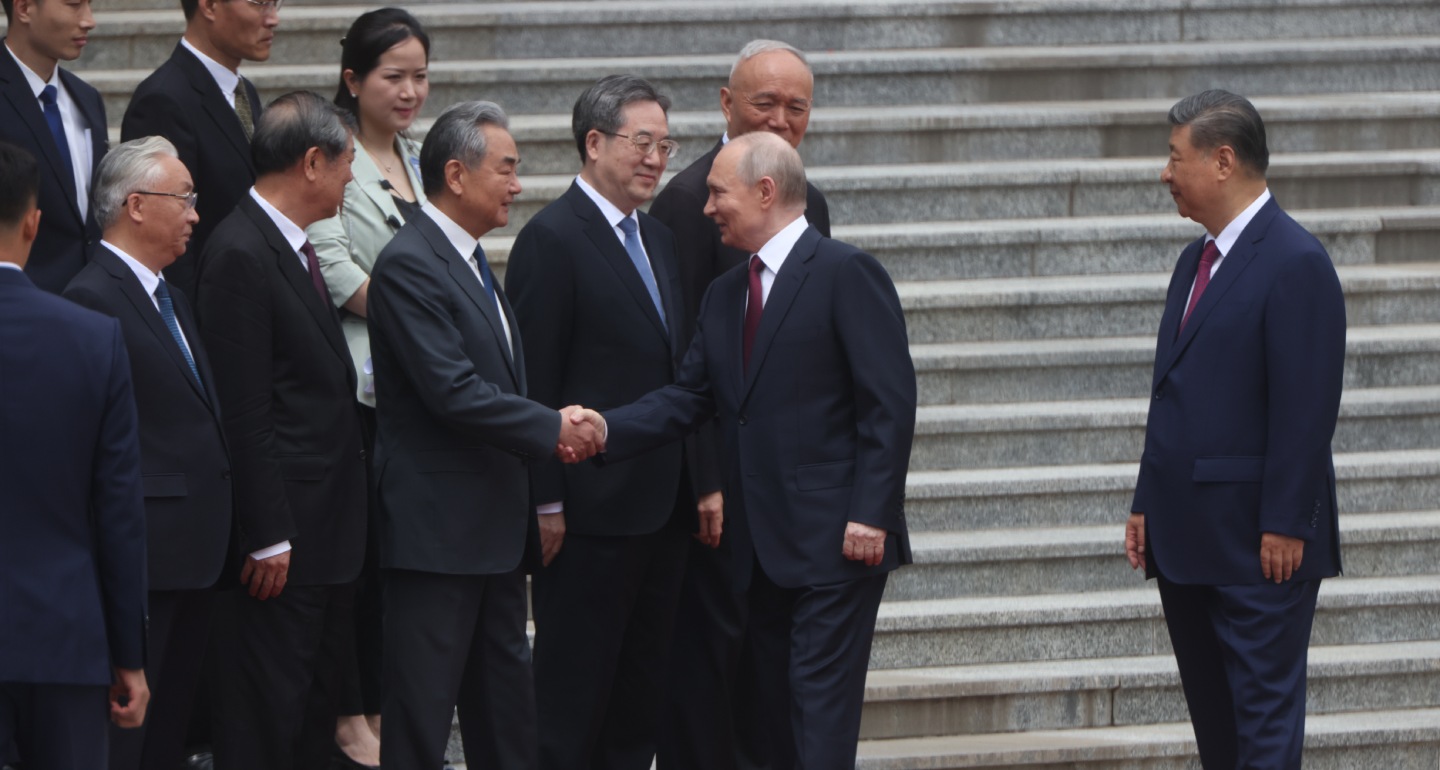
With no key agreement signed on the Power of Siberia 2 gas pipeline, there is a risk that the window of opportunity for Russia will close if Chinese power generation becomes so green that new gas sources are no longer of any interest to Beijing.

Alexander Gabuev