

Commentary
Sergey Vakulenko
{
  "authors": [
    "Sergey Vakulenko"
  ],
  "type": "commentary",
  "blog": "Carnegie Politika",
  "centerAffiliationAll": "",
  "centers": [
    "Carnegie Endowment for International Peace",
    "Carnegie Russia Eurasia Center"
  ],
  "englishNewsletterAll": "",
  "nonEnglishNewsletterAll": "",
  "primaryCenter": "Carnegie Russia Eurasia Center",
  "programAffiliation": "",
  "regions": [
    "Russia",
    "Europe"
  ],
  "topics": [
    "Trade",
    "Energy",
    "Foreign Policy"
  ]
}
Source: Getty
A gas deal would create palpable economic value, but it wouldn’t fundamentally change the position of either Russia or the EU.
At the beginning of this month, The Wall Street Journal reported that U.S. President Donald Trump’s special envoys Jared Kushner and Steve Witkoff had proposed restarting the sale of Russian gas to Europe via Ukraine, using a U.S. intermediary to circumvent EU sanctions.
The logic behind the initiative is that since the economic standoff between Russia and the West has reached a stalemate, de-escalation will require at least some kind of mutually beneficial connections. But gas is a poor contender for that role.
The Russia–Ukraine war is increasingly growing into an unprecedentedly intense confrontation between Russia and Europe. The EU believes that Russia is already waging a hybrid war against it through various acts of sabotage, while Moscow, for its part, is convinced that it would have long ago been victorious in Ukraine had it not been for Europe’s support for Kyiv.
Outside of the military arena, the two sides have almost reached the top of the escalation ladder. Most possible sanctions have been imposed, the majority of ties have been severed, and a significant number of assets have been frozen or put under external management. There are few major measures left unused.
Both sides have less and less to lose from a worsening of the conflict, which makes persisting until one side emerges victorious the most obvious strategy. De-escalation, on the other hand, would require moving in the opposite direction, and building relationships for whose sake the opponents would be prepared to compromise. But can a gas deal realistically achieve that?
The EU currently imports 5.7 billion cubic meters of gas per week, of which 0.4 billion is Russian pipeline gas, and 0.27 billion is Russian LNG. As recently as in March this year, Russian deliveries of LNG were more than twice what they are today. And until the end of 2024, the EU was also receiving about 0.3 billion cubic meters of Russian gas per week via Ukraine.
In January 2026, the EU gave its final approval to the plan to phase out the purchase of Russian gas altogether by the fall of 2027. The decision was made back before the Iran war and the closing of the Strait of Hormuz, and was based on expectations that U.S. production of LNG would increase, and that Qatar and the UAE would continue to supply large volumes.
Qatar itself did not supply that much gas to Europe, but the LNG market now resembles the oil market: it’s global, and the commodity is easily moved among consumers, so what matters is how much LNG is available overall. After the closing of the Strait of Hormuz, shipments from Qatar fell by the equivalent of 2.2 billion cubic meters of pipeline gas per week to 0.3 billion, and continue to fall. Some of the country’s capacity has been damaged, and may take a year or more to repair, even after shipping has returned to normal.
Europe could procure gas by outbidding Asian buyers, just as it did during the crisis of 2022. But that’s an expensive solution: global LNG prices are almost three times higher than a year ago, exchange prices in Europe have returned to 2022 crisis levels, and storage facilities at the beginning of the heating season are only 75 percent full: the lowest level for this time of year in the last six years.
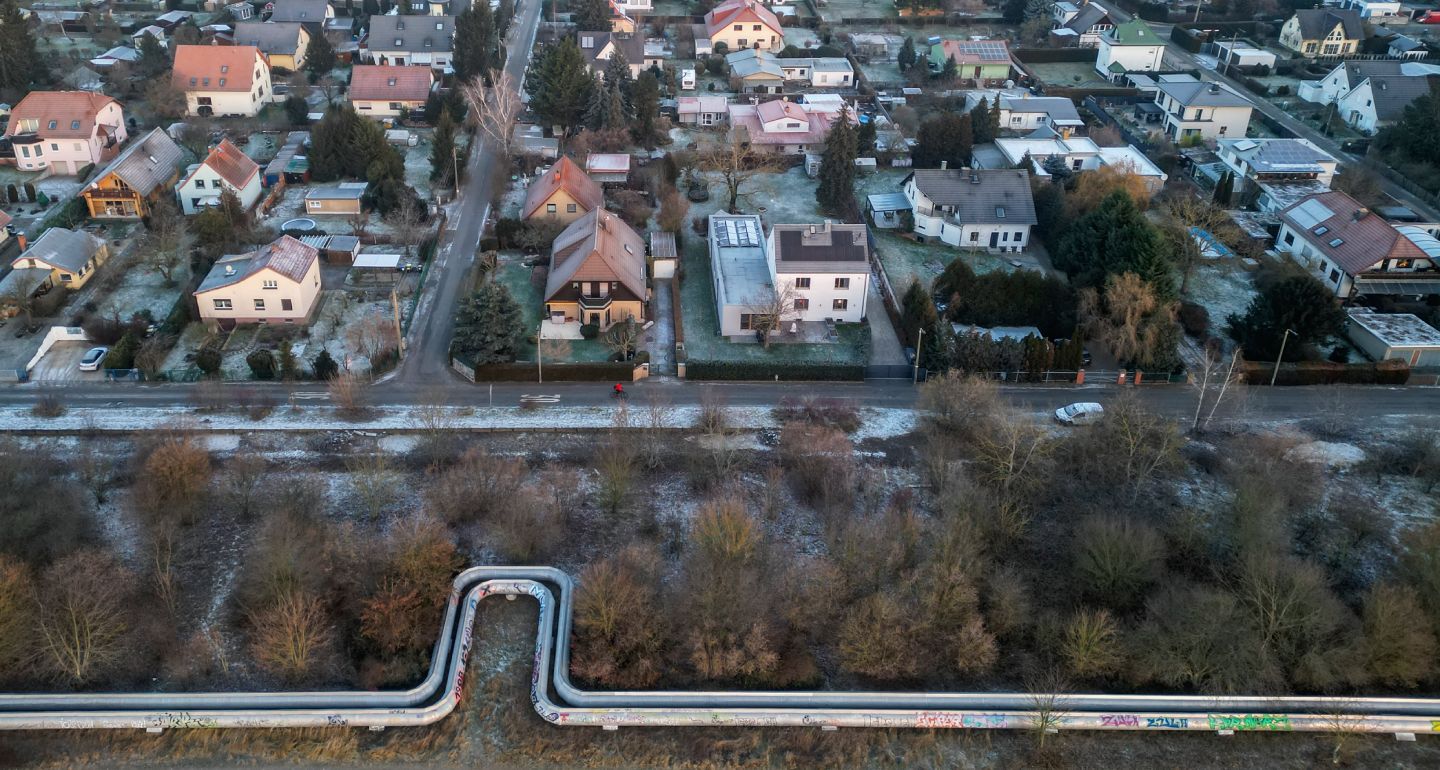
In this situation, it might seem that Europe should be interested in Russian gas—especially since the logistics of its transport would be straightforward. There is one intact strand of the North Stream 2 pipeline that was never launched but which, according to the Russian side, remains ready for use.
Then there is the Yamal–Europe pipeline via Belarus and Poland to Germany. There’s also the old route through Ukraine, which remained operational even during the fighting around Sudzha—home to a key gas metering station—in 2024. And Russia has plenty of shut-in wells on the Yamal Peninsula: it’s simply a matter of opening the valves and getting the gas—and payment for it—flowing.
It’s hard to make a precise prediction as to what the price would be in that scenario, but an increase in supply would clearly result in lower prices. As for Russian revenues, if it exported an additional 50 billion cubic meters per year at a price of about $500 per 1,000 cubic meters (half the current price), it would receive $25 billion a year: an increase of about 10 percent on its current revenues from oil and gas exports.
This, however, is precisely where the problem lies. A gas deal would create palpable economic value, but it wouldn’t fundamentally change the position of either Russia or the EU.
It was not easy for the EU to stop buying Russian gas. It was the culmination of a long debate between pragmatists, who wanted to keep supplies of relatively cheap gas, and those guided by principle, who believe that supporting Ukraine and overcoming dependency on Russia are more important than any economic benefits.
For that camp, reconsidering the decision would be a demonstration of weakness and lack of willpower. It would undermine the ruling coalitions in France and Germany, and would play into the hands of critics of ending the energy relationship with Russia—like AfD in Germany—by appearing to vindicate their position.
In addition, helping Russia to increase its export revenues would mean an about-face in the entire EU strategy. The EU’s current approach is based on the premise that sanctions will deprive the Kremlin of the resources it needs to continue its war, and will make life so hard for Russians that support for the war will plummet, forcing Putin to enter into a peace agreement.
The Russian leadership, for its part, is also banking on the energy crisis to worsen Europe’s economic situation and foment popular unrest. That, in turn, is expected either to force the current European governments to stop supporting Ukraine, or bring to power parties that are better disposed toward Moscow.
If Russia agrees to restore the supply of cheaper gas to Europe, the money saved by European governments could be used to support Ukraine. From the Kremlin’s point of view, therefore, helping Europe to weather the gas crisis would directly undermine its own interests.
According to The Wall Street Journal, under the terms of the deal for which Washington is lobbying, the revenue from renewed supplies would be deposited in a special escrow account in a third country so that the Kremlin could only use those funds for peaceful purposes. But if the money is made instantly available, Russia will simply use it for civilian needs and then funnel the budget funds it has freed up in doing so into its military requirements.
Leaving the revenue to accumulate in accounts unavailable to Moscow until the fighting ends, on the other hand, is unlikely to be acceptable to Russia. All of the Russian leadership’s actions indicate that their planning horizon stretches no further than the end of the war on the Kremlin’s terms, so Moscow would need the money today in order to achieve that goal.
After all, in the event of an outright victory, Moscow will in any case receive that $25 or $50 billion in the form of reparations and compensation. And if there is no victory, then the money in that escrow account will be confiscated—if not for Ukraine, then under rulings by arbiters whose authority Russia doesn’t recognise, to be given to European gas companies to compensate them for their losses in 2022. Uniper alone successfully sued Gazprom Export for more than 13 billion euros. The ongoing saga over Bank of Russia’s frozen assets has only convinced the Kremlin further that that will be the outcome.
Finally, the very idea that Russian export revenues could be left to build up in inaccessible accounts controlled by other countries and spent only with their agreement—as was the case with Iraq after its defeat in the 2003 war—looks suspiciously like a partial surrender of sovereignty. That is unacceptable to the Russian leadership, at least the way things currently stand.
Meanwhile, if the gas deal is structured in such a way that payments are made via private U.S. intermediaries, who take a percentage (and this is what deals featuring businessmen close to President Trump usually involve), that could prove unacceptable to European countries. To them, it would look like a conflict of interest and a blurring of the boundaries between politics, peacemaking efforts, and profit. For all of the above reasons, a gas deal between Russia and Europe mediated by Trump’s inner circle looks extremely unlikely.

Senior Fellow, Carnegie Russia Eurasia Center
Sergey Vakulenko is a senior fellow at the Carnegie Russia Eurasia Center.
Recent Work
Sergey Vakulenko
Sergey Vakulenko
Carnegie does not take institutional positions on public policy issues; the views represented herein are those of the author(s) and do not necessarily reflect the views of Carnegie, its staff, or its trustees.
Russia’s banking sector is sinking ever deeper into a crisis that the authorities are simply managing rather than trying to fix.


Alexander Kolyandr, Alexandra Prokopenko
The war does threaten Putin’s existence. That is why he does not negotiate.
René Nyberg
Russia’s coveted Red Sea naval base has fallen victim to its erratic foreign policy.

Sergey Konyashin
Mikhail Zvinchuk’s detention could have dealt a serious blow to Russia’s propaganda infrastructure in the Balkans. Instead, the incident has made something else eminently clear: Moscow values and protects its propagandists, while Europe still hasn’t figured out what to do with them.


Ivan Filippov, Ksenia Luchenko
Latvia and Lithuania have been considering whether they could temporarily host NATO nuclear weapons in the event of war or a similar crisis.
Sergejs Potapkins