

Article
Andrew Kuchins
Source: Getty
Trying to understand what is really going on in the Kremlin is like peeling an onion : layer by layer by layer with the only certitude that the process will bring you to tears. Kremlin politics can be described as “democracy within one fortress”; it is almost a completely nontransparent ruthless struggle where the stakes are high for the participants as well as those outside the Kremlin walls.
My head is spinning from a week in Russia as a guest of the Valdai Discussion Club, one of the Kremlin's more effective public relations exercises. OK, I know that is not saying much since “good image” and “ Russia ” are nearly oxymoronic.
In case anyone in our motley crew of about 40 foreign scholars and journalists had any doubts that Russia matters, we were flown out to Khanti-Mansisk in Western Siberia. Fun fact: with a population of less than one and a half million, the Khanti-Mansisk region produces more oil than the United States. Get it? In 2005 its gross economic product rose 105%, basically tracking the oil price.
Khanti-Mansisk is home to Yuganskneftgaz, formerly the crown jewel of Mikhail Khodorkovsky's Yukos empire and now part of the Kremlin's state oil champion, Rosneft. Yuganskneftgaz produces about 1 million barrels a day, and we got a tour of their mamonth Priobskoye field that produces about 400,000 barrels a day. Not surprisingly Rosneft feels a little more confident about its property rights than Mr. Khodorkovsky (now living in Eastern Siberia in case you forgot), and plans to triple investment in Yuganskneftgaz and raise production by 50% in the next few years.
Upon returning to Moscow the Kremlin spindoctors sharpened the message for their slightly dense, naïve, and jet-lagged guests. A “high-ranking Kremlin official” informed us that the succession battle is intensifying between the forces of good (the liberals like himself) and evil (the Siloviki—guys with the guns and the files), and foolish US policy is strengthening those on the dark side. Our failure to reach a WTO accession agreement with Russia this summer was a “huge mistake” that hurts the liberals' cause. With remarkable conviction and emotion he said “For young liberals like me, Putin is our hope!”. And unlike President Bush who is also leaving the scene in 2008, Mr. Putin has the responsibility of “picking a successor.” Refreshingly, he acknowledged this fact, making no pretensions to a democratic process and such niceties.
Whether this bright and articulate gentleman is simply a great conman and actor or actually believes what he is saying is impossible to judge. Likely a combination of both. Trying to understand what is really going on in the Kremlin is like peeling an onion : layer by layer by layer with the only certitude that the process will bring you to tears. Kremlin politics can be described as “democracy within one fortress”; it is almost a completely nontransparent ruthless struggle where the stakes are high for the participants as well as those outside the Kremlin walls.
The other principal impression created by our Kremlin interlocutor was the extent of the “besieged fortress” mentality that grips those within. The Russian masses are certainly not to be trusted, and Russia 's foreign partners constantly deceive and cheat ( obmanivayut in Russian, probably the most frequently used verb in this guy's engaging chat with us). I came away with the impression that the Kremlin boss is kind of like the Wizard of Oz, feared and revered by those beyond the curtain, but really he is frantically improvising, pulling many levers with only the faintest hope that these efforts will bring the desired effect.
But finally we met the Wizard who wined and dined us in his stately country home outside Moscow, the former residence of the last Grand Duke of the Romanov dynasty. Over a lavish five course meal, Mr. Putin dexterously fielded questions from his guests for three hours. He actually was a bit bored as the group soft-balled him with too many easy questions. The intensely competitive Mr. Putin did not come for a pillow fight. He must also be a very cold-blooded creature because while the dining room was overheated, he showed no sign of the slightest perspiration while we were all mopping our brow—some even taking off their coats despite protocol.
Mr. Putin's message to us was two-fold. The first message was not new Kremlin spin. On democracy in Russia, beware of what you wish for. The Russian population is far more anti-American than his pragmatic approach to Washington. And remember that democracy empowered such anti-American forces like Hizbollah in Lebanon and Hamas in Palestine.
The other message for us Americans and Europeans was not only does Russia have new-found leverage but also new options if we fail to appreciate Russian interests. Of all the guests, Putin was most solicitous of the one representative from China, a professor from Shanghai who graciously invited the Russian president to his hometown. Putin cooed over as Shanghai as a virtual miracle of development and described China-Russia relations in the most positive terms ever. As for the Shanghai Cooperation Organization, a relatively new grouping of Russia, China, and Central Asia that some alarmists liken to the anti-NATO, Putin made a special point (He twice used the phrase chestnoe slovo —that can be loosely translated as “for real” to make sure we did not miss the point while downing our Pinot Grigio) that the rapid development of this grouping, in response “to demand in the wake of the collapse of the bipolar world”, has truly surprised him. That's right, according to Putin there is a natural gravitational pull drawing Russia and China closer together. You Americans and Europeans better chill out on the dissing of Russia because the Chinese are banging hard on our door and ready to bear gifts. Spin job? We shall see.
Andrew C. Kuchins is director and senior associate of the Russian and Eurasian Program at the Carnegie Endowment for International Peace in Washington DC.
Former Senior Associate and Director, Russian & Eurasian Program
Recent Work
Andrew Kuchins
Andrew Kuchins, Vyacheslav A. Nikonov, Dmitri Trenin
Carnegie does not take institutional positions on public policy issues; the views represented herein are those of the author(s) and do not necessarily reflect the views of Carnegie, its staff, or its trustees.
Russia’s coveted Red Sea naval base has fallen victim to its erratic foreign policy.
Sergey Konyashin
Mikhail Zvinchuk’s detention could have dealt a serious blow to Russia’s propaganda infrastructure in the Balkans. Instead, the incident has made something else eminently clear: Moscow values and protects its propagandists, while Europe still hasn’t figured out what to do with them.
Ivan Filippov, Ksenia Luchenko
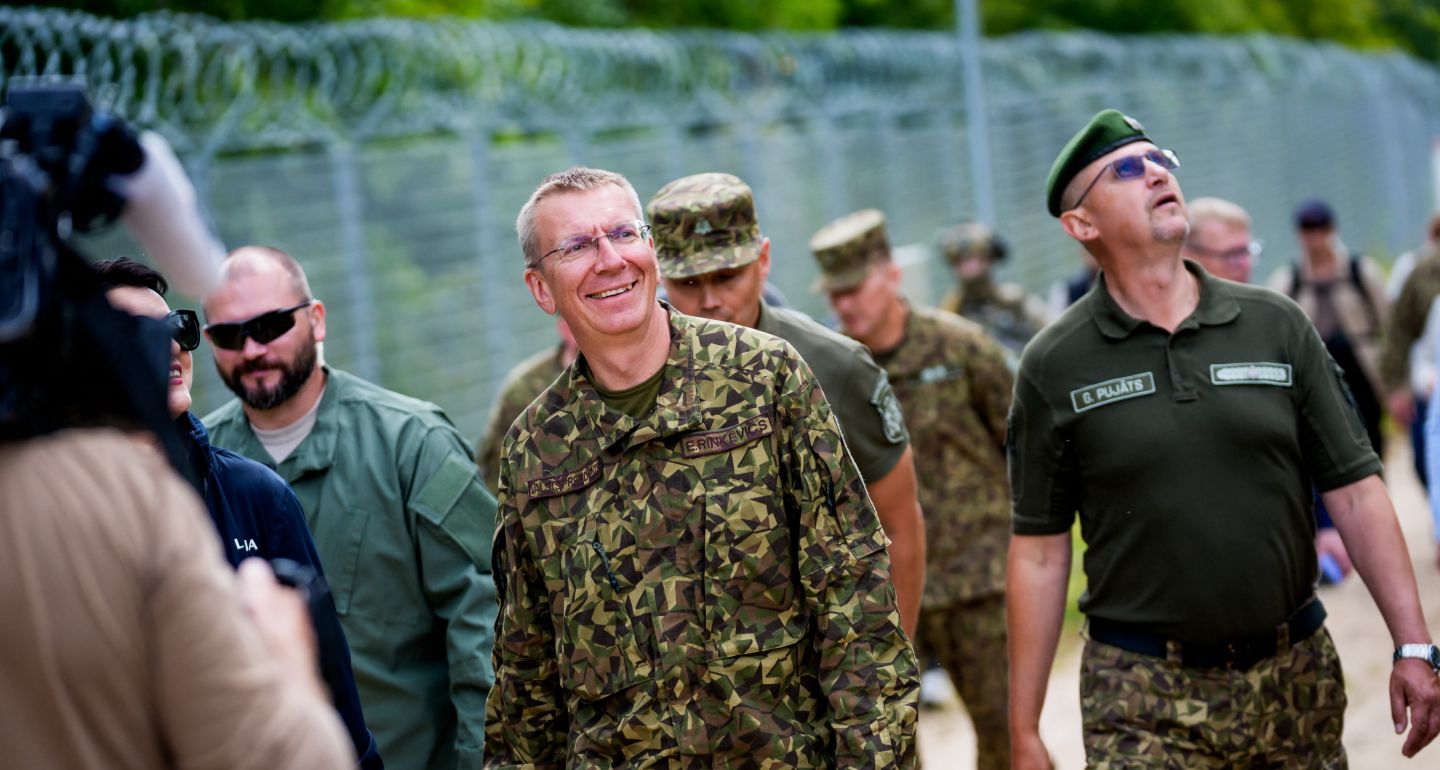
Latvia and Lithuania have been considering whether they could temporarily host NATO nuclear weapons in the event of war or a similar crisis.
Sergejs Potapkins
Russia does not have to treat Western companies as equal partners. A centralized regime built on a foundation of oil and gas income was never going to relinquish what it saw as sovereign control.
Edward C. Chow
The new Serbian leadership may have promised to keep on cooperating with Russia, but soon they will have to make a choice between fighting corruption and sealing lucrative deals with Moscow. The two are mutually exclusive, even if the new leaders in Belgrade haven’t yet realized it.
Maksim Samorukov