• Research
  • Politika
  • About
Carnegie Russia Eurasia center logoCarnegie lettermark logo
  • Donate
REQUIRED IMAGE

REQUIRED IMAGE

Paper

When Money Talks: Arab Sovereign Wealth Funds in the Global Public Policy Discourse

The financial interdependence that sovereign wealth funds (SWFs) created between the West and the Arab world could help stabilize multilateral relations and promote economic development and political stability in the Middle East.

Link Copied
By Sven Behrendt
Published on Oct 15, 2008

Additional Links

When Money Talks - English (PDF)When Money Talks - Arabic (PDF)

The financial interdependence that sovereign wealth funds (SWFs) created between the West and the Arab world could help stabilize multilateral relations and promote economic development and political stability in the Middle East, concludes a new paper from the Carnegie Middle East Center. 

Sven Behrendt studies the rise of Arab SWFs, assesses their investment strategy, and evaluates the policies of Arab investors and Western nations.

He also analyses the political implications of policy initiatives, such as the International Working Group of Sovereign Wealth Funds convened by the IMF, which agreed to new voluntary principles and investment practices in Washington last Saturday.
 
Key conclusions:
  • An international framework between investing and recipients nations is needed and should reflect the changing nature of the global market. A fragmented system of national policies is inefficient and in no one’s interest.
  • Arab investment managers need to adjust their strategies and take broader responsibility for the stability of the global financial markets. They can no longer play the role of quiet investors. 
  • Arab public opinion, media, and civil society should take an interest in their countries’ SWFs and demand a more transparent accounting of how the funds are being invested. 
  • Western governments should acknowledge the increased bargaining power of the Gulf countries and reach out in a constructive manner. They must also avoid policy decisions based on misplaced fear of foreign domination and populist sentiments.
 Behrendt cautions:
 
“It is vital that the International Working Group’s work acquires a high degree of political legitimacy, anticipating the tremendous growth of SWFs in the mid-term future, further straining any new financial markets regime. Otherwise states will revert to national legislation in regard to regulating SWFs. The outcomes of these policy processes risk to largely be a function of the domestic discourse between pragmatists and populists in the Western countries.”
 
Sven Behrendt is a visiting scholar at the Carnegie Middle East Center. He is an expert in global policy issues, international negotiations, corporate strategy, and diplomacy. Prior to his appointment at Carnegie, he served in various management positions at the World Economic Forum and the Bertelsmann Group on Policy Research. He is a regular commentator on television and in the press on corporate strategy and globalization.

About the Author

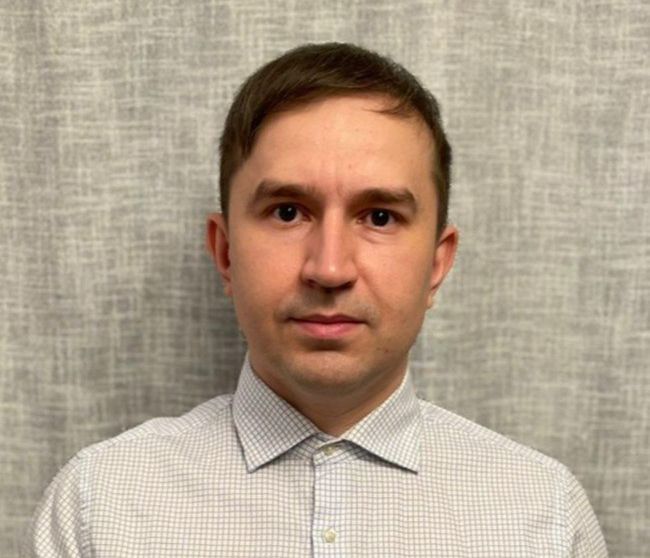
Sven Behrendt

Sven Behrendt
BahrainKuwaitSaudi ArabiaUnited Arab EmiratesGulfEconomy

Carnegie does not take institutional positions on public policy issues; the views represented herein are those of the author(s) and do not necessarily reflect the views of Carnegie, its staff, or its trustees.

More Work from Carnegie Russia Eurasia Center

  • Commentary
    Carnegie Politika
    Does Russia Have Enough Soldiers to Keep Waging War Against Ukraine?

    The Russian army is not currently struggling to recruit new contract soldiers, though the number of people willing to go to war for money is dwindling.

      Dmitry Kuznets

  • Commentary
    Carnegie Politika
    Including Russia on the EU Financial Blacklist Will Hurt Ordinary People, Not the Kremlin

    The paradox of the European Commission’s decision is that the main victims will not be those it formally targets. Major Russian businesses associated with the Putin regime have long adapted to sanctions with the help of complex schemes involving third countries, offshore companies, and nonpublic entities.

      Alexandra Prokopenko

  • Commentary
    Carnegie Politika
    Why Didn’t the Ukraine War Turn Russia’s Ruling Class Against Putin?

    A new book by Alexandra Prokopenko looks at why the Russian ruling class became the regime’s willing servants—and how they might fare in a post-Putin world.

      Vladislav Gorin

  • Commentary
    Carnegie Politika
    Collateral Damage: The Frozen Foreign Assets of Middle-Class Russians

    The volume of frozen private assets might seem insignificant compared with Russia’s sovereign reserves, but these are the savings of millions of people who believed that foreign securities were a safe investment and in the institution of private property.

      Yulia Starostina

  • Commentary
    Carnegie Politika
    The Kremlin Has Weaponized Western Financial Checks to Punish Russian Dissidents

    International compliance and anti-money laundering standards are currently formulated in such a way that the Western financial system does not differentiate between Russian political prisoners and ISIS militants.

      Alexandra Prokopenko

Get more news and analysis from
Carnegie Russia Eurasia Center
Carnegie Russia Eurasia logo, white
  • Research
  • Politika
  • About
  • Experts
  • Events
  • Contact
  • Privacy
  • For Media
Get more news and analysis from
Carnegie Russia Eurasia Center
© 2026 Carnegie Endowment for International Peace. All rights reserved.