

Article
Thomas Carothers
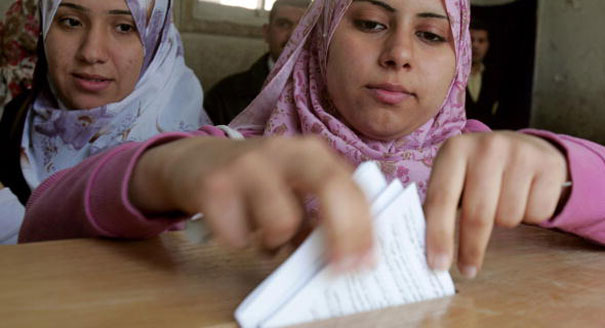
Source: Getty
Good news on democratization, though often less visible, has occurred in roughly equal proportion to bad news. By taking on this more balanced perspective, the Obama administration can ensure that unnecessary pessimism does not hinder important U.S. support for democracy around the world.
The Obama administration faces pressure to pull back U.S. democracy promotion efforts, given the Bush administration’s legacy and increasing talk of a global “democratic recession.” The United States can and should remain an active supporter of democracy abroad. By building a new approach to democracy promotion around the new president’s cardinal values—non-confrontational, measured, cooperative, and empowering—the United States can regain its place as a respected, trusted, and influential ally of democracy around the world.
Thomas Carothers offers a wide-ranging assessment of the state of democracy in the world, finding that despite set backs in the troubled regions of the Middle East and former Soviet Union, democracy has not experienced a global retreat this decade. Good news on democratization, though often less visible, has occurred in roughly equal proportion to bad news, and considerable continuity exists in many places. By taking on this more balanced perspective, the Obama administration can ensure that unnecessary pessimism does not hinder important U.S. support for democracy.
Understanding Democracy Development in Key Regions

Harvey V. Fineberg Chair for Democracy Studies; Senior Fellow, Democracy, Conflict, and Governance Program
Thomas Carothers, a senior fellow in the Carnegie Endowment for International Peace’s Democracy, Conflict, and Governance Program, is a leading expert on comparative democratization and international support for democracy.
Recent Work
Thomas Carothers
Thomas Carothers
Carnegie does not take institutional positions on public policy issues; the views represented herein are those of the author(s) and do not necessarily reflect the views of Carnegie, its staff, or its trustees.

Ex-president Gurbanguly Berdimuhamedov remains interested in politics, but his son Serdar, Turkmenistan’s current president, is becoming increasingly independent and willing to break with his father’s legacy. If their covert rivalry goes too far, both risk losing power.

Galiya Ibragimova

Sergei Kiriyenko used Russia’s parliamentary vote to further hone his strategy of corporate mobilization that is designed to maximize votes for United Russia.

Andrey Pertsev

The European far right might fail to steer EU policy in the direction Russia wants, but they will create enough chaos inside Europe to benefit the Kremlin.

Dimitar Bechev

If the Russian-speaking community in Latvia cannot articulate their interests without being seen as disloyal, they could end up embracing a pro-Kremlin agenda.

Sergejs Potapkins

Russia’s ruling party would have benefited from Putin appearing as its distant patron, but as an active frontman imposing his views on the public, he has done nothing but harm both the party’s election campaign and the ruling system overall.
Andrey Pertsev