

Article
Леонид Гозман, Michael McFaul
{
  "authors": [
    "Michael McFaul"
  ],
  "type": "legacyinthemedia",
  "centerAffiliationAll": "dc",
  "centers": [
    "Carnegie Endowment for International Peace"
  ],
  "collections": [],
  "englishNewsletterAll": "ctw",
  "nonEnglishNewsletterAll": "",
  "primaryCenter": "Carnegie Endowment for International Peace",
  "programAffiliation": "NPP",
  "programs": [
    "Nuclear Policy"
  ],
  "projects": [],
  "regions": [
    "Iraq"
  ],
  "topics": [
    "Security"
  ]
}
REQUIRED IMAGE
Source: Carnegie
Originally published in the Christian Science Monitor on September 16, 2002.
PALO ALTO, CALIF. - A year ago, a group of terrorists from Saudi Arabia and Egypt attacked the United States using box cutters as their weapons and citing extremist versions of Islamic fundamentalism as their cause.
Today, the Bush administration and Congress are focused almost solely on Iraqi leader Saddam Hussein and his weapons of mass destruction, with almost no reference whatsoever to his ideology.
This narrow focus has only a loose relationship to the grander vision of "securing freedom's triumph" that President Bush has outlined as the mission of American foreign policy in the new millennium.
As currently framed, the debate about Iraq has produced three dangerous distortions. First, the discussion has confused the means-ends relationship between weapons of mass destruction and regime change. Suddenly, both hawkish Republicans and antiwar Democrats now have asserted that the destruction of Iraq's weapons of mass destruction is the new paramount objective in the war on terrorism.
For the hawks, regime change is the means to achieving this objective. Those less eager to go to war assert that this same goal can be achieved by other means, such as sending in the weapons inspectors or even by a surgical strike against weapons facilities.
Both sides of this debate are focused on the wrong objective. Regime change – democratic regime change – must be the objective. If over the next years and decades, a democratic regime consolidates in Iraq, then it will not matter to the United States if Iraq has weapons of mass destruction or not.
Does anyone in the United States know how many weapons of mass destruction the British or French have? Does anyone even lose much sleep over the fact that Russia still has thousands of nuclear weapons and launch vehicles capable of reaching the US in a matter of minutes?
Specialists are rightly worried about the safety and security of Russian weapons, but most Americans no longer make plans for what to do in the event of a Soviet nuclear attack. It was not a robust nonproliferation regime, coercive weapons inspections, or a preemptive war against the Soviet Union that produced this shift in our attitudes about Russia's weapons of mass destruction. Rather, it was regime change in the Soviet Union and then Russia.
Someday, the same will be true in Iraq. Israel already destroyed Iraq's nuclear weapons program once in 1981, delaying but not eliminating the threat. The real objective of any strategy toward Iraq, therefore, must be the creation of a democratic, market-oriented, pro-Western regime.
The singular focus on Iraq's weapons of mass destruction – not unlike the misplaced focus on arms control during the cold war – prevents the US from pursuing a grander strategy that could secure the more important objective of democratic regime change. Moreover, many of the means for achieving this objective are nonmilitary by nature, an aspect forgotten in the discussion.
A second distorting consequence of the current debate is that we have become obsessed with one leader, one country, and one category of weapons, none of which were involved directly in the Sept. 11 attacks.
The Iraqi dictatorship (and not simply President Hussein) is certainly part of the problem, but Iraq cannot be the only front of the war on terrorism. In fact, victories on other fronts could create momentum for the Iraqi regime's demise. Ronald Reagan's strategy for defeating communism did not begin with a military invasion of the Soviet Union, but rather aimed first to roll back communism in peripheral places like Poland, Afghanistan, and Nicaragua. Imagine how isolated Hussein would be if democratic regimes took hold in Iran, Palestine, and Afghanistan.
A third distortion of the debate is the near silence about the kind of regime the Bush administration plans to help build in Iraq after the war. The Bush administration is busy making the case against Hussein, but has devoted much less attention to outlining the plan for a new regime in Iraq. Will it be one state or three, a federal or unitary state, governed by the US or the United Nations? How many decades will occupation last?
We need to have the same "frenzied" debate about Iraq's reconstruction that is now being devoted to Iraq's deconstruction. A serious discussion of the postwar regime in Iraq will help inspire support in Congress, the international community, and within Iraq. Now is the time to be concrete about future blueprints.
To be credible, the message of change must also be directed at other dictators in the region. The probabilities of fanatics coming to power in Pakistan and using weapons against American allies are greater than the probabilities of Hussein doing the same.
Without reform, revolution in Saudi Arabia is just as likely as an Iranian attack on American allies. Failure to define a grand strategy of transformation in the region will condemn American soldiers to fighting new dictators like Hussein over and over again.
Michael McFaul is an associate professor of political science and Hoover Fellow at Stanford University, and a senior associate at the Carnegie Endowment for International Peace.

Former Senior Associate
In addition to his role at Carnegie, McFaul is Peter and Helen Bing Senior Fellow at the Hoover Institution and associate professor of political science at Stanford University.
Recent Work
Леонид Гозман, Michael McFaul
Michael McFaul, Sanja Tatic
The Thai-Cambodian conflict highlights the limits to China's peacemaker ambition and the significance of this role on Southeast Asia’s balance of power.

Pongphisoot (Paul) Busbarat
Beijing believes that Washington is overestimating its own leverage and its ability to handle the trade war’s impacts.


Rick Waters, Sheena Chestnut Greitens
Tapping our network of China experts in the region, Carnegie China offers this latest “China Through a Southeast Asian Lens” report to offer preliminary assessments of whether the U.S. effort to reshape the global trading order will lead countries in the region to tilt toward Beijing.


Selina Ho, Khin Khin Kyaw Kyee, Joseph Ching Velasco, …
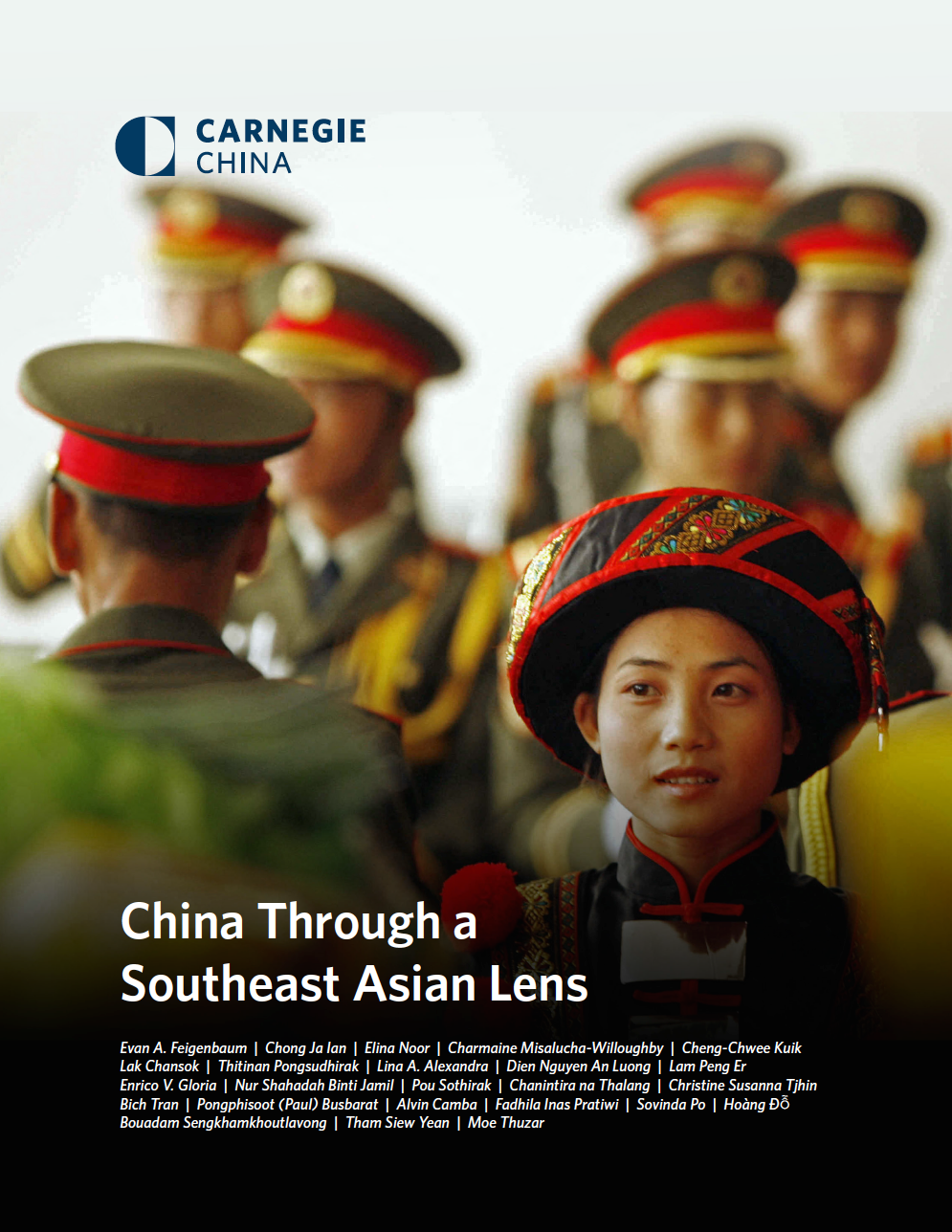
Because strategic, economic, and ideological perceptions of China contain multiple, sometimes contradictory facets in Southeast Asia, receptions of and responses to Beijing diverge across and within state lines.



Evan A. Feigenbaum, Chong Ja Ian, Elina Noor
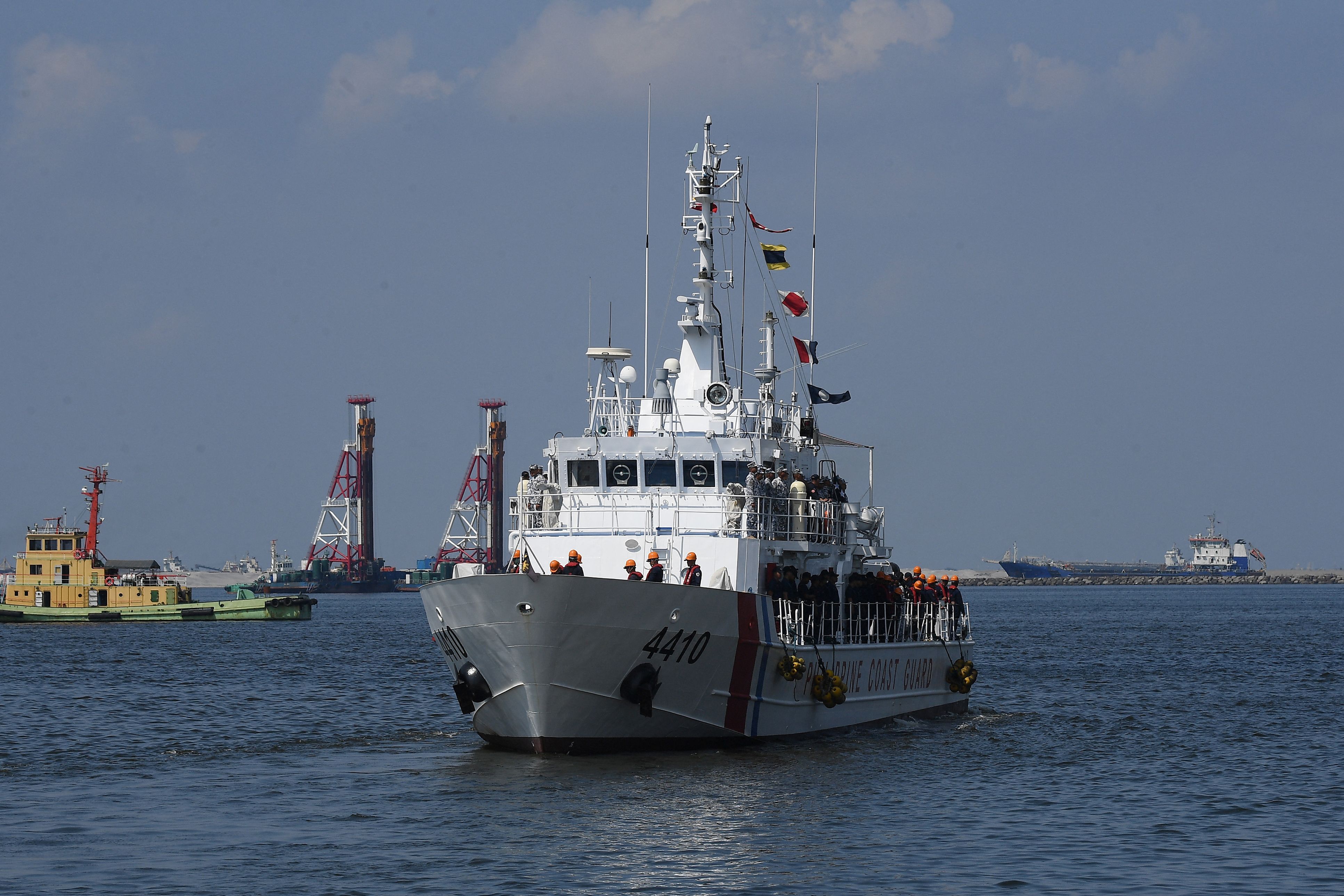
Most Southeast Asian states behave as if the actions of their Northeast Asian neighbors and the Philippines will be sufficient to maintain a regional status quo from which they can benefit.
Chong Ja Ian