

Report
- +1
Dr. Demetrios Papademetriou, Mr. John Audley, Ms. Sandra Polaski, …
{
  "authors": [
    "John Audley"
  ],
  "type": "legacyinthemedia",
  "centerAffiliationAll": "",
  "centers": [
    "Carnegie Endowment for International Peace"
  ],
  "collections": [],
  "englishNewsletterAll": "",
  "nonEnglishNewsletterAll": "",
  "primaryCenter": "Carnegie Endowment for International Peace",
  "programAffiliation": "",
  "programs": [],
  "projects": [],
  "regions": [
    "North America"
  ],
  "topics": [
    "Economy",
    "Trade",
    "Climate Change"
  ]
}
REQUIRED IMAGE
Source: Carnegie
ISSUE BRIEF
TRADE, EQUITY, AND DEVELOPMENT PROJECT
February 2003
Opportunities and Challenges to Advance Environmental Protection in the U.S.-Central American Free Trade Negotiations
By John Audley
Full text in English (PDF format)
Full text in English (HTML format)
Full text in Spanish (PDF format)
Summary
The U.S. Congress has instructed the administration to treat environmental issues as a key objective in trade negotiations, and this challenge will be formidable in newly launched talks with Central American governments. Audley offers guidelines for the U.S. - Central American Free Trade Agreement (CAFTA) that will result in a trade regime that promotes environmental protections, strengthens rule of law, and encourages good governance in the region. Steps to achieve this ambitious agenda include building on environmental protection efforts already underway; creating trade-related incentives, such as promotion of green product exports; and including good governance provisions: dispute settlement proceedings, environmental reviews, and participation and transparency measures.
About the Author
John Audley is a senior associate at the Carnegie Endowment for International Peace, where he directs the Trade, Equity, and Development Project. Before joining the Endowment in April 2001, he was the trade policy coordinator at the U.S. Environmental Protection Agency, where he was responsible for developing and presenting EPA positions on U.S. trade policy.
Also Read on CAFTA: Sandra Polaski's "Central America and the U.S. Face Challenge-and Chance for Historic Breakthrough-on Workers' Rights"
Former Senior Associate
Recent Work

Dr. Demetrios Papademetriou, Mr. John Audley, Ms. Sandra Polaski, …

Mr. John Audley, George Perkovich, Ms. Sandra Polaski, …
Carnegie does not take institutional positions on public policy issues; the views represented herein are those of the author(s) and do not necessarily reflect the views of Carnegie, its staff, or its trustees.

China has showcased its engineering prowess with small modular reactor demonstration projects. But turning these technological achievements into commercial success will be a greater challenge.

Tong Zhao

The Plaza Accord was not an externally imposed punishment of Japan but part of a broader restructuring that Japanese economists and policymakers themselves recognized was necessary. Its effects were undermined, however, when Tokyo responded to the resulting slowdown with policies that exacerbated investment, credit expansion, and the very imbalances the adjustment was intended to resolve.

Michael Pettis
China’s banking crisis in the 2000s was resolved by transferring the costs to households through financial repression—a decision that recapitalized the banks while exacerbating the structural imbalances that continue to shape the Chinese economy today.
Michael Pettis
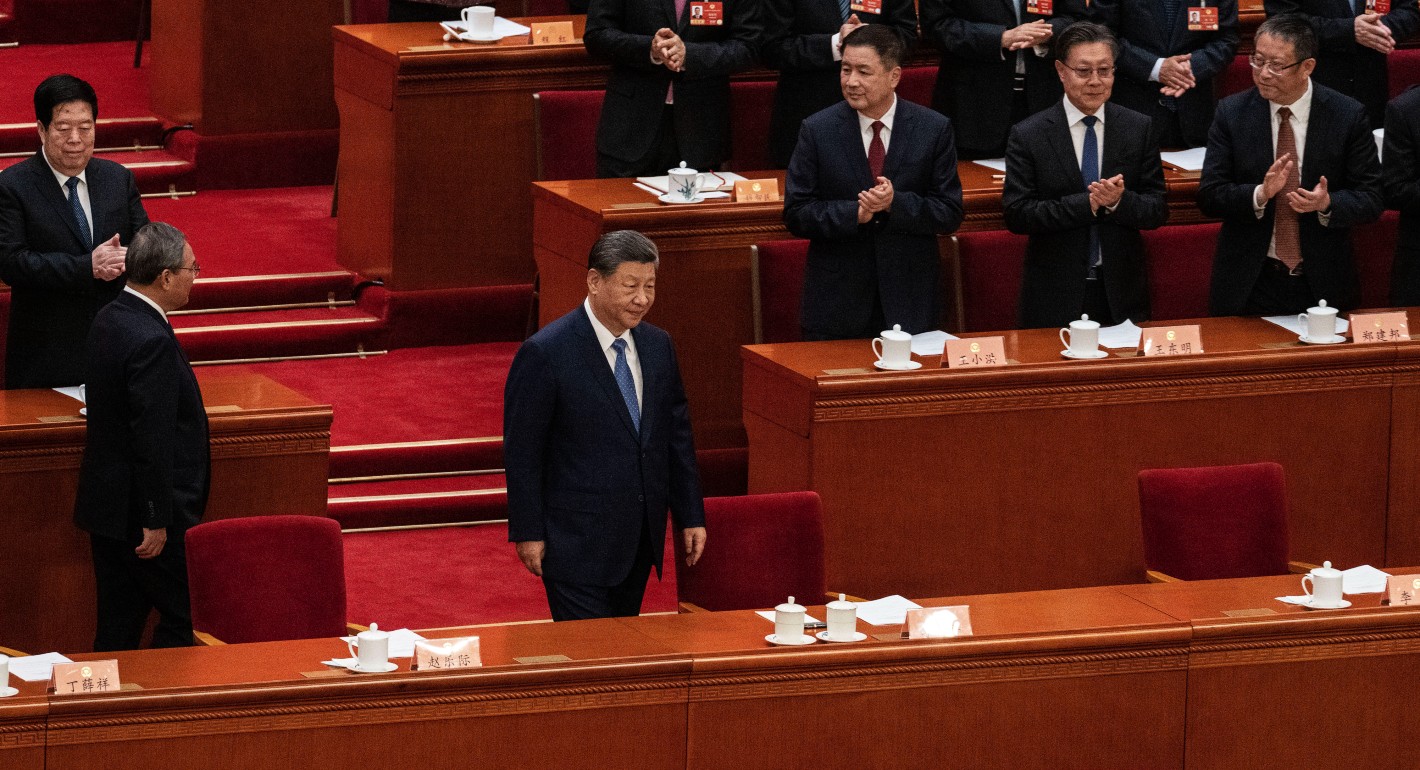
In the latest Five-Year Plan, the Chinese president cements the shift to an innovation-driven economy over a consumption-driven one.

Damien Ma

Regulation, not embargo, allows Beijing to shape how other countries and firms adapt to its terms.
Alvin Camba