

Report
- +2
George Perkovich, Jessica Tuchman Mathews, Joseph Cirincione, …
{
  "authors": [
    "Jon Wolfsthal"
  ],
  "type": "legacyinthemedia",
  "centerAffiliationAll": "dc",
  "centers": [
    "Carnegie Endowment for International Peace"
  ],
  "collections": [],
  "englishNewsletterAll": "ctw",
  "nonEnglishNewsletterAll": "",
  "primaryCenter": "Carnegie Endowment for International Peace",
  "programAffiliation": "NPP",
  "programs": [
    "Nuclear Policy"
  ],
  "projects": [],
  "regions": [
    "Middle East",
    "Iraq"
  ],
  "topics": [
    "Security",
    "Foreign Policy",
    "Nuclear Policy"
  ]
}
REQUIRED IMAGE
Regardless of whether Saddam Hussein had actual chemical or biological weapons, it is known with absolute certainty that Iraq had a large and well-trained cadre of scientists and technicians capable of producing such arms.
Source: Carnegie
Jon Wolfsthal is Deputy Director of the Non-Proliferation Project at the Carnegie Endowment. This article originally appeared June 13, 2003, in the Los Angeles Times.
Regardless of whether Saddam Hussein had actual chemical or biological weapons, it is known with absolute certainty that Iraq had a large and well-trained cadre of scientists and technicians capable of producing such arms. Also, the United Nations in the mid-1990s verified that Iraq had an advanced understanding of nuclear weapons and a team of experts that could have produced a weapon had Iraq acquired the critical nuclear materials. Most of these experts remain in Iraq, but many are on the run or in hiding from U.S. authorities.
Although the U.S. continues to make progress on tracking down and capturing Hussein's top leadership, the record is not as strong when it comes to finding and working with the several thousand people who were responsible for Iraq's weapons of mass destruction programs.
The U.S. continues to pursue the many weapons experts as war criminals, and even those not emblazoned in a deck of cards fear prosecution for their roles in Hussein's weapons programs. It is not clear that U.S. intelligence even knows who all of the scientists are, and the decision to freeze out the U.N. weapons inspectors who worked with many of these people for years has hampered finding and engaging this critical group of Iraqis.
Some of these Iraqi scientists may know where weapons are located in Iraq, and they might be willing - or induced by economics or passions - to sell them to other countries or factions in Iraq. Fears that Hussein may be alive also could be used by his loyalists to direct the actions or motivate weapons scientists to act against U.S. interests.
Brain Drain
Even if no weapons exist, these at-large scientists might know the location of weapon precursors or be willing to use or sell their skills to help other countries or groups. The most radical scientists might even be willing to use their skills to fight against the U.S.
Any of these developments would seriously undermine U.S. security, threaten U.S. troops in the region and reduce the value of having fought and won the war in the first place.
Recruit Them
Fortunately, there is a model for another approach. After the collapse of the Soviet Union, the U.S., Europe and Japan worked together to engage former Soviet weapons scientists to ensure that they would not sell their skills or any materials on hand to make a living. The establishment of science centers in Moscow and Ukraine served as matchmaking services to employ former government scientists in civilian research. More than 50,000 scientists found jobs in peaceful enterprises and were redirected away from the former Soviet weapons complex.
The same approach should be adopted in Iraq. Instead of hunting down these experts, the majority of them should be offered formal amnesty in exchange for their cooperation.
The top managers of Iraq's weapons programs and those responsible for the use of chemical weapons against the Kurds and Iran should not be eligible for this treatment, and punishing them could be a powerful message to future WMD program employees in other countries. But the others should be given new opportunities to work, and their skills should be channeled into rebuilding Iraq. Experts in chemical weaponry could be used to help rebuild Iraq's petrochemical industry, and biological weapon experts could make great contributions to Iraq's pharmaceutical industry.
Time is of the Essence
The case of the missing WMD in Iraq is likely to occupy the public and the Congress for some time. But we cannot allow this important issue to overshadow the real security risks that remain in Iraq any more than we can allow other countries, like Iran or North Korea, to use the current focus on Iraq to advance their weapon ambitions.
Former Nonresident Scholar, Nuclear Policy Program
Jon Wolfsthal was a nonresident scholar with the Nuclear Policy Program.
Recent Work

George Perkovich, Jessica Tuchman Mathews, Joseph Cirincione, …
Jon Wolfsthal
Carnegie does not take institutional positions on public policy issues; the views represented herein are those of the author(s) and do not necessarily reflect the views of Carnegie, its staff, or its trustees.

Malaysia’s chairmanship sought to fend off short-term challenges while laying the groundwork for minimizing ASEAN’s longer-term exposure to external stresses.

Elina Noor

For Malaysia, the conjunction that works is “and” not “or” when it comes to the United States and China.
Elina Noor
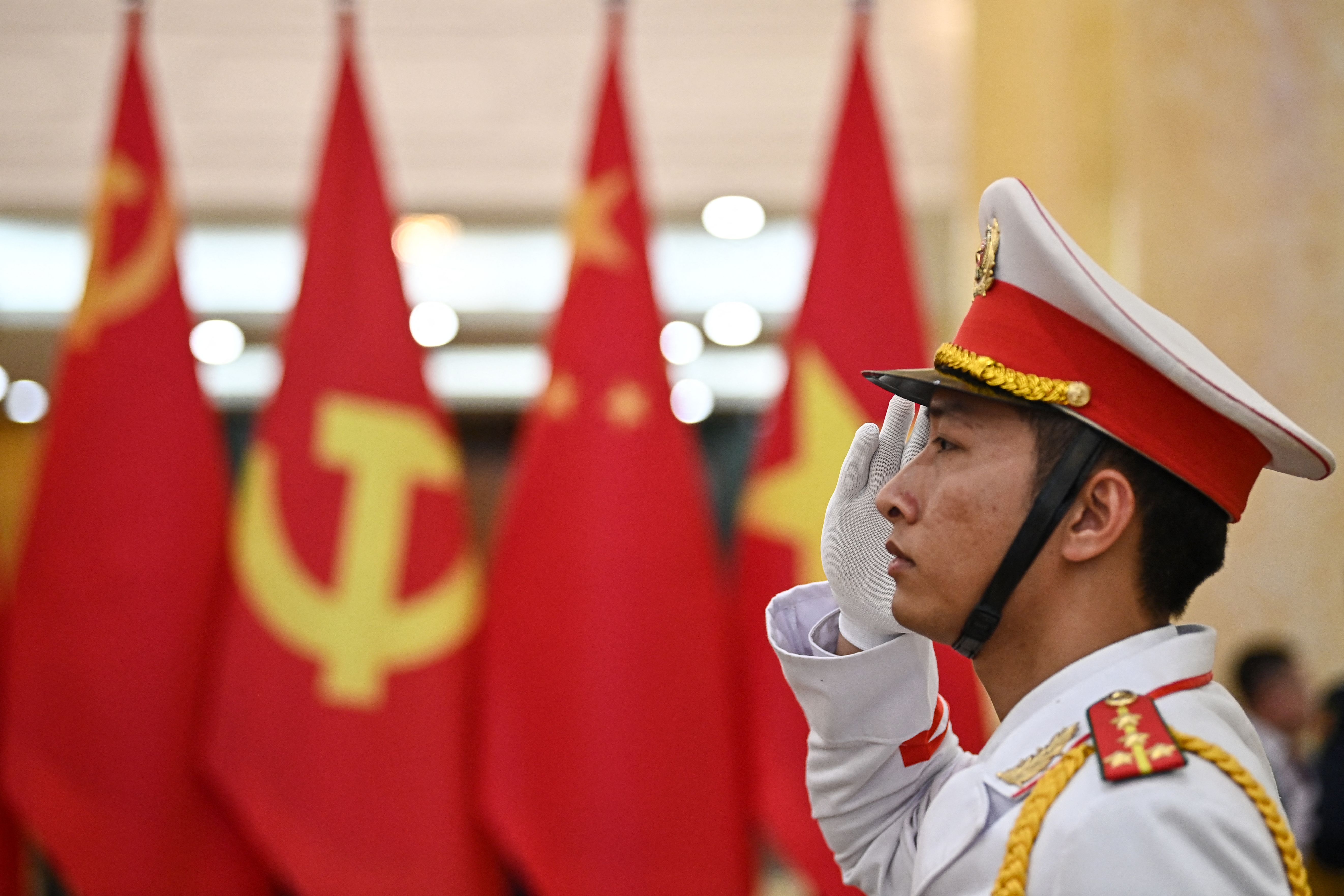
In July 2025, Vietnam and China held their first joint army drill, a modest but symbolic move reflecting Hanoi’s strategic hedging amid U.S.–China rivalry.

Nguyễn Khắc Giang

The Thai-Cambodian conflict highlights the limits to China's peacemaker ambition and the significance of this role on Southeast Asia’s balance of power.

Pongphisoot (Paul) Busbarat

Beijing believes that Washington is overestimating its own leverage and its ability to handle the trade war’s impacts.


Rick Waters, Sheena Chestnut Greitens