

In The Media
Jessica Tuchman Mathews
{
  "authors": [
    "Jessica Tuchman Mathews"
  ],
  "type": "legacyinthemedia",
  "centerAffiliationAll": "dc",
  "centers": [
    "Carnegie Endowment for International Peace"
  ],
  "collections": [],
  "englishNewsletterAll": "ctw",
  "nonEnglishNewsletterAll": "",
  "primaryCenter": "Carnegie Endowment for International Peace",
  "programAffiliation": "NPP",
  "programs": [
    "Nuclear Policy"
  ],
  "projects": [],
  "regions": [
    "Iraq"
  ],
  "topics": [
    "Nuclear Policy"
  ]
}
REQUIRED IMAGE
So far, efforts to unravel why both British and American intelligence were so wrong about Iraq's weapons of mass destruction have ignored one crucial fact: while governments on both sides of the Atlantic were getting the picture wrong, United Nations inspectors were getting it largely right.
Source: Carnegie
So far, efforts to unravel why both British and American intelligence were so wrong about Iraq's weapons of mass destruction have ignored one crucial fact: while governments on both sides of the Atlantic were getting the picture wrong, United Nations inspectors were getting it largely right.
In 1991-98, UN Special Commission inspectors - though hobbled by a degree of Iraqi obstruction the Security Council never should have countenanced - were able to discover and eliminate most of Iraq's unconventional weapons and production facilities. The evidence also suggests that a package of measures that included sanctions, procurement investigations and export/import controls, in addition to inspections, was far more effective in constraining Iraq than has yet been appreciated.
In the months just before last year's war, inspectors' assessment of Iraq's programmes was quite close to what has since been found, and much closer to the truth than American or British prewar beliefs. Although the inspections - carried out by the UN Monitoring, Verification and Inspection Commission - were halted in their early stages, they appear to have been closing in on what was there.
All this is relevant now for several reasons. On the intelligence front, there is reason to wonder whether the US was fully aware of what was learnt during the seven years of Unscom inspections and the four months of resumed inspections before the war. Unscom discovered in 1991 that Iraq's nerve gas weapons were no longer potent enough for battlefield use because Iraqi scientists could not keep the agent stable for very long. Why then was the US treating these same weapons as a threat 12 years later? How much of the 30m pages produced by UN and International Atomic Energy Agency inspections was sifted by US analysts before the war?
A related question arises at the policy level. In his speech just over a year ago to the UN Security Council on the Iraqi threat, Colin Powell, US secretary of state, pointed to "signature items" in satellite photos that, he said, were decontamination vehicles proving the presence of chemical weapons. Yet inspectors who had visited the sites say these were water trucks and that they tried to so inform US officials. Was this a valid technical disagreement, a failure of communication or had a decision been made not to know?
One possibility is that, notwithstanding the 1991-98 record, US policymakers had long since decided inspections were futile. Months before the terms of the Unmovic inspections were settled, Dick Cheney, vice-president, said the return of inspectors "would provide no assurance whatsoever". Donald Rumsfeld, secretary, called them a "sham". This scepticism may have been due to a widespread but incorrect conviction at the top level that inspectors depended almost entirely on tips from defectors. Every senior official, including the president on numerous occasions and Mr Powell as recently as last week, has repeated the canard that Iraq's entire biological weapons programme was only discovered through such a lucky break.
In fact, it was discovered through mundane detective work. Inspectors tracked a spray-drying system to its source and were told by the supplier that the Iraqis wanted it to produce particles so small they would be inhaled. Alerted, inspectors searched hospitals and research laboratories and pieced the story together. Discovery of the programme was reported to the Security Council four months before the programme's leader defected. According to Rolf Ekeus, Unscom's chairman, the defection provided "additional confirmation . . . but few . . . new details". Ironically, over-reliance on untrustworthy defectors may later have been a key cause of serious US intelligence mistakes.
President George W. Bush continues to describe the threat Iraq posed a year ago as a "grave and gathering" one. It was indeed a grave long-term threat, but the unclassified evidence today is indisputable that, at the time, the threat was both minor and either diminishing, as inspectors began to uncover and destroy facilities, or stable and contained. The weaknesses in that containment lay not in lack of active Iraqi co-operation on the ground - that could, with persistence, be overcome - but in uncertain political support for the inspectors in New York. The record from the 1990s is clear: when the big powers were united, Saddam Hussein backed down. When they split, he played them off against each other until the inspectors were forced to withdraw. Diplomacy, therefore, is part of what needs to be done differently next time.
A robust inspections regime is not a panacea, but the Iraq story suggests it may be an essential part of an effective system for stopping proliferation. Inspectors on the ground and armed with an international writ can do things even the best human and technical intelligence sources cannot.
The necessary first step is to piece together a complete history and inventory of Iraq's WMD programmes through a collaboration that is not now happening between UN inspectors and the US search team in Iraq. Similarly, the various commissions and investigations will miss a big part of the story if they do not dig into the huge UN/International Atomic Energy Agency archive. Ideologically inspired resistance to taking these steps, in Washington, London or at the UN, is unworthy of the task at hand.
This piece first appeared in the Financial Times on February 9, 2004. Jessica Mathews is president of the Carnegie Endowment for International Peace and co-author with Joseph Cirincione and George Perkovich.

Distinguished Fellow
Mathews is a distinguished fellow at the Carnegie Endowment for International Peace. She served as Carnegie’s president for 18 years.
Recent Work
Jessica Tuchman Mathews
Jessica Tuchman Mathews
Carnegie does not take institutional positions on public policy issues; the views represented herein are those of the author(s) and do not necessarily reflect the views of Carnegie, its staff, or its trustees.

The nuclear relationship between China and the United States is increasingly shaped by widening perception gaps rather than deliberate strategic design.

Tong Zhao
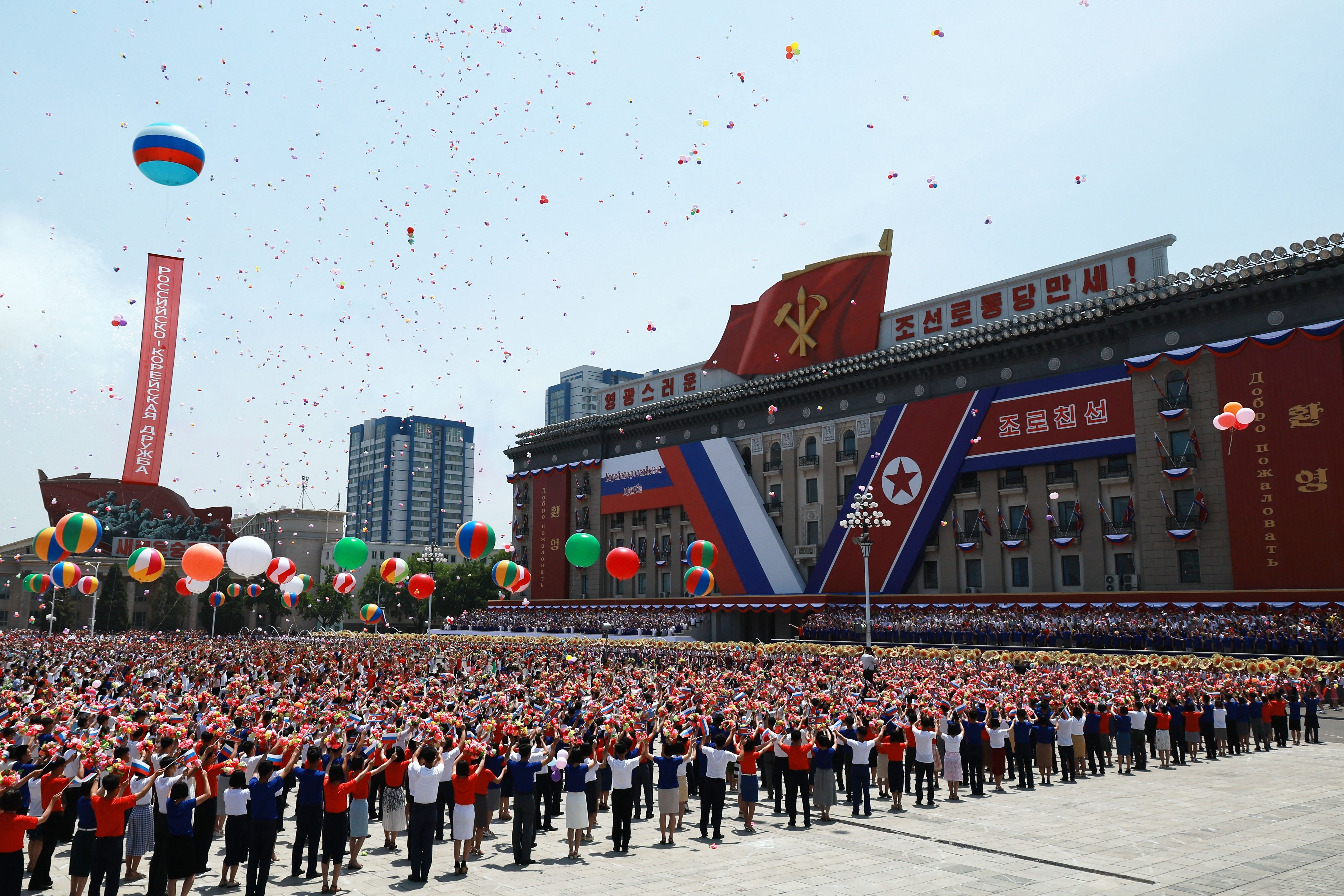
Faced with an increase in strategic maneuvering by Moscow and Pyongyang, Beijing will not sit idly by and allow Putin and Kim to shape the security environment on its behalf.
Tong Zhao
China views U.S. missile defense as posing a greater potential threat to China’s nuclear deterrent than other U.S. military capabilities.
Tong Zhao, Dmitry Stefanovich
There are certainly other issues among other P5 countries, but the U.S.-China competition is so by far the most consequential great power rivalry in the international system, and it has very far-reaching geopolitical implications at and beyond the Pacific region.
Tong Zhao
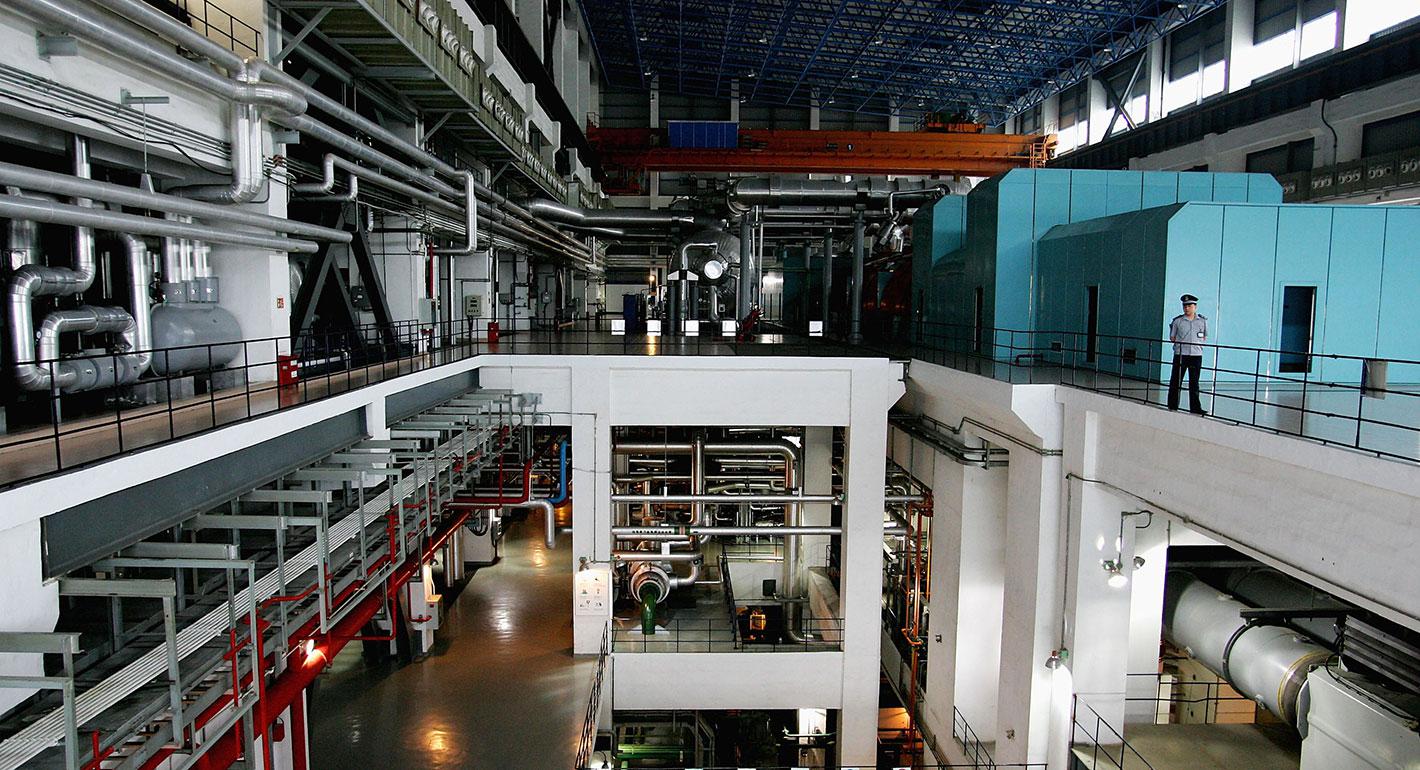
Satellite data has revealed the construction of new nuclear missile silos in Gansu and Xinjiang in western China. How U.S. and Chinese experts interpret the buildup and the motivations behind it could greatly reshape their security relationship.
Tong Zhao