

Commentary
But their "principal to principal" model will only be as effective as the political strength of each leader back home.
Damien Ma
{
  "authors": [
    "Robert Kagan",
    "William Kristol"
  ],
  "type": "legacyinthemedia",
  "centerAffiliationAll": "",
  "centers": [
    "Carnegie Endowment for International Peace"
  ],
  "collections": [],
  "englishNewsletterAll": "",
  "nonEnglishNewsletterAll": "",
  "primaryCenter": "Carnegie Endowment for International Peace",
  "programAffiliation": "",
  "programs": [],
  "projects": [],
  "regions": [
    "Iraq"
  ],
  "topics": [
    "Democracy",
    "Foreign Policy"
  ]
}
REQUIRED IMAGE
Source: Carnegie
Originally published in the Weekly Standard, March 22, 2004
A YEAR HAS PASSED since the invasion of Iraq, and while no sensible person would claim that Iraqis are safely and irrevocably on a course to liberal democracy, the honest and rather remarkable truth is that they have made enormous strides in that direction. The signing on March 8 of the Iraqi interim constitution--containing the strongest guarantees of individual, minority, and women's rights and liberties to be found anywhere in the Arab world--is the most obvious success. But there are other measures of progress, as well. Electricity and oil production in Iraq have returned to prewar levels. The capture of Saddam Hussein has damaged the Baathist-led insurgency, although jihadists continue to launch horrific attacks on Iraqi civilians. But by most accounts those vicious attacks have spurred more Iraqis to get more involved in building a better Iraq. We may have turned a corner in terms of security.
What's more, there are hopeful signs that Iraqis of differing religious, ethnic, and political persuasions can work together. This is a far cry from the predictions made before the war by many, both here and in Europe, that a liberated Iraq would fracture into feuding clans and unleash a bloodbath. The perpetually sour American media focus on the tensions between Shiites and Kurds that delayed the signing by three whole days. But the difficult negotiations leading up to the signing, and the continuing debates over the terms of a final constitution, have in fact demonstrated something remarkable in Iraq: a willingness on the part of the diverse ethnic and religious groups to disagree--peacefully--and then to compromise.
This willingness is the product of what appears to be a broad Iraqi consensus favoring the idea of pluralism. The interim constitution itself represents a promising compromise between the legitimate desire of the majority Shiites to be fairly represented in the Iraqi government--for the first time in a century--and the equally legitimate desire of Kurds and Sunnis to be protected from a tyranny of the majority. These are never easy matters to resolve, as our own Founders knew well. Add to these problems the vexing question of the role of Islam in Iraqi politics and society, and the complexities multiply. Yet here, too, the Iraqis seem to have struck a hopeful balance. Islam is respected in the constitution as the national religion. But that does not impinge on the basic rights of Iraqis, both Muslim and non-Muslim. This does not seem to be a Muslim theocracy in the making. Indeed, the way in which the Iraqi constitution reconciles liberal democracy with the culture and religion of Islam really is an encouraging and feasible model for others in the Islamic world.
A share of the credit for Iraq's achievements so far should go to the leading Shiite cleric, Ayatollah Sistani. He has of course consistently represented the interests of the long-oppressed Shiite majority. But he has also consistently supported liberal democratic processes and institutions in Iraq. Indeed, he has been more persistent in urging free and democratic elections than some top American officials, who for months put off elections out of fear of their possible consequences and tried to set up a clumsy system of "caucuses" to choose a constituent assembly. Now they have changed course and agree that real elections are both simpler and far preferable in conferring legitimacy on any Iraqi government or final constitution.
The administration's about-face on elections is one of several instances over the past year where American officials have had to recover from misjudgments about the reconstruction of Iraq. The first and most serious misjudgment concerned the level of American troops. Even though it was apparent by early summer 2003 that there were too few troops to provide security for the reconstruction effort, the administration remained committed to drawing down the number of forces. These plans along with other instances of apparent wavering led many people in the United States, in Europe, and most damaging of all in Iraq, to conclude last fall that the Bush administration was looking for an early exit. Fortunately, President Bush moved to squelch all talk of an exit strategy, and the number of American troops in Iraq has actually risen slightly. This has not only increased security but, just as importantly, has sent a powerful signal of U.S. determination to remain in Iraq as long as needed.
That is the key to success in Iraq. This administration did not do a particularly good job of preparing for postwar Iraq before the invasion, and it has not always made the right decisions on how to proceed politically, diplomatically, and militarily in the reconstruction of Iraq. But the mere fact that the White House has not sought an early exit timed to our presidential election has made it possible to recover from these mistakes--many of which, to be fair, are unavoidable in a complex undertaking like nation-building. Also to its credit, the administration has shown enough flexibility to abandon favored plans when they have proved unworkable. But the most important thing the administration has done is to make clear, both in word and in deed, its determination to see our mission in Iraq completed.
For this we believe President Bush deserves enormous credit, and perhaps sole credit. Everyone knew--or thought they knew--last fall that the politically expedient thing was to begin a serious drawdown of American forces. But the president has proven remarkably stubborn on the question of Iraq. He has not decreased troops in an election year. He has not offered the American people a plan for getting out this year or next year or offered any timetable at all. In fact, he has done nothing in Iraq to strengthen his political prospects at home, except perhaps to realize the deeper truth that he is better off in November if Iraq is better off, no matter how many American troops remain. On this question, at least, there should be no doubt that the president has so far put the national interest above political expediency.
We wish we could say the same of John Kerry. The fate of Iraq is so important that we would much prefer to have each candidate this fall trying to outbid the other on who would do the most to ensure success there. On the subject of Iraqi reconstruction, however, Kerry has been, at best, hard to pin down. At worst, he has pandered not only to the left wing of the his party but to Americans' worst instincts.
Kerry has frequently complained, for instance, about the costs of reconstruction. "The bill," he said in December, is "too large." And "Americans are paying it--in resources that could be used for health care, education, and our security here at home." "We should not be opening firehouses in Baghdad and closing them down in New York City." To be sure, he has uttered these complaints in the context of chastising the Bush administration for not getting more help from the international community. And, of course, in classic Kerry fashion, he has also warned the Bush administration against pursuing a "cut and run strategy." But there is no mistaking Kerry's deliberate effort play to those American voters, across the political spectrum, who want to know why the United States should spend a penny on reconstruction in Iraq or anywhere else abroad for that matter.
That was the audience Kerry played to on the most important foreign policy vote in 2003: the authorization of $87 billion for the reconstruction of Iraq. Rhetoric is one thing, and no candidate's rhetoric is entirely consistent throughout a campaign. But the vote on the $87 billion was real, and it was a test of a politician's willingness to set expediency aside. John Kerry--the man who now warns President Bush against cutting and running in Iraq--failed the test.
Kerry, of course, claims that he didn't like the particulars of Bush's proposal or the way Bush was conducting international diplomacy. In a statement explaining his vote, Kerry also complained that a proposal he co-sponsored with Senator Joseph Biden to repeal part of Bush's tax cut to pay for Iraq had been defeated. But guess what? Biden, who surely liked his own proposal as much as Kerry did, voted for the $87 billion anyway.
And so did 38 other Democratic senators, including Tom Daschle, Hillary Clinton, Christopher Dodd, and Barbara Mikulski. It's safe to say these Democrats did not vote for the $87 billion out of affection for George W. Bush or because they approved of Bush's conduct of foreign or domestic policy. We dare say some of them may have felt as strongly as Kerry about the inadequacies of administration policy. And some of those who voted for the $87 billion had even voted against the Iraq war in 2002--unlike, say, Kerry, who managed to vote for the invasion of Iraq one year and against the costs of staying the course the next.
Those Democrats who held their noses and voted for the $87 billion did so because they believed it vitally important to do something to aid the reconstruction of Iraq, and as quickly as possible. As Biden put it, "for all the errors of the past, we must confront the reality of the present and the imperative of the future." He continued:
The reality of the present is that the window of opportunity is closing on our ability to bring peace to Iraq. . . . Losing the peace in Iraq is not about terror alone. It is so much bigger than that. . . . If we lose Iraq, Iran becomes an incredibly empowered nation; Syria becomes more emboldened; Turkey, an Islamic government, seeing a failed state on their border, becomes more radicalized; Iran, surrounded by the failed states of Iraq and Afghanistan, puts in jeopardy the very existence of Pakistan. . . . Losing the peace would reinforce the view held by the extremists in the Arab and Islamic world that while the United States can project power, we have no staying power, and that all they have to do is wait us out. . . . It would confirm the concerns of many moderate Arab regimes expressed before we went to war with Iraq that we would not finish the job. Our credibility in Iraq and the region and across the globe will be at rock bottom if we do not successfully secure the peace. America and Americans will be far less secure to boot.
Senator John McCain at the time accused Kerry, and John Edwards, of pandering to Howard Dean and the liberal base of the Democratic party. "They know better than that," McCain chided. Kerry may know better, but McCain was right about Kerry's political calculations. In an interview after the vote, Kerry attempted to explain his decision by pointing to a poll the previous week which showed that many voters in three early primary states said they preferred a nominee who voted for the war but who was critical of Bush's handling of Iraq after the war. Kerry was pleased to report he had received an ovation at a Democratic rally when he spoke of his vote against the $87 billion. "I think over time it's sinking in,'' Kerry told reporters. "I think I was prescient. I think I showed leadership.''
We don't think so, and we wish the Democratic party had chosen someone with a better understanding of leadership. But now that Kerry is the nominee, we trust that serious Democrats will do their best to see to it that their candidate expresses a commitment like the president's to finishing the task in Iraq. Real and important progress has been made in this momentous, and at times trying, year. There should be no debating the need to persevere.
--Robert Kagan and William Kristol
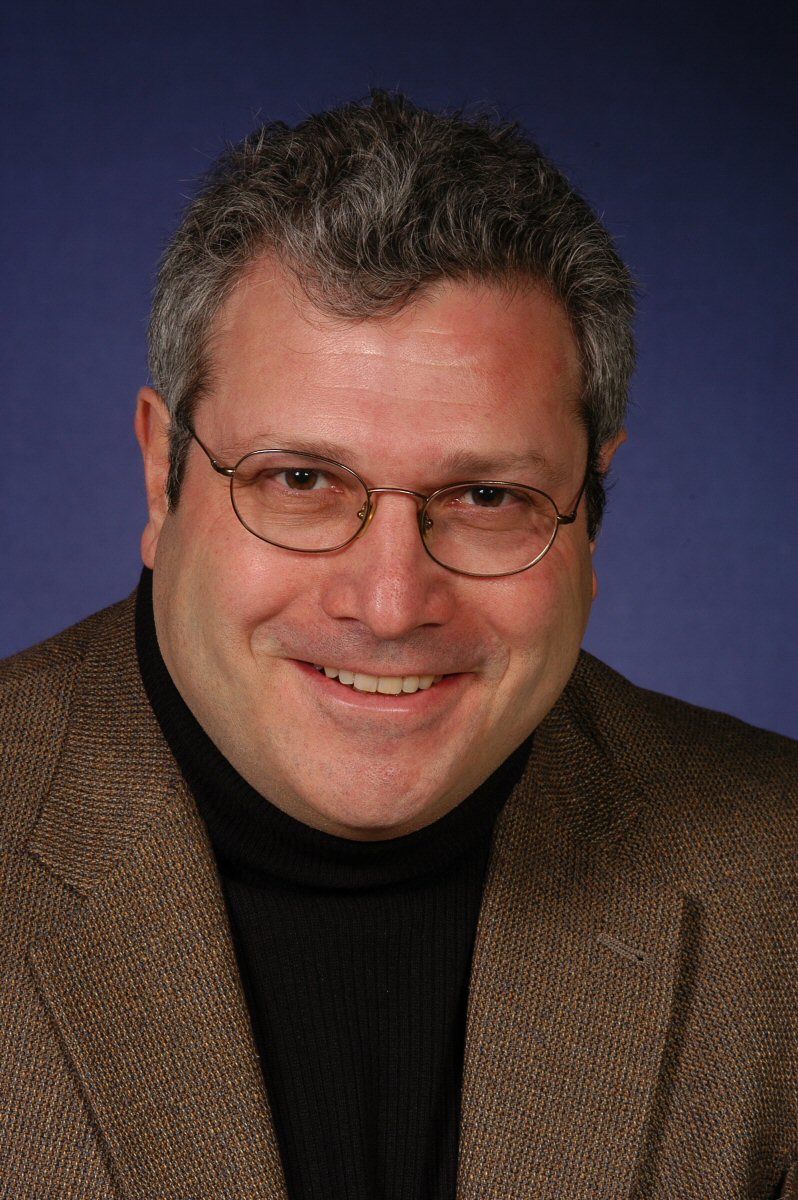
Former Senior Associate
Kagan, author of the recent book, The Return of History and the End of Dreams (Knopf 2008), writes a monthly column on world affairs for the Washington Post and is a contributing editor at both the Weekly Standard and the New Republic.
William Kristol
Carnegie does not take institutional positions on public policy issues; the views represented herein are those of the author(s) and do not necessarily reflect the views of Carnegie, its staff, or its trustees.

But their "principal to principal" model will only be as effective as the political strength of each leader back home.

Damien Ma

U.S. unpredictability has allowed China to capitalize on its positioning as the “responsible great power”. Paradoxically, the more China wins the perception game, the more likely expectations will rise for Beijing to deliver not just words but to demonstrate with its deeds.

Chong Ja Ian

Hanoi and Beijing have long treated each other as distant cousins rather than comrades in arms. That might be changing as both sides draw closer to hedge against uncertainty and America’s erratic behavior.

Nguyễn Khắc Giang

Across Asia, China is better positioned to withstand energy shocks from the fallout of the Iran war. Its abundant coal capacity can ensure stability in the near term. Yet at the same time, the country’s energy transition away from coal will make it even less vulnerable during the next shock.
Damien Ma

Malaysia’s chairmanship sought to fend off short-term challenges while laying the groundwork for minimizing ASEAN’s longer-term exposure to external stresses.

Elina Noor