

Other
Fiona Hill, Anatol Lieven, Thomas de Waal
{
  "authors": [
    "Anatol Lieven"
  ],
  "type": "legacyinthemedia",
  "centerAffiliationAll": "dc",
  "centers": [
    "Carnegie Endowment for International Peace"
  ],
  "collections": [],
  "englishNewsletterAll": "ctw",
  "nonEnglishNewsletterAll": "",
  "primaryCenter": "Carnegie Endowment for International Peace",
  "programAffiliation": "russia",
  "programs": [
    "Russia and Eurasia"
  ],
  "projects": [],
  "regions": [
    "Caucasus",
    "Russia"
  ],
  "topics": [
    "Political Reform",
    "Democracy",
    "Foreign Policy"
  ]
}
REQUIRED IMAGE
Anatol Lieven reviews Russian journalist Anna Politkovskaya's book, Putin's Russia.
Source: The Times Literary Supplement
PUTIN'S RUSSIA. Translated by Arch Tait. By Anna Politkovskaya. 219pp. Harvill. Paperback, Pounds 8.99.- 1 84343 050 9
In the century before 1917, a bitter alienation developed between the Russian State and the Russian liberal intelligentsia, which is now being repeated following the collapse of the Soviet Union. State officials, wrestling with the appalling problems of governing Russia, developed a deep hatred and contempt for the intellectuals who sniped at them incessantly from the sidelines. In the eyes of the more hardline officials at least, the common image of the liberal intellectual came to be that of an irresponsible, narcissistic, self-righteous, unpatriotic dreamer and whiner. Since in the hands of such people the Russian State would not survive for a year, there could be no question of allowing them a share of political responsibility. The liberal intelligentsia, on the other hand, viewing the yawning gulf in economic progress and in political, legal, civic and administrative culture between Russia and the European states to its West, came to see conservative officialdom as characterized by brutality, ignorance, incompetence, corruption, chauvinism and instinctive autocracy: the characteristics summed up in part by the Russian word samodur.
The Russian tragedy lies in the fact that both of these images have been substantially accurate. The record of the State really has all too often been appalling; the intelligentsia, excluded from responsibility, not unnaturally became extremely irresponsible in its attitudes to government and unrealistic in its beliefs about the real choices and possibilities facing Russia. Too many intellectuals came to associate all Russia's myriad problems with the State or even with the individual ruler. They believed that if only that individual could be overthrown and his rule replaced with their own, Russia would automatically take its rightful and natural place as a developed nation -a belief which contributed strongly to the catastrophe of 1917.
Which brings us to the Russian radical journalist Anna Politkovskaya and her very brave, misguided book. Politkovskaya is a person of great physical and moral courage. Unfortunately, just as the administration of Vladimir Putin has displayed all too many of the traditional vices of Russian officialdom, especially in its conduct of the war in Chechnya, so Politkovskaya and other critics of that administration and that war have also displayed all too many of the traditional vices of the Russian liberal intelligentsia.
The blurb on her book presents it as "a devastating appraisal of the policies of Russia's head of state". In fact, Putin's Russia, like Politkovskaya's previous work on the Chechen war, contains a good deal of vivid and moving reportage, together with some savage polemics, but very little analysis. Much of the book does not even really have anything to do with Putin or his administration. It is rather a series of portraits of aspects of today's Russia as these were shaped by a mixture of the nature of the Soviet system and the Soviet collapse. This is most obviously true of the portrayal of the Soviet and post- Soviet lives of three of her friends, which are simply accounts of how they have prospered or failed as a result of the economic and moral revolution attendant on the collapse of Communism.
But it is also true of Politkovskaya's portrayal of the frequently shameful behaviour of the Russian military towards its own soldiers. The abuses and corruption that she describes were documented during the war in Afghanistan. They became considerably worse as a result of the immiseration and demoralization of the armed forces that followed the collapse of the Soviet Union. Putin can certainly be accused of not having done enough to reform the military and to reduce these abuses. However, to suggest that the reform of demoralized and corrupted militaries is an easy task is completely unhistorical. But then, Politkovskaya rarely allows facts to get in the way of her polemic. Thus she declares that "Putin's new-old nomenklatura has taken corruption to heights undreamt of under the Communists or Yeltsin". This allegation is supported by no evidence and is self-evidently absurd if one remembers the anarchic years of the early and mid-1990s.
Similarly, the Chechen war of 1994-6, which really inaugurated the whole Chechen disaster of our time, was begun by Yeltsin. Putin has made matters worse, but he also inherited a radicalized shambles in Chechnya which would have taxed the wisdom and restraint of any government. In her blind hostility to her own government, without any recognition of the real dangers from the Chechen side, Politkovskaya resembles the most extreme left-wing Western critics of the Bush and Blair administrations, who fail to distinguish between justified and unjustified wars and call every civilian death a "war crime".
There is plenty of room for a searing critique of Bush's strategy in the "war on terror", just as there is for condemnation of Putin over Chechnya. But if these critiques are to win over the mass of the American or Russian populations, they must be balanced by an awareness that savage terrorist enemies really do exist and must be fought.
In the case of Russia, anyone professing to respect the views of ordinary Russians must also recognize that a majority has supported Putin and his authoritarian programme because their experience of pseudo-democracy in the 1990s was so terrible. Let us hope that in future a Russian government will emerge that will be able to tame Russia's various ills without recourse to authoritarian means. But at present, no such popular democratic alternative exists in Russia -and it would vain indeed to look for one in the circles represented by Anna Politkovskaya.
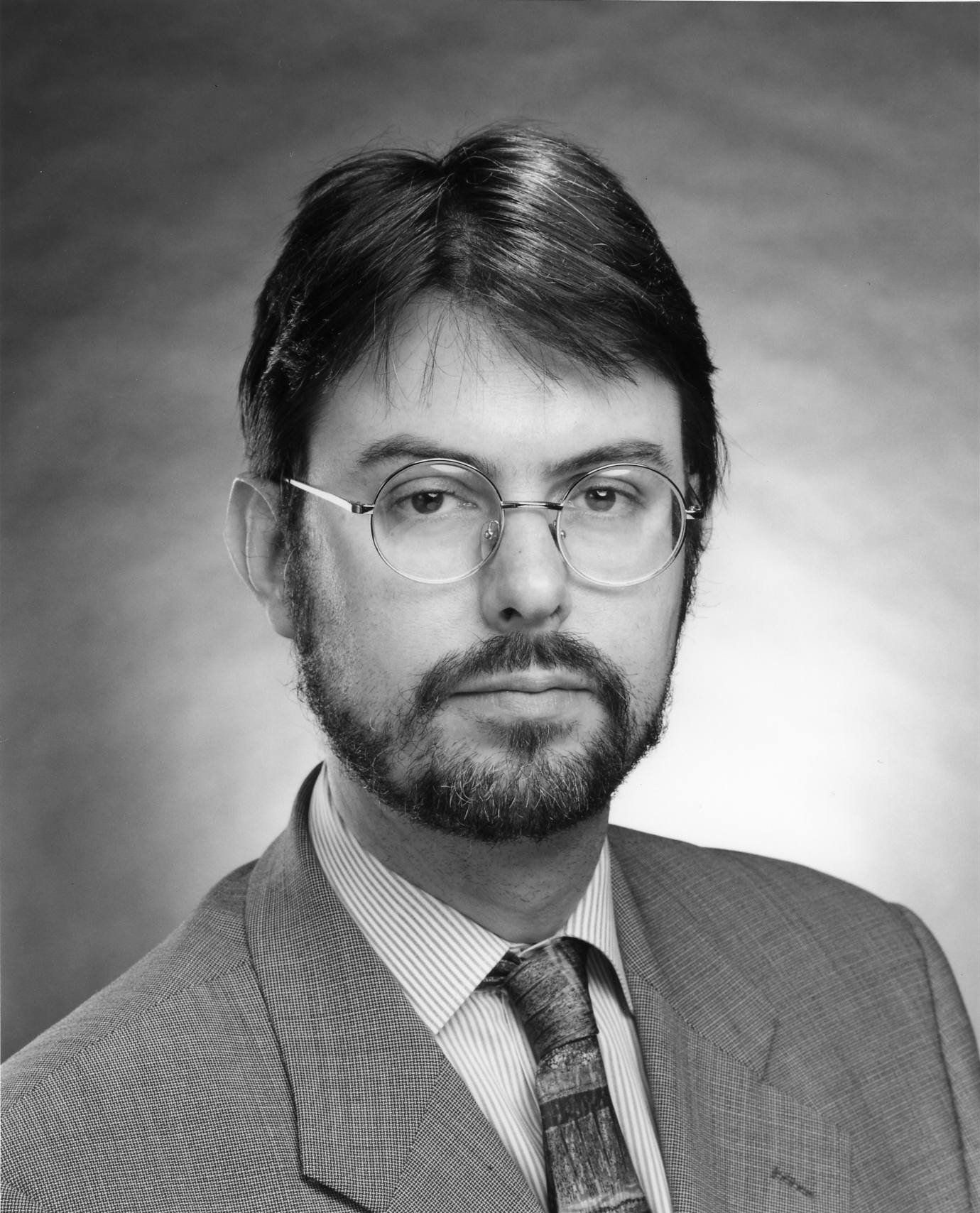
Former Senior Associate
Recent Work

Fiona Hill, Anatol Lieven, Thomas de Waal
Carnegie does not take institutional positions on public policy issues; the views represented herein are those of the author(s) and do not necessarily reflect the views of Carnegie, its staff, or its trustees.

But their "principal to principal" model will only be as effective as the political strength of each leader back home.

Damien Ma

U.S. unpredictability has allowed China to capitalize on its positioning as the “responsible great power”. Paradoxically, the more China wins the perception game, the more likely expectations will rise for Beijing to deliver not just words but to demonstrate with its deeds.

Chong Ja Ian

Hanoi and Beijing have long treated each other as distant cousins rather than comrades in arms. That might be changing as both sides draw closer to hedge against uncertainty and America’s erratic behavior.

Nguyễn Khắc Giang

Across Asia, China is better positioned to withstand energy shocks from the fallout of the Iran war. Its abundant coal capacity can ensure stability in the near term. Yet at the same time, the country’s energy transition away from coal will make it even less vulnerable during the next shock.
Damien Ma

Malaysia’s chairmanship sought to fend off short-term challenges while laying the groundwork for minimizing ASEAN’s longer-term exposure to external stresses.

Elina Noor