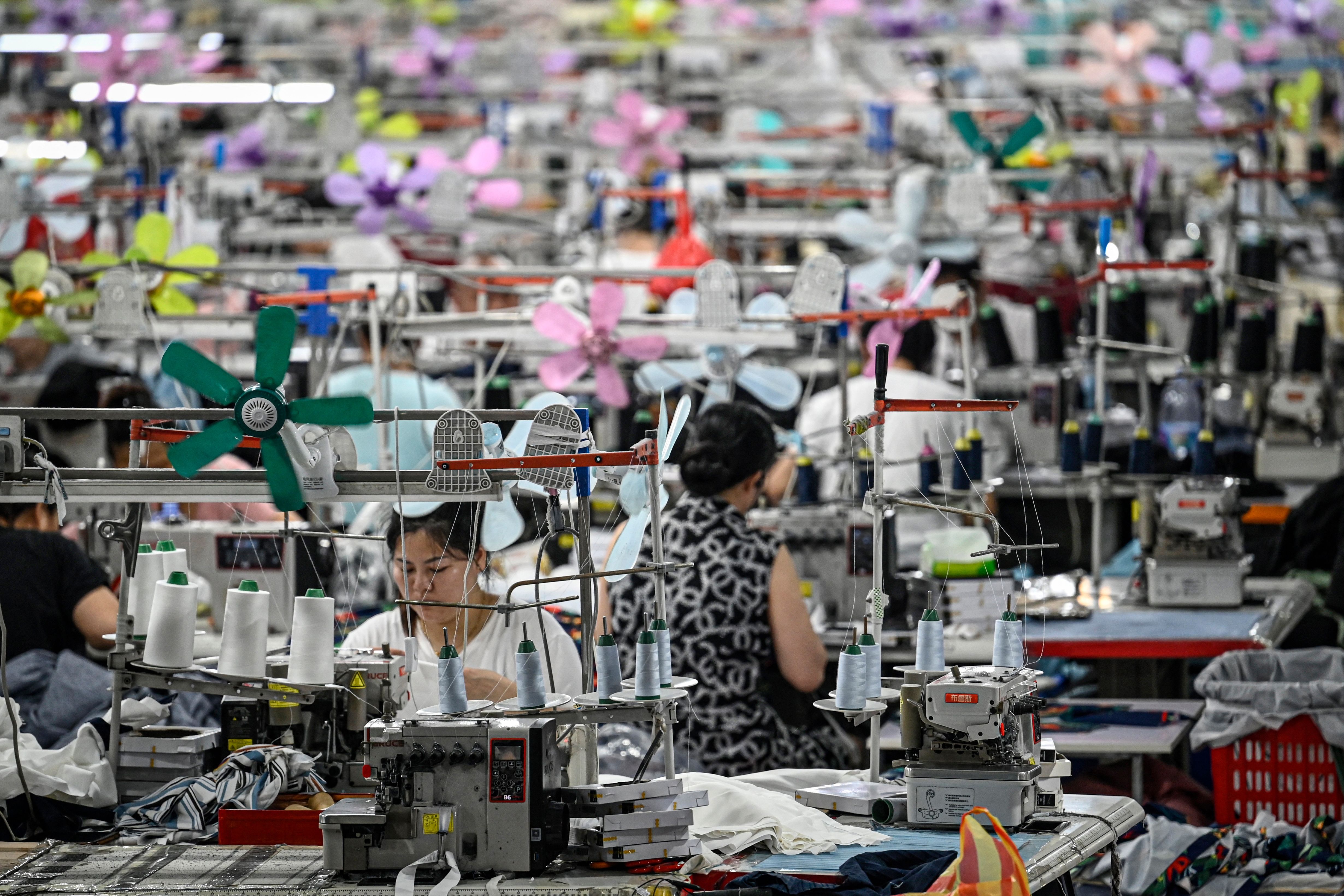
Rather than climate ambitions, compatibility with investment and exports is why China supports both green and high-emission technologies.
Mathias Larsen
{
"authors": [
"Aleksandr Zaslavsky"
],
"type": "legacyinthemedia",
"centerAffiliationAll": "dc",
"centers": [
"Carnegie Endowment for International Peace"
],
"collections": [],
"englishNewsletterAll": "ctw",
"nonEnglishNewsletterAll": "",
"primaryCenter": "Carnegie Endowment for International Peace",
"programAffiliation": "russia",
"programs": [
"Russia and Eurasia"
],
"projects": [],
"regions": [
"Middle East",
"North Africa",
"Caucasus"
],
"topics": [
"Economy",
"Climate Change"
]
}REQUIRED IMAGE
Among the Russian oil majors, Lukoil is the most ambitious when it comes to plans outside the country. The Middle East is central to its strategy of concentrating 23 percent of its total production outside of Russia by 2015, and these plans in large part focus on Iraq.
Source: Pro et Contra
This article orginally appeared in Russian in "The Power of Oil and Gas" edition of the Pro et Contra journal (Volume 10, Nos. 2-3, 2006), published by the Carnegie Moscow Center.
Among the Russian oil majors, Lukoil is the most ambitious when it comes to plans outside the country. The Middle East is central to its strategy of concentrating 23 percent of its total production outside of Russia by 2015, and these plans in large part focus on Iraq. Unlike Lukoil, with its gigantic resources, Tatneft is developing one of Russia 's oldest fields. With each passing year, the problem of renewing its resources becomes pressing for the company. This drives its aggressive attempts to gain access to fields both in Russia and abroad. Tatneft is the only Russian company that managed to win recent auctions for exploring and drilling Libyan resources.
For the full text, please click on the link above.
Aleksandr Zaslavsky
Carnegie does not take institutional positions on public policy issues; the views represented herein are those of the author(s) and do not necessarily reflect the views of Carnegie, its staff, or its trustees.
Rather than climate ambitions, compatibility with investment and exports is why China supports both green and high-emission technologies.
Mathias Larsen
“Involution” is a new word for an old problem, and without a very different set of policies to rein it in, it is a problem that is likely to persist.
Michael Pettis
While China's investment story seems contradictory from the outside, the real answers to Beijing's high-quality growth ambitions are hiding in plain sight across the nation's cities.
Yuhan Zhang
China's stimulus addiction cannot go on forever. Beijing still has policy space to clean up the country's massive debt issue, but time is running short.
Michael Pettis
A quick look at the complexities behind Beijing’s enduring Catch-22 situation with revaluing the Renminbi, despite advantages of a stronger currency.
Michael Pettis