

In The Media
Josh Kurlantzick
{
  "authors": [
    "Josh Kurlantzick"
  ],
  "type": "legacyinthemedia",
  "centerAffiliationAll": "",
  "centers": [
    "Carnegie Endowment for International Peace"
  ],
  "collections": [],
  "englishNewsletterAll": "",
  "nonEnglishNewsletterAll": "",
  "primaryCenter": "Carnegie Endowment for International Peace",
  "programAffiliation": "",
  "programs": [],
  "projects": [],
  "regions": [
    "North America",
    "South America"
  ],
  "topics": [
    "Political Reform",
    "Economy",
    "Trade",
    "Foreign Policy"
  ]
}
Source: Getty
After more than 50 years in power, Fidel Castro, the longest-serving leader in the world, finally announced last week that he would step down. Mr. Castro's decision was hardly a surprise, as he'd officially given caretaker power to his brother two years ago, when Mr. Castro first revealed his serious intestinal illness.
Source: The Dallas Morning News

And yet American policy toward Cuba remains unchanged. The State Department has ruled out lifting the U.S. embargo. And the White House has said it will not work with Mr. Castro's brother, Raúl. Realists still believe that, in a presidential election where once again Florida promises to be a battleground state, there is no likelihood that policy will change in 2008.
Yet despite the continuing media coverage of Cuban-Americans' political influence, there are real reasons why the U.S. should change its Cuba policy now. And there are real signs that, unlike in the past, Miami Cubans just might be willing to live with a new, more open approach to the island.
For decades, many American politicians and officials resigned themselves to a failed Cuba policy. They understood that it made no sense to continue isolating the island even as Washington pursued close relations with communist nations, authoritarian states and former enemies – but, hey, they had Cuban-American voters to pacify.
President Bill Clinton, for his part, allowed some opening toward the island, like permitting greater trade in goods. But President Bush, indebted to Miami voters after a 2000 election in which Cuban-Americans helped deliver him the presidency, reversed even this limited détente, cracking down on remittances to the island, travel and family visits. Democrats in Congress, meanwhile, didn't do much to oppose Mr. Bush's stricter Cuba policies.
In the past two years, though, it has become obvious that sanctions on Cuba cannot be written off as an absurd but costless policy. As a recent report by the Government Accountability Office revealed, U.S. government agencies have been distracted from essential tasks like combating terrorism by having to spend time trying to find Americans who are illegally traveling to Cuba. The report also found that the emphasis on Cuba has distracted the Office of Foreign Assets Control, responsible for monitoring transactions with nations the United States sanctions, including more dangerous states than Cuba, like Iran.
Meanwhile, America's hard-line policy actually has undermined the cause of some Cuban reformers – men and women like Oswaldo Payá who want to bring change to Cuba and who have been tarred by Havana as toadies of Washington.
Worse, while in the 1990s Cuba had few other friends (having lost its Soviet patrons), today it has become a beachhead for two major American competitors. Havana's deep and cozy relationship with Venezuelan leader Hugo Chávez is well known – Venezuela gives Cuba some 100,000 barrels of heavily subsidized oil each day.
But Cuba has also grown increasingly close with China, which has upped its aid to Havana and has hosted Raúl Castro numerous times. Raúl, though clearly no democrat, allegedly has expressed a desire to promote some Chinese-style economic reforms. If the U.S. refuses relations with Cuba under a Raúl leadership, Beijing will only tighten its links to the island and possibly even tap the oil fields off Cuba's coast – potentially fertile ground for American energy firms.
Continuing Cuba's isolation doesn't even make political sense in America. With new generations of Cuban-Americans growing up removed from the battles of the '50s and '60s, the Miami community, once considered a monolithic bloc, has become more open to the idea of reconciliation with Cuba.
As shown by one poll by the William C. Velazquez Institute, a Latino polling group, most Cuban-Americans in Miami-Dade County think the residents of Cuba "should decide when and how the political system in Cuba should be changed." Many Cuban-Americans simply aren't as interested in Cuba as they used to be; the poll found that a majority of Cuban-Americans think "improving the quality of life in South Florida is more important than waiting to change the Cuban government."
Another study, by polling firm Bendixen and Associates, showed that more than 70 percent of Cuban-Americans want Washington to negotiate with the post-Fidel government if it is willing to cooperate.
Sensing this opinion shift, many prominent Cuban-Americans have been calling for "conditional engagement" with the island that would include more direct American travel to Cuba and more American investment – on the condition that the Cuban government increase its respect for workers' rights, create an independent judiciary and allow its people greater freedom to start businesses. Even some Republican members of Congress, once loath to contemplate rapprochement with Cuba, have changed their tune: At a recent Senate Finance Committee hearing, Sen. Chuck Grassley suggested the U.S. reconsider bilateral relations with the island.
Unfortunately, most presidential candidates don't seem to see this future. Though Barack Obama supports changing the relationship with Cuba, Hillary Clinton, who previously said she wanted to continue the economic embargo, has said she will continue Mr. Bush's tough policies.
John McCain has indicated he would continue the current policy. And as Washington policy analyst Steve Clemons notes, Mike Huckabee, who backed greater engagement with Cuba when he was governor of Arkansas, now says he wants to put still more pressure on Havana.
So, even as Cuba and the world changes, the candidates seem stuck in the past, keeping a shrinking number of Cuban-American voters happy – and leaving the rest of us less safe.
Joshua Kurlantzick is a visiting scholar at the Carnegie Endowment for International Peace. His e-mail address is jkurlantzick@ceip.org.
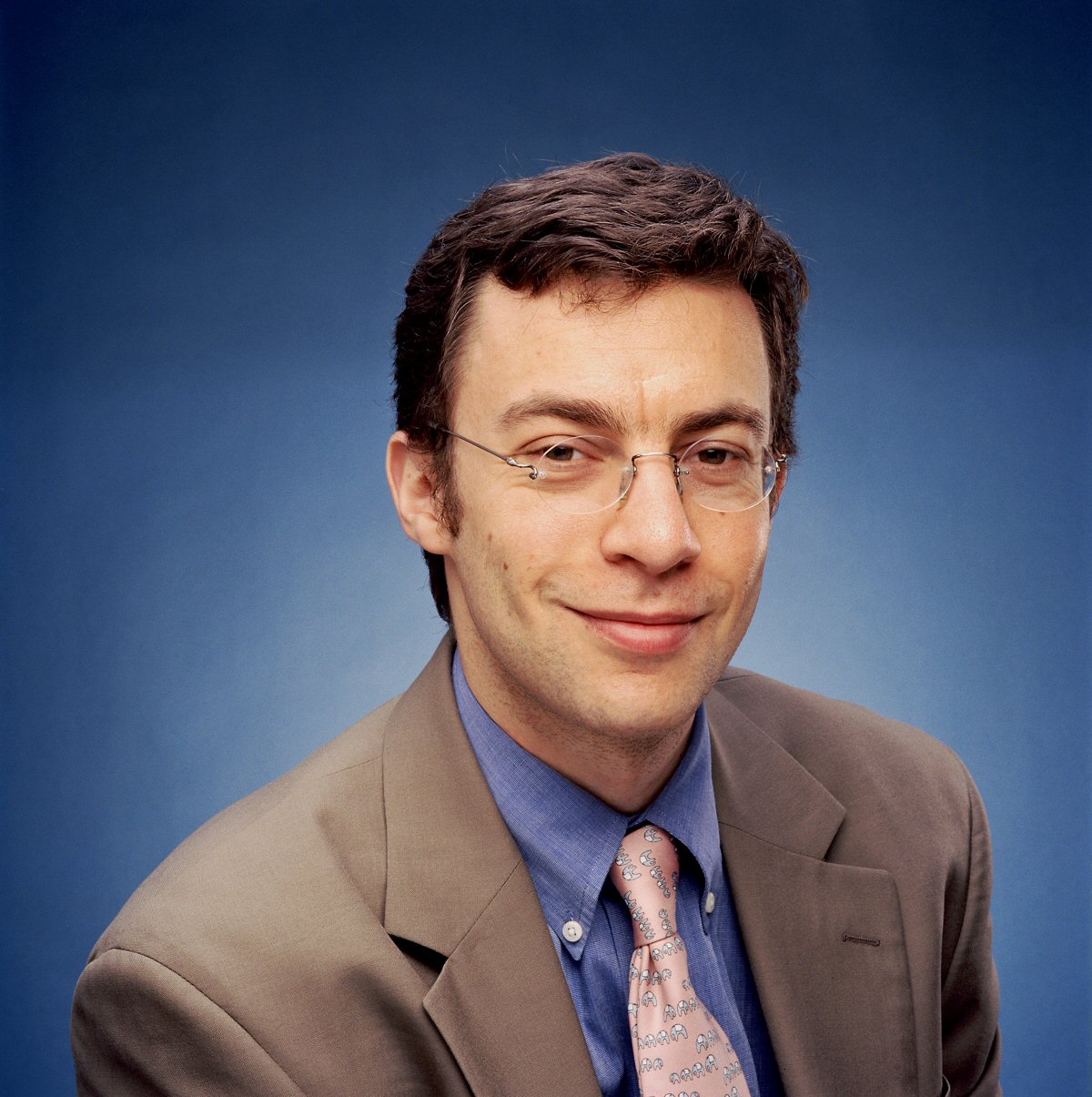
Former Visiting Scholar, China Program
A special correspondent for The New Republic, a columnist for Time, and a senior correspondent for The American Prospect, Kurlantzick assesses China’s relationship with the developing world, including Southeast Asia, Africa, and Latin America.
Recent Work
Josh Kurlantzick
Carnegie does not take institutional positions on public policy issues; the views represented herein are those of the author(s) and do not necessarily reflect the views of Carnegie, its staff, or its trustees.

The Plaza Accord was not an externally imposed punishment of Japan but part of a broader restructuring that Japanese economists and policymakers themselves recognized was necessary. Its effects were undermined, however, when Tokyo responded to the resulting slowdown with policies that exacerbated investment, credit expansion, and the very imbalances the adjustment was intended to resolve.

Michael Pettis
China’s banking crisis in the 2000s was resolved by transferring the costs to households through financial repression—a decision that recapitalized the banks while exacerbating the structural imbalances that continue to shape the Chinese economy today.
Michael Pettis

But their "principal to principal" model will only be as effective as the political strength of each leader back home.

Damien Ma

U.S. unpredictability has allowed China to capitalize on its positioning as the “responsible great power”. Paradoxically, the more China wins the perception game, the more likely expectations will rise for Beijing to deliver not just words but to demonstrate with its deeds.

Chong Ja Ian

Hanoi and Beijing have long treated each other as distant cousins rather than comrades in arms. That might be changing as both sides draw closer to hedge against uncertainty and America’s erratic behavior.

Nguyễn Khắc Giang