

In The Media
Minxin Pei
{
  "authors": [
    "Minxin Pei"
  ],
  "type": "legacyinthemedia",
  "centerAffiliationAll": "dc",
  "centers": [
    "Carnegie Endowment for International Peace",
    "Carnegie China"
  ],
  "collections": [],
  "englishNewsletterAll": "asia",
  "nonEnglishNewsletterAll": "",
  "primaryCenter": "Carnegie China",
  "programAffiliation": "AP",
  "programs": [
    "Asia"
  ],
  "projects": [],
  "regions": [
    "East Asia",
    "China",
    "Taiwan"
  ],
  "topics": [
    "Political Reform",
    "Military",
    "Domestic Politics"
  ]
}
Source: Getty
The resounding victory of Taiwan’s opposition party, the Kuomintang (KMT), in last Saturday’s presidential election has raised hopes for a new era of stability across the Taiwan Strait.
Source: Financial Times

Now that Taiwan’s voters have soundly rejected Mr Chen’s policy and given Ma Ying-jeou, the president-elect, a strong mandate to repair ties with Washington and seek a new modus vivendi with Beijing, one might be tempted to breathe a deep sigh of relief.
However, it would be unrealistic to count on Taipei’s new government to act alone to rebuild relations with Beijing. In the recent past some of the DPP’s political antics, such as holding a symbolic referendum on rejoining the United Nations as “Taiwan”, have worsened cross-strait ties. Today, only China can make the concessions needed to revive political dialogue with Taiwan and maintain stability.
Because Mr Ma rode to victory, in considerable part, on the Taiwanese electorate’s desire to capitalise on China’s booming market, the Chinese government should respond speedily to his proposal for a “common market”. It can start by establishing direct flights and permitting large numbers of Chinese tourists to visit Taiwan. Of course, the DPP government’s policy is responsible for the absence of direct transport links across the strait. But China’s flexibility on some complex technical and legal aspects of the establishment of direct transport links – those touching on sensitive sovereignty and national security issues – will accelerate the negotiation process.
China also needs to reduce its military presence facing Taiwan. For a decade, Beijing has been developing a credible military option for a Taiwan contingency. While the deployment of submarines, fighter jets, surface warships and about 1,000 ballistic missiles has strengthened China’s military capabilities, this has caused a backlash in Washington (which fears that China might be tempted to coerce Taiwan into submission) and Taiwan (where the public views the missiles as instruments of intimidation). Indeed, Mr Ma has demanded the withdrawal of these missiles as a precondition of resuming negotiations. A judicious gesture China can make is an immediate, albeit phased, withdrawal of the missiles from its coastal areas. China could also cancel its annual military exercise in the Taiwan Strait to underscore its commitment to political dialogue.
On the international stage, China can express its goodwill and flexibility towards the Ma government by abandoning its opposition to Taiwan’s admission into the World Health Assembly (WHA) as an observer, which gives it valuable international space without fundamentally endangering China’s claim of sovereignty over Taiwan. (Hong Kong, now part of China, is a full member of the WHA.) Beijing must also suspend its campaign of enticing, with economic aid, the handful of countries that recognise Taiwan to switch their diplomatic recognition to Beijing. With the KMT’s return to power, Beijing cannot afford any missteps that could alienate the Taiwanese public and undercut Mr Ma’s policy of reconciliation.
By themselves, these concessions will constitute only the initial – if not the minimum – steps towards laying the groundwork for resuming the political negotiations suspended in 1999. They are politically feasible as well. The KMT’s electoral triumph has vindicated President Hu Jintao’s Taiwan policy, which focuses on engaging with the KMT and offering economic incentives. Mr Hu now has the political capital to persuade his colleagues to support a more forward-looking strategy that will fundamentally alter the political dynamics across the Taiwan Strait.
The pay-off for Mr Hu – and China – can be huge, even historic. In the medium term China can expect up to eight years of peace, stability and prosperity with Taiwan. The goodwill and economic interdependence built in this period should also make the settlement of Taiwan’s final status more possible. In short, Mr Ma’s victory is an opportunity China can ill afford to miss.
This article was published originally in Financial Times on March 26, 2008
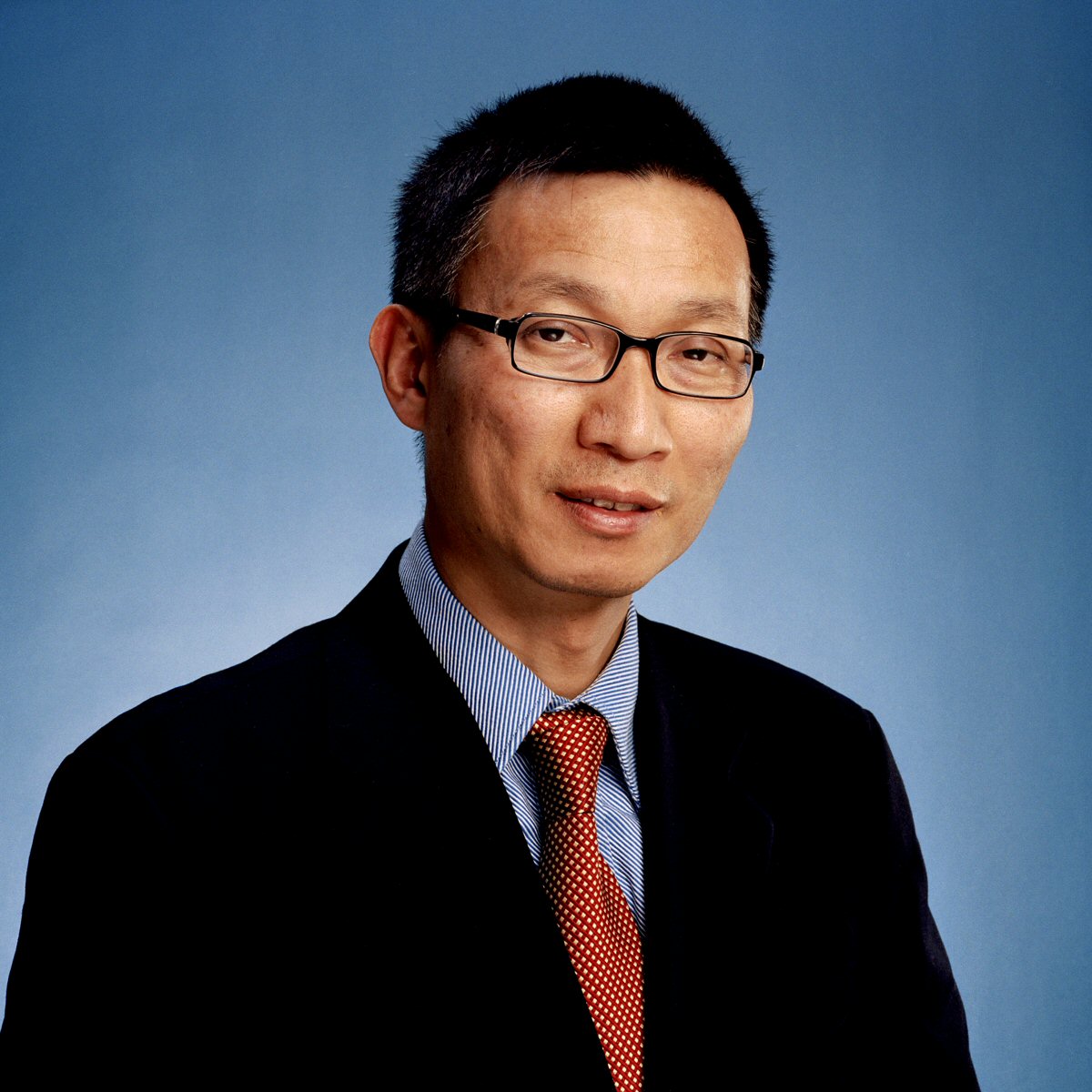
Former Adjunct Senior Associate, Asia Program
Pei is Tom and Margot Pritzker ‘72 Professor of Government and the director of the Keck Center for International and Strategic Studies at Claremont McKenna College.
Recent Work
Minxin Pei
Minxin Pei
Carnegie does not take institutional positions on public policy issues; the views represented herein are those of the author(s) and do not necessarily reflect the views of Carnegie, its staff, or its trustees.

China’s banking crisis in the 2000s was resolved by transferring the costs to households through financial repression—a decision that recapitalized the banks while exacerbating the structural imbalances that continue to shape the Chinese economy today.

Michael Pettis

Chinese biotech companies have been on the receiving end of U.S. economic coercion. Yet their responses have differed significantly because firm and state interests are not uniformly aligned. For Washington, treating all Chinese tech firms the same, irrespective of their actual interests, risks pushing them farther into Beijing’s corner.

Xue Gong

China’s latest energy plan explicitly calls for integrating data centers into the electricity system, particularly connecting them to green energy. It appears Beijing wants to use compute as a source of domestic demand to absorb renewables excess capacity.

Damien Ma

But their "principal to principal" model will only be as effective as the political strength of each leader back home.
Damien Ma

U.S. unpredictability has allowed China to capitalize on its positioning as the “responsible great power”. Paradoxically, the more China wins the perception game, the more likely expectations will rise for Beijing to deliver not just words but to demonstrate with its deeds.

Chong Ja Ian