• Commentary
  • Research
  • Experts
  • Events
Carnegie China logoCarnegie lettermark logo
{
  "authors": [],
  "type": "pressRelease",
  "centerAffiliationAll": "dc",
  "centers": [
    "Carnegie Endowment for International Peace"
  ],
  "collections": [],
  "englishNewsletterAll": "asia",
  "nonEnglishNewsletterAll": "",
  "primaryCenter": "Carnegie Endowment for International Peace",
  "programAffiliation": "AP",
  "programs": [
    "Asia"
  ],
  "projects": [],
  "regions": [
    "United States",
    "China"
  ],
  "topics": []
}
REQUIRED IMAGE

REQUIRED IMAGE

Press Release

Michael Pettis Joins the Carnegie Endowment

Michael Pettis, one of the foremost experts on China’s economy, has joined the Carnegie Endowment for International Peace.

Link Copied
Published on Apr 22, 2009

BEIJING, Apr 21—Michael Pettis, one of the foremost experts on China’s economy, has joined the Carnegie Endowment for International Peace.

A leading economist, former merchant banker, and currently Professor of Finance with Peking University’s Guanghua School of Management, Pettis will be a senior associate with Carnegie’s China program.

Making the announcement, Douglas H. Paal, Carnegie’s vice president for studies, said:

“Michael Pettis stands out in the field of economists who watch China because he writes with a true sense of where public policy meets economic reality. He publishes frequently in important media outlets, where he is even more often quoted for his expert opinion. Carnegie is fortunate, particularly at such a crucial time for the global economy and China’s role within it, to have such a distinguished scholar with hands-on business experience and a perch near the seat of power in Beijing. He will add greatly to the work of our China Program—in Beijing and Washington—and complement that of our new International Economics Program.”

Michael Pettis said:

“As the United States, China, and the world are forced to adapt to the consequences of one of the deepest financial and economic crises in recent history, the impact of policy making on the tectonic economic and geopolitical changes taking place will be fraught with risk and filled with opportunity. I am delighted and honored to be working with the tremendous intellectual resources at the Carnegie Endowment to help contribute to an understanding of the way this interaction will occur.”

###


NOTES

  • Michael Pettis is Professor of Finance with Peking University’s Guanghua School of Management, where he specializes in Chinese financial markets. He has also taught, from 2002 to 2004, at Tsinghua University’s School of Economics and Management and, from 1992 to 2001, at Columbia University’s Graduate School of Business. He is a member of the board of directors of ABC-CA Fund Management Co., a Sino–French joint venture based in Shanghai.

    Pettis has worked on Wall Street in trading, capital markets, and corporate finance since 1987, when he joined the Sovereign Debt trading team at Manufacturers Hanover (now JP Morgan). Most recently, from 1996 to 2001, Pettis worked at Bear Stearns, where he was managing director-principal heading the Latin American Capital Markets and the Liability Management groups. He has also worked as a partner in a merchant banking boutique that specialized in securitizing Latin American assets and at Credit Suisse First Boston, where he headed the emerging markets trading team.

    Besides trading and capital markets, Pettis has been involved in sovereign advisory work, including for the Mexican government on the privatization of its banking system, the Republic of Macedonia on the restructuring of its international bank debt, and the South Korean Ministry of Finance on the restructuring of the country’s commercial bank debt. Pettis is a member of the Institute of Latin American Studies Advisory Board at Columbia University as well as the Dean’s Advisory Board at the School of Public and International Affairs.

    He is the author of several books, including The Volatility Machine: Emerging Economies and the Threat of Financial Collapse (Oxford University Press, 2001). He received an MBA in Finance in 1984 and an MIA in Development Economics in 1981, both from Columbia University.

  • Read Michael Pettis’ blog
  • The Carnegie China Program in Beijing and Washington provides policy makers in both countries with a better understanding of the dynamics within China and between the United States and China. In addition to books, policy briefs, papers, and other publications, the Program produces Carnegie China Insight Monthly, a Chinese-language e-newsletter, and hosts the Hong Kong Journal, an online quarterly covering political, economic, and social issues on Hong Kong and its relations with mainland China, the United States, and other governments and international organizations. 
  • Building on the successful establishment of the Carnegie Moscow Center fifteen years ago, and following its century-long practice of adapting to radically-changed global circumstances, the Carnegie Endowment is undertaking a fundamental re-definition of its role and mission. In February 2007, Carnegie announced that it had added operations in Beijing, Beirut, and Brussels to its existing offices in Washington and Moscow, pioneering the idea that a think tank whose mission is to contribute to global security, stability, and prosperity requires a permanent international presence and a multinational outlook at the core of its operations. For more information on the Carnegie Endowment’s “New Vision,” visit: www.carnegieendowment.org/newvision
  • Press Contact: Trent Perrotto, 202/939-2372, tperrotto@ceip.org
United StatesChina

Carnegie does not take institutional positions on public policy issues; the views represented herein are those of the author(s) and do not necessarily reflect the views of Carnegie, its staff, or its trustees.

More Work from Carnegie China

  • Commentary
    China Financial Markets
    Who Paid for China’s Last Debt Cleanup, and Who Will Pay for the Next?

    China’s banking crisis in the 2000s was resolved by transferring the costs to households through financial repression—a decision that recapitalized the banks while exacerbating the structural imbalances that continue to shape the Chinese economy today.

      Michael Pettis

  • Robot arm with disposable test tube virus sampling in laboratory
    Commentary
    Caught in the Middle: Chinese Biotech Firms’ Divergent Responses to U.S. Sanctions

    Chinese biotech companies have been on the receiving end of U.S. economic coercion. Yet their responses have differed significantly because firm and state interests are not uniformly aligned. For Washington, treating all Chinese tech firms the same, irrespective of their actual interests, risks pushing them farther into Beijing’s corner.

      Xue Gong

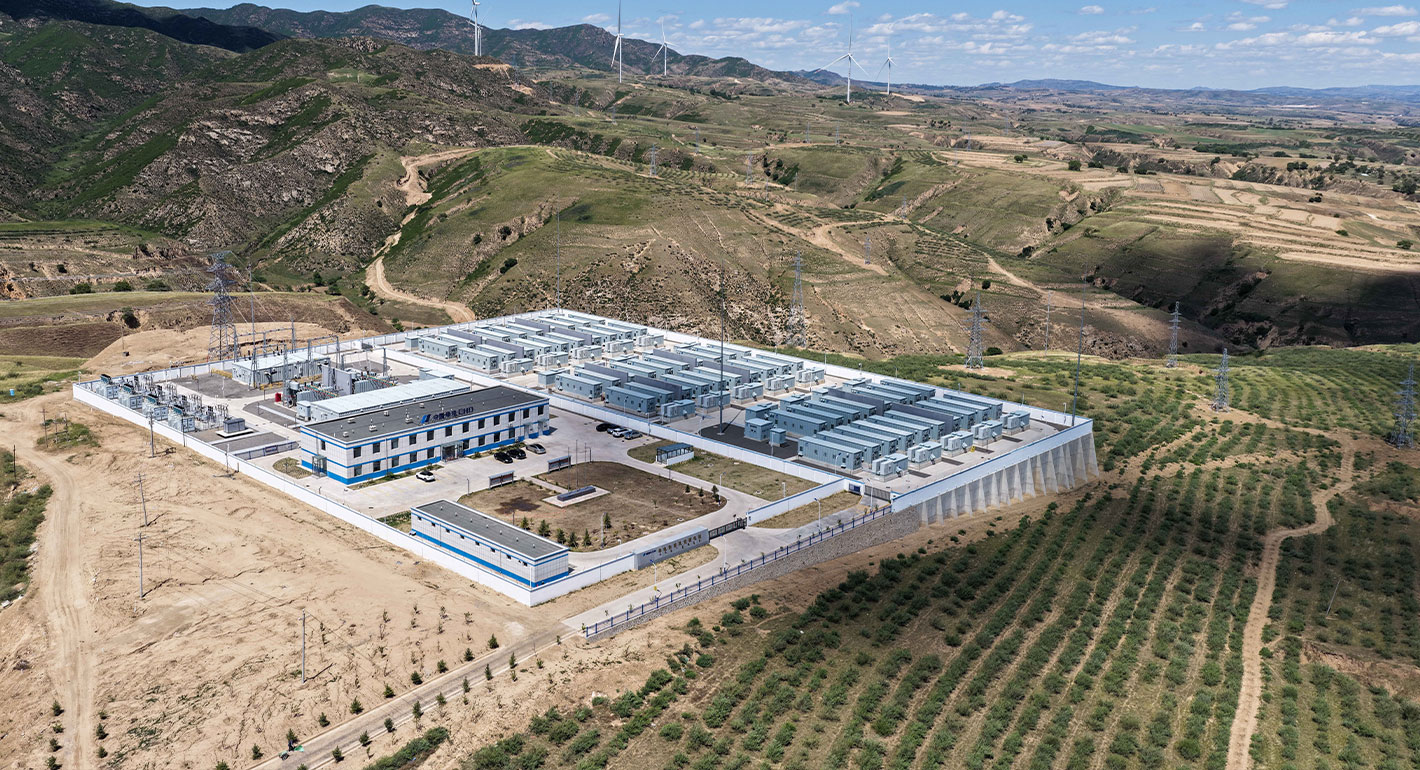
  • An aerial drone photo taken on June 4, 2026 shows a wind-photovoltaic power storage station of Huadian Inner Mongolia New Energy Co., Ltd. as part of the Horinger data center cluster green energy supply demonstration project, in Hohhot, north China's Inner Mongolia Autonomous Region.
    Commentary
    Are Data Centers the Solution to China’s Renewables Excess Capacity?

    China’s latest energy plan explicitly calls for integrating data centers into the electricity system, particularly connecting them to green energy. It appears Beijing wants to use compute as a source of domestic demand to absorb renewables excess capacity.

      • Damien Ma

      Damien Ma

  • Commentary
    Emissary
    Trump and Xi Are Angling for Three Years of Stability

    But their "principal to principal" model will only be as effective as the political strength of each leader back home.

      • Damien Ma

      Damien Ma

  • Commentary
    China Sells Stability Amid American Volatility

    U.S. unpredictability has allowed China to capitalize on its positioning as the “responsible great power”. Paradoxically, the more China wins the perception game, the more likely expectations will rise for Beijing to deliver not just words but to demonstrate with its deeds.

      Chong Ja Ian

Get more news and analysis from
Carnegie China
Carnegie China logo, white
Keck Seng Tower133 Cecil Street #10-01ASingapore, 069535Phone: +65 9650 7648
  • Research
  • About
  • Experts
  • Events
  • Contact
  • Careers
  • Privacy
  • For Media
Get more news and analysis from
Carnegie China
© 2026 Carnegie Endowment for International Peace. All rights reserved.