

Paper
Ashley J. Tellis
{
  "authors": [
    "Ashley J. Tellis"
  ],
  "type": "legacyinthemedia",
  "centerAffiliationAll": "dc",
  "centers": [
    "Carnegie Endowment for International Peace"
  ],
  "collections": [],
  "englishNewsletterAll": "ctw",
  "nonEnglishNewsletterAll": "",
  "primaryCenter": "Carnegie Endowment for International Peace",
  "programAffiliation": "SAP",
  "programs": [
    "South Asia"
  ],
  "projects": [],
  "regions": [
    "South Asia",
    "Afghanistan",
    "Pakistan"
  ],
  "topics": [
    "Security",
    "Military",
    "Foreign Policy"
  ]
}
Source: Getty
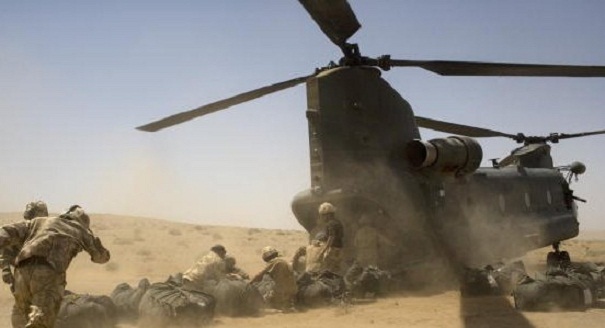
President Obama's failure to explicitly mention that the U.S. intends to stay in Afghanistan could could strengthen the Taliban, which seeks to outlast the international coalition.
Source: Yale Global

Comprehensive engagement in Afghanistan, of course, was opposed by a variety of constituencies. Senator John Kerry (D-Mass.), for example, warned against any reconstruction intended “to make [Afghanistan] our 51st state,” suggesting instead that allied objectives in that country be limited to ensuring that “it does not become an al-Qaeda narco-state and terrorist beachhead capable of destabilizing neighboring Pakistan.” Others, such as the former president of the Council on Foreign Relations, Leslie Gelb, urged Obama “to explore a strategy of power extrication” by which the United States would “leave Afghanistan” because “trying to eliminate the Taliban and Qaeda threat [therein] is unattainable.” Some other alternatives were proposed as well. David Boaz of the libertarian Cato Institute wondered whether the US would “be able to extricate [itself] sooner if we accept a decentralized Afghanistan with some regions ruled by groups that are currently fighting against our troops?” And, one senior NATO official, reflecting the view of many European governments eager to end their involvement in Afghanistan, has been quoted by the Guardian as arguing that Kabul “doesn’t need to be a democracy, just secure.”
Former Senior Fellow
Ashley J. Tellis was a senior fellow at the Carnegie Endowment for International Peace.
Recent Work
Ashley J. Tellis
Ashley J. Tellis
Carnegie does not take institutional positions on public policy issues; the views represented herein are those of the author(s) and do not necessarily reflect the views of Carnegie, its staff, or its trustees.

But their "principal to principal" model will only be as effective as the political strength of each leader back home.

Damien Ma

U.S. unpredictability has allowed China to capitalize on its positioning as the “responsible great power”. Paradoxically, the more China wins the perception game, the more likely expectations will rise for Beijing to deliver not just words but to demonstrate with its deeds.

Chong Ja Ian

Hanoi and Beijing have long treated each other as distant cousins rather than comrades in arms. That might be changing as both sides draw closer to hedge against uncertainty and America’s erratic behavior.

Nguyễn Khắc Giang

Across Asia, China is better positioned to withstand energy shocks from the fallout of the Iran war. Its abundant coal capacity can ensure stability in the near term. Yet at the same time, the country’s energy transition away from coal will make it even less vulnerable during the next shock.
Damien Ma

Malaysia’s chairmanship sought to fend off short-term challenges while laying the groundwork for minimizing ASEAN’s longer-term exposure to external stresses.

Elina Noor