

Q&A
Suzanne Maloney, Aaron David Miller, Karim Sadjadpour
{
  "authors": [
    "Karim Sadjadpour"
  ],
  "type": "legacyinthemedia",
  "centerAffiliationAll": "dc",
  "centers": [
    "Carnegie Endowment for International Peace"
  ],
  "collections": [],
  "englishNewsletterAll": "menaTransitions",
  "nonEnglishNewsletterAll": "",
  "primaryCenter": "Carnegie Endowment for International Peace",
  "programAffiliation": "MEP",
  "programs": [
    "Middle East"
  ],
  "projects": [],
  "regions": [
    "North America",
    "United States",
    "Middle East",
    "Iran"
  ],
  "topics": [
    "Political Reform",
    "Foreign Policy"
  ]
}
Source: Getty
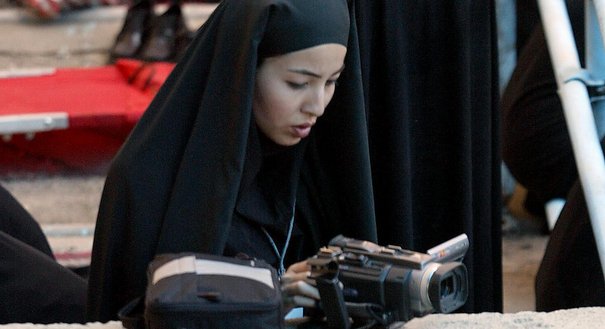
There are now many voices in Washington arguing that engaging Tehran’s leadership is an exercise in futility. The Obama administration should understand that this is precisely the conclusion Roxana Saberi's jailers would like it to draw.
Source: New York Times

So why did the Iranian authorities imprison her? Didn’t they realize that would damage Iran’s international reputation and increase its political and economic isolation? Didn’t they understand that by imprisoning an American citizen they would diminish the prospects of a diplomatic breakthrough with the United States? The answer is yes, and that is precisely what they’re hoping to achieve.
Going back to the 1979 hostage crisis, hard-line factions in Tehran have a history of provoking international incidents to advance their domestic political agendas. Figures like Ayatollah Ahmad Jannati, a powerful supporter of President Ahmadinejad, argue that enmity toward the United States was a fundamental pillar of the 1979 revolution and central to the identity of the Islamic Republic: “If pro-American tendencies come to power in Iran we have to say goodbye to everything. After all, anti-Americanism is among the main features of our Islamic state.”
But while they cloak their hostility toward the United States with appeals to ideological purity, these actors — including powerful, aging clergymen and nouveau riche Revolutionary Guardsmen — are usually driven by power and greed. They recognize that improved ties with Washington would lead to greater openness, which would undermine the political and economic monopolies they enjoy in isolation.
Iran’s hard-liners may have calculated that after four months, the costs of holding on to Roxana Saberi outweighed any continued benefits. After all, there are now many voices in Washington arguing that engaging Tehran’s leadership is an exercise in futility. The Obama administration should understand that this is precisely the conclusion her jailers would like us to draw.

Senior Fellow, Middle East Program
Karim Sadjadpour is a senior fellow at the Carnegie Endowment for International Peace, where he focuses on Iran and U.S. foreign policy toward the Middle East.
Recent Work


Suzanne Maloney, Aaron David Miller, Karim Sadjadpour

Aaron David Miller, Karim Sadjadpour, Robin Wright
Carnegie does not take institutional positions on public policy issues; the views represented herein are those of the author(s) and do not necessarily reflect the views of Carnegie, its staff, or its trustees.

The nuclear relationship between China and the United States is increasingly shaped by widening perception gaps rather than deliberate strategic design.

Tong Zhao

But their "principal to principal" model will only be as effective as the political strength of each leader back home.

Damien Ma

U.S. unpredictability has allowed China to capitalize on its positioning as the “responsible great power”. Paradoxically, the more China wins the perception game, the more likely expectations will rise for Beijing to deliver not just words but to demonstrate with its deeds.

Chong Ja Ian

Hanoi and Beijing have long treated each other as distant cousins rather than comrades in arms. That might be changing as both sides draw closer to hedge against uncertainty and America’s erratic behavior.

Nguyễn Khắc Giang

Across Asia, China is better positioned to withstand energy shocks from the fallout of the Iran war. Its abundant coal capacity can ensure stability in the near term. Yet at the same time, the country’s energy transition away from coal will make it even less vulnerable during the next shock.
Damien Ma